
Many people think medicines work the same way for both animals and humans. This assumption creates confusion and sometimes even dangerous practices. Veterinary medicines and human medicines may look similar, and some drugs may even contain the same active ingredient, but they differ in many important ways.
The difference between veterinary drugs and human drugs goes far beyond packaging or labeling. Manufacturers design these medicines for different body systems, metabolism rates, species requirements, dosages, and safety standards.
Understanding these differences helps doctors, pharmacists, medical store owners, distributors, and even pet owners make informed decisions and avoid serious health risks.
Why Can't Humans And Animals Always Use The Same Medicines?
Human and veterinary medicines differ because humans and animals process medicines differently. Doctors and veterinary experts design drugs according to body weight, organ function, metabolism, species-specific biology, dosage strength, and safety standards.
For example, a painkiller that works safely in humans can become toxic for dogs or cats. Likewise, some veterinary drugs may contain different concentrations, flavors, additives, or formulations that do not suit humans.
Regulatory approvals also differ. Human medicines undergo clinical trials for human use, while veterinary drugs undergo animal-specific testing.
Because of these differences, people should never use veterinary drugs for self-treatment or use human medicines for animals without professional advice.
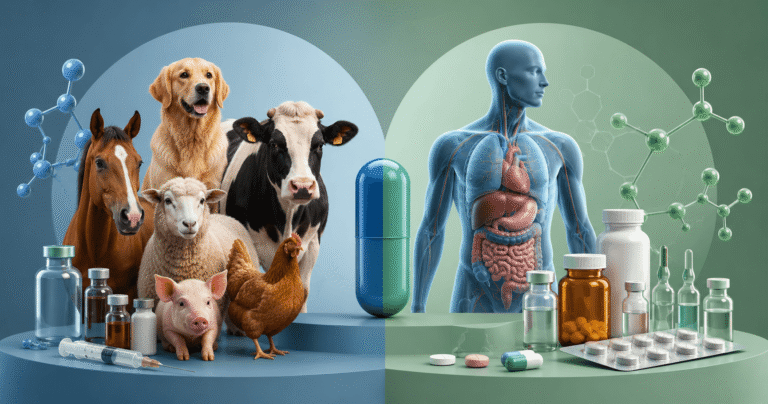
Understanding Veterinary Drugs And Human Drugs
Human drugs are medicines developed specifically to diagnose, treat, prevent, or manage diseases in people, following standards and guidance established by the World Health Organization (WHO). Veterinary drugs are medicines developed to prevent, treat, or control diseases in animals such as:
- Dogs
- Cats
- Cattle
- Poultry
- Horses
- Goats
- Sheep
- Fish
The pharmaceutical industry develops these medicines according to species-specific medical needs.
Examples include:
Human medicine examples:
- Paracetamol tablets
- Antibiotics for respiratory infections
- Diabetes medicines
- Blood pressure medicines
Veterinary medicine examples:
- Deworming medicines
- Animal antibiotics
- Livestock vaccines
- Poultry growth-support medicines
- Tick and flea treatments
7 Major Differences Between Veterinary Drugs And Human Drugs
| Parameter | Veterinary Drugs | Human Drugs |
|---|---|---|
| Target user | Animals | Humans |
| Dosage calculation | Species and weight based | Age and body condition based |
| Formulation | Species-specific | Human-specific |
| Flavoring | Meat or animal flavors | Sweetened or neutral |
| Testing process | Animal trials | Human clinical trials |
| Regulatory approval | Veterinary authorities | Human drug authorities |
| Safety profile | Animal safety standards | Human safety standards |
1. Target Biological System
Animals have different body structures and biological responses.
For example:
- Dogs metabolize some medicines faster
- Cats lack certain liver enzymes
- Cattle have different digestive systems
- Poultry absorb medicines differently
Human drugs focus only on human physiology.
2. Difference In Dosage Strength
Veterinary medicines often come in higher strengths because animals may weigh significantly more than humans.
Example:
A cow weighing 500 kg needs a completely different dose compared to a person weighing 70 kg.
Wrong dosage can cause:
- Toxicity
- Organ damage
- Treatment failure
- Drug resistance
3. Formulation Differences
Manufacturers create medicines according to ease of administration.
Veterinary formulations may include:
- Injectable solutions
- Feed additives
- Oral suspensions
- Powder formulations
- Bolus tablets
- Topical sprays
Human medicines commonly come as:
- Tablets
- Capsules
- Syrups
- Injections
4. Ingredients And Additives
Some veterinary products contain additives that improve animal acceptance.
Examples:
- Beef flavor
- Fish flavor
- Meat flavoring agents
Human medicines use different excipients and stabilizers. Certain ingredients safe for animals may not suit humans.
5. Testing And Clinical Research
Human medicines undergo:
- Phase I trials
- Phase II trials
- Phase III trials
- Safety monitoring
Veterinary medicines undergo:
- Animal safety studies
- Species effectiveness studies
- Veterinary clinical evaluation
Both follow strict quality systems but testing methods differ.
6. Regulatory Requirements
Different authorities monitor approval processes.Human medicines usually follow regulations from:
- Drug regulatory authorities
- Health departments
- Pharmaceutical safety boards
Veterinary products follow veterinary drug regulations and animal health standards.
Regulations help ensure:
- Product quality
- Safety
- Effectiveness
- Correct labeling
7. Disease Treatment Focus
Human drugs mainly target:
- Diabetes
- Hypertension
- Cancer
- Infections
- Heart diseases
Veterinary medicines mainly target:
- Animal infections
- Parasites
- Livestock diseases
- Poultry disorders
- Animal nutrition support

Benefits Of Understanding Veterinary Drugs Vs Human Drugs
Prevents wrong medicine use
Proper classification and labeling of medicines help ensure that patients and healthcare providers use the correct medication for the right condition. This reduces confusion and minimizes treatment errors.
Improves patient safety
Clear information and proper medicine management improve overall patient safety by reducing the chances of adverse reactions and medication-related mistakes. It supports safer healthcare practices.
Reduces drug misuse
Correct guidance and categorization help prevent medicines from being used inappropriately or without proper need. This lowers the risk of misuse and harmful consequences.`
Supports responsible treatment
Responsible use of medicines encourages proper dosage, timing, and medical supervision. It helps ensure effective treatment and better health outcomes.
Prevents toxicity risks
Proper medicine awareness helps identify dosage limits and safety precautions to avoid harmful effects. This reduces the risk of overdose and toxicity-related issues.
Helps distributors understand product categories
Well-organized medicine categories allow distributors to identify and manage products more efficiently. It improves inventory handling and supply accuracy.
Improves pharmaceutical awareness
Providing clear information about medicines increases understanding among healthcare professionals and consumers. Greater awareness supports informed and safer healthcare decisions.
Uses Of Veterinary Medicines
Veterinary medicines support animal healthcare in several areas.
Common uses include:
- Treating bacterial infections
- Parasite control
- Vaccination support
- Pain management
- Nutritional supplementation
- Livestock productivity support
- Disease prevention
Key Features Of Veterinary Medicines
Species-specific formulation
Veterinary medicines are developed according to the specific biological and physiological needs of different animal species. This ensures better effectiveness and safer treatment outcomes.
Weight-based dosing
Medicine dosage for animals is often calculated based on body weight to provide accurate treatment. Proper dosing helps improve effectiveness and reduces the risk of side effects.
Specialized packaging
Veterinary products are designed with packaging that supports easy handling, storage, and administration for different animal types. It also helps maintain product safety and quality.
Livestock and companion animal applications
Veterinary medicines are used for both livestock animals and companion animals depending on their healthcare needs. They support disease prevention, treatment, and overall animal well-being.
Different administration routes
Animal medicines can be administered through various methods such as oral, injectable, topical, or feed-based routes to ensure convenience and effective treatment delivery. Additionally, understanding veterinary and human drugs differences helps explain why treatment methods and formulations are designed differently for animals and humans.
Strict quality standards
Veterinary products must follow strict quality and safety regulations during manufacturing and testing. These standards ensure reliable, safe, and effective use in animals.
Composition Details
Veterinary and human medicines may sometimes share active ingredients, but the overall composition can differ.The same active ingredient does not mean identical formulation.
| Drug | Human Use | Veterinary Use |
|---|---|---|
| Amoxicillin | Bacterial infections | Animal infections |
| Ivermectin | Selected medical conditions | Parasite control |
| Doxycycline | Human infections | Animal infections |
Side Effects And Safety Concerns
Possible risks of improper use include:
- Allergic reactions
- Organ toxicity
- Digestive problems
- Drug interactions
- Treatment failure
- Overdose complications
Important safety note:
Never use animal medicines for self-treatment. Never give human medicines to animals without medical or veterinary guidance.
Dosage Information
Dosage varies according to:
- Species
- Weight
- Age
- Medical condition
- Severity of disease
- Drug concentration
Always follow:
- Doctor instructions
- Veterinary recommendations
- Product labeling
Veterinary Medicine Market Demand And Business Opportunity
The veterinary pharmaceutical market continues to grow because of:
- Rising pet ownership
- Growth in poultry farming
- Expansion of dairy industries
- Increased livestock healthcare awareness
- Demand for preventive animal care
For PCD pharma businesses and distributors, veterinary products create strong growth opportunities in:
- Rural healthcare markets
- Livestock sectors
- Poultry medicine distribution
- Animal healthcare franchises
Expert Recommendations
Avoid self-medication with veterinary products
Veterinary medicines should only be used under the guidance of qualified professionals. Self-medication may lead to incorrect treatment and potential health risks for animals.
Educate customers about medicine differences
Customers should understand the differences between veterinary and human medicines to avoid misuse. Proper awareness helps ensure safe and appropriate use.
Store veterinary medicines separately
Veterinary products should be stored separately from human medicines to prevent confusion and dispensing errors. Organized storage also supports better inventory management.
Train pharmacy staff properly
Pharmacy staff should receive proper training on veterinary medicines and their applications. This improves handling, guidance, and customer support.
Follow approved dosage guidelines
Medicines should always be administered according to approved dosage recommendations. Correct dosing improves treatment effectiveness and reduces safety risks.
Conclusion
The difference between veterinary drugs and human drugs involves much more than packaging and labeling. Drug formulation, dosage, testing methods, biological response, safety requirements, and treatment goals all differ significantly.
Understanding these differences protects human health, improves animal care, and prevents medication errors. Healthcare professionals, distributors, and consumers should always use medicines according to approved recommendations.
Difference Between Veterinary Drugs And Human Drugs - FAQs
Can humans use veterinary medicines?
Can animals take human medicines?
Why do veterinary drugs have different doses?
Are antibiotics the same in veterinary and human medicine?
Which is more strictly regulated, human or veterinary medicine?
ABOUT THE AUTHOR

Mitesh Vyas
My name is Mitesh Vyas, and I am a Pharma Franchise Consultant and Industry Research Analyst specializing in India’s PCD pharma business ecosystem. My work focuses on helping beginners, distributors, and small pharma entrepreneurs understand the real-world functioning of the pharma franchise model. Unlike theoretical content, my insights are based on ground-level observations from Indian pharmaceutical markets, including Tier-1, Tier-2, and Tier-3 cities such as Ahmedabad, Indore, Lucknow, and surrounding business hubs. I regularly share insights on how the pharma franchise business in India works in real market conditions, including investment, product strategy, and growth challenges.