
Third Party Manufacturer Selection Criteria : In my 10+ years of working closely with 50+ third party pharma manufacturers and PCD distributors across India, one pattern is extremely clear:
Most pharma franchise failures do NOT happen because of marketing or demand issues — they happen because of wrong manufacturer selection.
In markets like Ahmedabad, Indore, Lucknow, Patna, and Surat, I’ve seen first-time entrepreneurs enter the pharma franchise business model with strong capital and motivation, but within 6–12 months, they struggle due to:
- Stock delays
- Poor product quality
- Hidden pricing changes
- Weak packaging standards
- Low trust from retailers
In nearly 70% of cases I’ve observed, the root cause is the same: wrong third party pharma manufacturing partner selection.
This guide is designed to give you real-world, audit-level clarity, not theoretical advice, so you can confidently choose the right third party pharma manufacturing companies in India and build a scalable pharma franchise business.
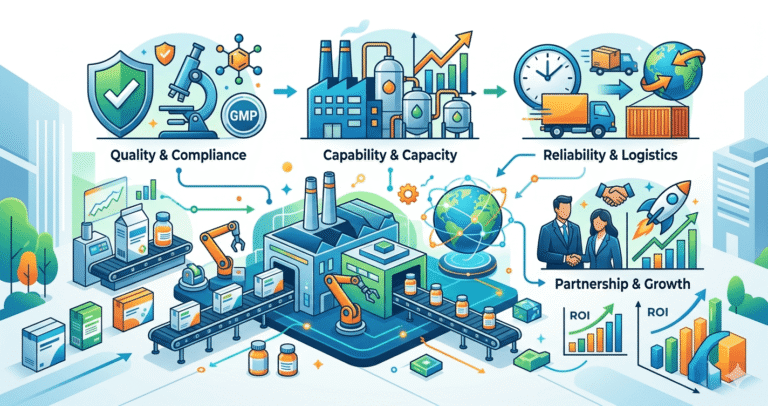
What is Third Party Pharma Manufacturing?
Third party pharma manufacturing is a business model where:
- You own the brand name
- A licensed manufacturer produces your medicines
- You market and distribute them through a PCD pharma franchise network
This includes:
- Tablets
- Capsules
- Syrups
- Injections
- Ointments
- Antibiotics & general range products
It is the backbone of the PCD pharma franchise in the India ecosystem.
But here is the truth most beginners miss:
The manufacturer you choose directly controls your brand reputation, cash flow cycle, and market survival.
Why Manufacturer Selection Decides 70% of Your Pharma Business Success
In real-world pharma distribution, success is not driven by branding alone.
It depends on:
- Supply consistency
- Product acceptance in chemist shops
- Doctor repeat prescriptions
- Batch quality consistency
- Delivery reliability
Based on distributor feedback across Tier-2 and Tier-3 cities:
- 60–70% of retailers prefer stable brands over new flashy ones
- A single quality failure can permanently damage trust in a region
- A 7–10 day supply delay can break repeat order cycles
So yes — your manufacturer is not just a supplier.
They are your silent business partner controlling market perception.

Core Selection Criteria for Third Party Manufacturer
1. Certifications (GMP, WHO-GMP, ISO) – But Not Blindly
Most beginners believe:
“GMP certified means safe and reliable.”
But in my audits, I’ve seen:
- Certificates that are not backed by actual compliance
- Temporary upgrades before inspections
- Documentation stronger than production discipline
Real check points:
- Batch record consistency
- QA/QC lab capability
- On-ground hygiene standards
- Staff training depth
Certifications are entry-level filters — NOT quality guarantees.
2. Product Quality Consistency
In the pharma business, consistency is more important than initial quality.
Problems I’ve seen:
- Same product shows different results in different batches
- Tablet dissolution variation
- Syrup viscosity inconsistency
- Antibiotics showing weak clinical response
Business impact:
- Retailer complaints
- Return pressure
- Brand rejection in key markets
3. MOQ (Minimum Order Quantity) Flexibility
Low MOQ looks attractive for beginners.
But here’s the reality:
Too low MOQ often means:
- Poor batch control
- Unstable production planning
- Delayed dispatch cycles
In 80% of scaling distributors I’ve worked with, growth started only after switching to stable MOQ partners, not lowest MOQ suppliers.
4. Pricing Transparency
Many manufacturers advertise:
- “Lowest rate in India”
- “Best wholesale pricing”
But later:
- Prices change after onboarding
- Hidden charges in packaging
- Extra costs for artwork, labels, logistics
Always demand:
- Final landed cost
- Packaging inclusion clarity
- Reprint policy
5. Delivery Timelines & Supply Reliability
In pharma distribution:
Speed = Trust
If supply is delayed beyond 7–10 days, retailers quickly shift preference.
I’ve seen entire districts switch brands due to repeated dispatch delays.
6. Packaging & Branding Standards
Weak packaging leads to:
- Retailer rejection
- Low perceived quality
- Competitor advantage
Check:
- Foil sealing quality
- Box durability
- Label clarity
- Batch printing accuracy
7. Communication & Support System
A hidden success factor:
- Fast response teams
- Dedicated franchise manager
- Transparent complaint handling
Poor communication = operational chaos during scaling phase.
How Third Party Manufacturing Works in Real Indian Market Conditions
On paper, it looks simple:
- You give order
- Manufacturer produces
- Goods are delivered
- You sell
But reality includes:
- Credit cycle pressure
- Dispatch delays
- Seasonal production load
- Raw material dependency
- Regulatory bottlenecks
Especially in peak demand seasons, manufacturers prioritize larger clients first.
Real Benefits
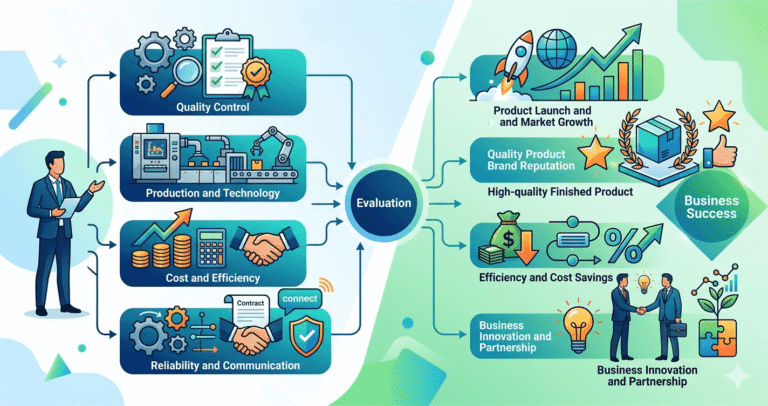
Faster market entry
A strong third party manufacturer helps you launch products quickly without long setup delays. This allows you to enter new markets faster and start generating sales in a shorter time.
Stable product quality
Consistent quality ensures every batch performs the same in the market. This builds trust among doctors, chemists, and patients, reducing complaints and returns.
Better doctor acceptance
When product quality and packaging are reliable, doctors are more likely to prescribe your brand repeatedly. This improves long-term prescription-based demand.
Strong franchise network growth
Reliable supply and consistent products from leading pharma third party manufacturing companies make it easier to onboard and retain franchise partners. This supports faster expansion of your distribution network across regions.
Predictable cash flow
Stable pricing, timely delivery, and repeat orders create a smooth cash flow cycle. This helps you manage inventory and business growth without financial pressure.
Hidden Risks & Failure Reasons
Fake or outdated GMP claims
Some manufacturers display GMP certificates that are expired, copied, or not fully valid in practice. This creates a false sense of compliance and can lead to serious quality and regulatory risks.
Outsourced production without disclosure
Many companies secretly outsource production to smaller units without informing the client. This often leads to inconsistent quality and lack of control over actual manufacturing standards.
Inconsistent raw material sourcing
Using different or low-grade raw material batches affects product effectiveness. This results in variation in quality, reducing trust from doctors and chemists.
Sudden price revision after 2–3 months
Some manufacturers initially offer low pricing but later increase costs unexpectedly. This disrupts profit margins and creates financial instability for franchise partners.
Batch variation during high demand
During peak demand, manufacturers may rush production, leading to batch-to-batch differences. This affects product performance and damages long-term brand reliability.
What Most Pharma Companies Won’t Tell You
In my field audits:
- Some units “rent” GMP documentation
- QC testing is sometimes symbolic, not functional
- Packaging subcontracting reduces quality control
- Same formulation may differ across batches
This is why verification is more important than brochure claims.
Real Case Studies
Case 1: ₹1.5 Lakh Stock Loss Due to Poor Manufacturer
A distributor in Indore invested heavily in branding.
But due to inconsistent quality:
- Retailers stopped reordering
- Entire stock was rejected in 3 months
- Financial loss: ₹1.5 lakh+
Case 2: Fast Growth with Reliable Manufacturer
A Jaipur-based startup chose a high-quality manufacturer despite higher pricing.
Result:
- Faster doctor acceptance
- Strong repeat orders
- Break-even in 5 months
Case 3: Credit Cycle Collapse
A Tier-2 distributor faced:
- 45-day payment cycle from retailers
- But manufacturer demanded advance payment
Result: Cash flow mismatch → business stress → scaling stopped.
7-Step Pharma Manufacturer Selection Framework
Step 1: Verify Certifications On-Site
Always visit the manufacturing unit instead of relying on PDF certificates. This helps confirm whether GMP, WHO-GMP, and ISO claims are genuinely implemented in real operations.
Step 2: Check Batch Consistency Samples
Request samples from different production batches of the same product. This helps you verify whether quality remains stable over time or varies between batches.
Step 3: Evaluate QC/QA Lab Strength
Don’t just check if a lab exists—evaluate its actual testing capability and equipment. A strong QC/QA system ensures safer, more consistent pharmaceutical output.
Step 4: Analyze Delivery Track Record
Speak with existing distributors to understand real delivery performance. Timely dispatch is critical for maintaining stock flow and retailer trust.
Step 5: Test Communication Speed
Before finalizing, check how quickly they respond to queries and issues. Slow communication later can create serious operational delays in business.
Step 6: Compare Hidden Costs
Go beyond product price and evaluate packaging, artwork, and logistics charges. Transparent costing helps avoid unexpected profit margin losses later.
Step 7: Start With Small Trial Order
Begin with a limited order to test quality, service, and reliability. This reduces risk before committing to large-scale long-term partnership.
Expert-Level Mistakes to Avoid
- Choosing lowest price supplier
- Ignoring batch testing
- Skipping factory visit
- Over-relying on broker recommendations
- Not checking supply chain stability
Who Should Start & Who Should Avoid This Model
Suitable For:
- Pharma distributors
- Medical representatives
- Entrepreneurs with ₹1–5 lakh starting capital
- People with doctor/chemist network
Should Avoid:
- No industry understanding
- Expecting instant profits
- No patience for supply chain cycles
Conclusion
In real pharma business:
Your manufacturer is your brand backbone, growth engine, and risk controller
Choosing the wrong one can destroy your business even if marketing is strong.
But choosing the right one can:
- Reduce failure risk
- Improve brand trust
- Accelerate market penetration
- Stabilize long-term income
If you are serious about building a scalable PCD pharma franchise in India, treat manufacturer selection not as a purchase decision — but as a strategic partnership decision.
Third Party Manufacturer Selection Criteria : FAQs
Q1. What is the most important factor while choosing a third party pharma manufacturer?
Q2. Is GMP certification enough to select a pharma manufacturer?
Q3. Why do most pharma franchise businesses fail in India?
Q4. What is a safe MOQ for starting a pharma franchise business?
Q5. How do I verify a third party pharma manufacturer before partnering?
References
ABOUT THE AUTHOR

Mitesh Vyas
My name is Mitesh Vyas, and I am a Pharma Franchise Consultant and Industry Research Analyst specializing in India’s PCD pharma business ecosystem. My work focuses on helping beginners, distributors, and small pharma entrepreneurs understand the real-world functioning of the pharma franchise model. Unlike theoretical content, my insights are based on ground-level observations from Indian pharmaceutical markets, including Tier-1, Tier-2, and Tier-3 cities such as Ahmedabad, Indore, Lucknow, and surrounding business hubs. I regularly share insights on how the pharma franchise business in India works in real market conditions, including investment, product strategy, and growth challenges.