
How To Select The Right Pharma Manufacturers?: Most people think success in a PCD pharma franchise in India depends on marketing, MR activity, or investment.
That’s only half the truth.
In my experience working with 50+ distributors, manufacturer selection alone decides nearly 60% of your success or failure.
Here’s the harsh reality:
- You can have a strong sales strategy
- You can visit doctors daily
- You can push retailers aggressively
But if your manufacturer fails in supply, quality, or consistency, your entire business collapses silently.
And this is exactly where most beginners make a mistake.
They choose companies based on:
- Monopoly promises
- Attractive price lists
- Fancy product catalogs
Instead of focusing on what actually drives business:
Product movement + supply reliability + market acceptance
In this guide, I’ll break down:
- How manufacturer selection really works on ground
- What companies claim vs what actually happens
- A practical framework to choose the right partner

Why Choosing the Right Pharma Manufacturer is Critical
A pharma manufacturer is not just your supplier—when working with PCD Pharma Franchise Companies in India, they act as your backend business engine.
Cause → Effect → Outcome
1. Poor Manufacturing Quality
When product quality is inconsistent, doctors quickly lose confidence because patient results become unpredictable. In real practice, even 1–2 bad outcomes can stop prescriptions completely, and once trust is broken, it’s very hard to rebuild.
2. Irregular Supply
If your products are not consistently available, retailers stop relying on you and shift to brands that deliver on time. In my experience, even a few missed supplies can break your repeat order cycle and damage long-term relationships.
3. Weak Product Portfolio
A large product list means nothing if those products don’t have real market demand or prescription support. Distributors often end up with slow-moving stock, which blocks cash flow and increases expiry risk over time.
In 70% of failed cases I’ve audited, the root problem was:
Wrong company selection, not poor marketing

How It Actually Works in the Real Market
Let’s move away from theory and understand ground reality.
1. Supply Chain Reality
Most companies claim:
“Fast delivery” and “Always available stock”
But in reality:
- Many depend on third-party manufacturers
- Production delays are common
- Stock-outs happen frequently
Even a 7–10 day stock gap can break your entire cycle.
2. Doctor Dependency (Micro-Level Truth)
Doctors don’t switch brands easily.
Why?
- They trust proven results
- They avoid risk with new brands
- They prefer companies with consistent availability
What happens:
You promote a product → Doctor prescribes → Patient goes to chemist
If product is unavailable → Doctor loses trust
After 2–3 such incidents, your brand is permanently ignored.
3. Retailer Behavior
In most markets (60–70% cases):
Retailers prefer fast-moving and easily available brands
They don’t care about:
- Monopoly rights
- Fancy packaging
They care about:
- Margin
- Availability
- Replacement policy
4. Stock Movement Truth
A product doesn’t sell because it exists.
It sells when:
- Doctors prescribe
- Retailers trust
- Supply is consistent
Most beginners underestimate this.

Key Factors To Evaluate Pharma Manufacturers
1. Product Quality Consistency
Why it matters:
Quality variations damage doctor trust instantly.
How to verify:
Check Certifications (WHO-GMP, ISO)
Certifications indicate that the company follows standard manufacturing practices, but don’t rely on them blindly. In real market audits, I’ve seen certified companies still face quality and supply issues—so treat this as a starting point, not final proof.
Ask for Batch Consistency Proof
Consistent quality across batches is what builds long-term doctor trust. Always ask for recent batch reports or compare samples—because even small variations can lead to prescription rejection in the market.
Take Feedback from Existing Distributors
Nothing reveals the truth better than real distributor experience. Speak to 2–3 existing partners to understand supply reliability, complaint handling, and actual support—this often exposes gaps that companies won’t tell you directly.
What happens if ignored:
- Doctor rejection
- Complaints
- Market reputation damage
2. Product Portfolio (Not Quantity, But Movement)
Many companies show 300+ products.
Reality:
Only 30–40 products actually move.
Focus on:
- Antibiotics
- Syrups
- Tablets with real demand
Ask:
“Which products generate repeat orders?”
3. Supply Consistency
In Tier-2 markets like Ahmedabad, Indore:
Availability matters more than branding.
Test this by:
- Placing small trial orders
- Checking delivery timelines
- Monitoring stock continuity
4. Company Background & Stability
Check:
- Years in operation
- Manufacturing vs trading company
- Market reputation
New companies often overpromise to acquire distributors.
5. Pricing vs Market Fit
Low price doesn’t mean high sales.
Cause:
Cheap pricing → low doctor confidence
Outcome:
Product remains unsold
6. Marketing & Field Support
Most companies promise:
- Visual aids
- MR support
- Promotional tools
Reality:
50% of this exists only during onboarding.
Read More: Can Beginners Start A Pharma Franchise?
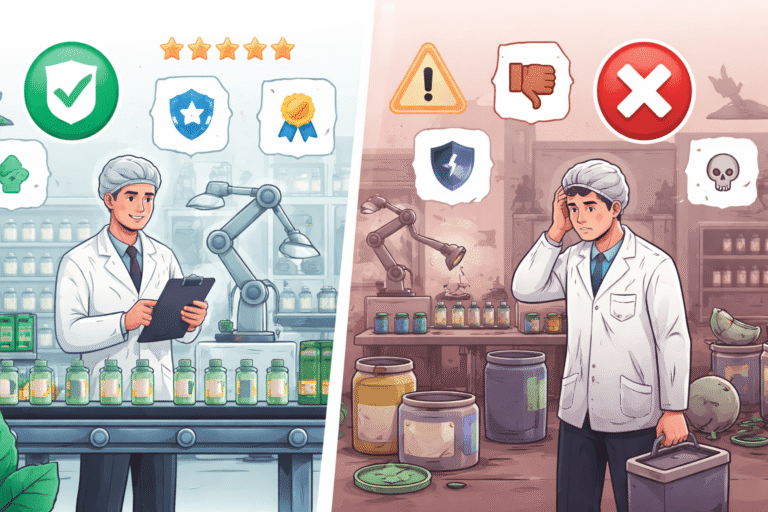
Good Manufacturer vs Bad Manufacturer
| Factor | Good Manufacturer | Bad Manufacturer |
|---|---|---|
| Supply | Consistent | Frequent stock-outs |
| Quality | Stable batches | Variation issues |
| Products | Market-driven | Random list |
| Support | Practical | Only verbal promises |
| Focus | Long-term | Quick onboarding |

Hidden Challenges & Failure Reasons
From real audits, these are the most common reasons for failure:
1. Overdependence on Monopoly
Monopoly sounds attractive, but in real markets, it doesn’t create demand. If doctors aren’t prescribing and retailers aren’t pushing your products, exclusivity has no value. In many cases I’ve seen, distributors hold monopoly rights—but still struggle with zero movement.
2. Ignoring Supply Testing
Most beginners invest ₹1–2 lakh upfront without checking how reliable the company actually is. The problem starts after 2–3 months when stock delays begin, and by then your money is already stuck. A small trial order could have revealed this early.
3. Choosing Based on Price
Low pricing gives a false sense of advantage, especially to new distributors. But in practice, doctors often avoid cheap brands due to quality perception, and retailers prefer brands that move fast—not just higher margins. This leads to slow sales and blocked capital.
4. No Market Validation
Selecting products without checking doctor preference or retailer demand is one of the most common mistakes. In real scenarios, this results in stock that looks good on paper but doesn’t sell in the market, increasing expiry risk and cash flow pressure.

What Most Pharma Companies Won’t Tell You
This is where reality hits.
1. Monopoly Is Often Not Exclusive
Many companies promise area monopoly, but in reality, similar compositions are already being sold nearby under different brand names. This reduces your competitive advantage, and you end up competing in the same market despite having “exclusive rights.”
2. Stock Availability Is Not Guaranteed
A long product list looks impressive on paper, but it doesn’t ensure those products are actually available when needed. In real market conditions, frequent stock-outs can break doctor trust and push retailers to switch to more reliable brands.
3. Third-Party Dependency
Many pharma companies rely on third-party manufacturers instead of producing in-house. This often leads to delays, inconsistent supply, and variation in product quality—issues that directly affect your credibility in front of doctors and retailers.
4. Fake Marketing Support
At the time of onboarding, companies often promise visual aids, promotional materials, and field support. But in many cases, these commitments fade after payment, leaving distributors to manage marketing entirely on their own.
Real Case Scenarios
Case 1: ₹2 Lakh Investment Failure
A distributor invested ₹2 lakh with a company offering monopoly.
Problem:
- Products unavailable after 2 months
- Retailers stopped ordering
Outcome:
40% stock remained unsold
Case 2: Doctor Rejection
A beginner selected a low-cost manufacturer.
Problem:
- Doctors didn’t trust the brand
Outcome:
No prescriptions → zero movement
Case 3: Dispatch Delay Impact
A distributor built a good retailer network.
Problem:
- Company delayed dispatch by 10–12 days
Outcome:
Retailers switched to competitors

Who Should Choose Carefully
Beginners
High risk:
- Lack of market understanding
- Easily influenced by offers
Must focus on reliability over margin
Experienced Distributors
Can take calculated risks But still prioritize:
- Supply chain
- Product movement

7-Step Framework To Select The Right Pharma Manufacturer
Step 1: Check Company Background
Don’t just look at how long the company has existed—understand how stable and active it is in the market. In my experience, companies with consistent operations and in-house manufacturing tend to offer better long-term reliability than newly launched or purely trading firms.
Step 2: Validate Certifications
Certifications like WHO-GMP, ISO, and DCGI approvals indicate regulatory compliance, but they are only the baseline. Always cross-check whether these certifications are current and applicable to the actual products you plan to sell.
Step 3: Analyze Product Demand
Focus on products that already have prescription demand in your target area. A strong portfolio is not about quantity—it’s about whether doctors are actively prescribing those molecules and retailers are regularly stocking them.
Step 4: Test Supply
Before committing a big investment, place small trial orders to check delivery timelines and stock consistency. This step alone can reveal hidden supply issues that most companies won’t disclose upfront.
Step 5: Market Feedback
Speak directly with existing distributors to understand real challenges like stock availability, complaint handling, and support. Honest feedback from the field often gives more clarity than any company presentation.
Step 6: Evaluate Support
Don’t rely on verbal promises of promotional support—verify what is actually provided after onboarding. In many cases, distributors are left on their own once the initial order is completed.
Step 7: Start Controlled Investment
Avoid putting ₹1–2 lakh at the beginning without testing the system. Start small, evaluate performance over 2–3 months, and then scale based on real results, not expectations.
Expert Mistakes To Avoid
- Choosing company based on monopoly only
- Ignoring supply chain testing
- Investing heavily at the start
- Not validating doctor acceptance
- Falling for low pricing traps
Conclusion
Selecting the right pharma manufacturer is not about:
- Who offers the highest margin
- Who promises monopoly
- Who has the biggest product list
It’s about:
Who can consistently support your business in the real market
In my experience:
- Reliable companies grow slow but steady
- Over-promising companies fail distributors quickly
If you’re serious about starting a pharma franchise or scaling your pharma franchise business model,
then your first decision should not be marketing…
It should be choosing the right manufacturer
How To Select The Right Pharma Manufacturers? - FAQS
1. How do I verify a pharma company?
2. Should I trust monopoly rights?
3. What matters more: price or product movement?
4. How long does it take to evaluate a company?
5. How can I quickly identify a reliable pharma manufacturer?
REFERENCES
ABOUT THE AUTHOR

Mitesh Vyas
My name is Mitesh Vyas, and I am a Pharma Franchise Consultant and Industry Research Analyst specializing in India’s PCD pharma business ecosystem. My work focuses on helping beginners, distributors, and small pharma entrepreneurs understand the real-world functioning of the pharma franchise model. Unlike theoretical content, my insights are based on ground-level observations from Indian pharmaceutical markets, including Tier-1, Tier-2, and Tier-3 cities such as Ahmedabad, Indore, Lucknow, and surrounding business hubs. I regularly share insights on how the pharma franchise business in India works in real market conditions, including investment, product strategy, and growth challenges.