
The veterinary pharmaceutical industry plays a vital role in protecting animal health, supporting livestock productivity, and ensuring food safety. As the demand for high-quality veterinary medicines continues to grow, manufacturers also face increasing pressure to reduce their environmental impact.
Green Manufacturing in Veterinary Pharma focuses on producing veterinary medicines through environmentally responsible processes. It aims to reduce waste, conserve natural resources, lower carbon emissions, and improve operational efficiency without compromising product quality or regulatory compliance.
Today, veterinary medicine manufacturers in India are increasingly investing in sustainable manufacturing technologies to meet global standards, strengthen brand reputation, and create long-term business value.
A Simple Guide to Green Manufacturing In Veterinary Pharma
Green Manufacturing in Veterinary Pharma refers to the use of eco-friendly production methods that minimize environmental impact while maintaining the safety, quality, and effectiveness of veterinary medicines.
It includes:
- Energy-efficient manufacturing facilities
- Water conservation systems
- Waste reduction and recycling
- Responsible sourcing of raw materials
- Eco-friendly packaging
- Cleaner production technologies
- Compliance with GMP and environmental regulations
These practices help veterinary pharmaceutical manufacturers improve operational efficiency, reduce production costs, enhance regulatory compliance, and contribute to sustainable healthcare.
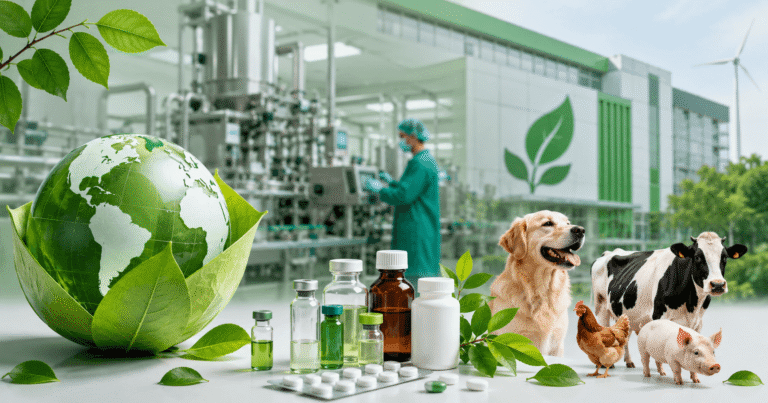
What is Green Manufacturing in Veterinary Pharma?
Green manufacturing is a production approach that integrates sustainability into every stage of veterinary medicine manufacturing.
Instead of focusing only on production output, manufacturers also evaluate:
- Energy consumption
- Water usage
- Air emissions
- Chemical handling
- Waste disposal
- Packaging materials
- Supply chain sustainability
The goal is to manufacture veterinary medicines while reducing the environmental footprint throughout the product lifecycle.
This approach supports responsible pharmaceutical production and aligns with global sustainability goals.
Why Sustainability Matters in Veterinary Pharma
The veterinary healthcare industry continues to expand because of:
- Growing livestock farming
- Increasing pet ownership
- Rising awareness of animal health
- Export opportunities
- Demand for quality veterinary medicines
With this growth comes greater responsibility to reduce pollution, conserve natural resources, and ensure responsible manufacturing practices.
Green manufacturing helps companies balance business growth with environmental protection.
Sustainable Practices Used by Veterinary Pharmaceutical Manufacturers
1. Energy-Efficient Manufacturing Plants
Modern veterinary pharma manufacturing companies install:
- Solar power systems
- LED lighting
- Energy-efficient HVAC systems
- Smart production equipment
- Automated process controls
These upgrades reduce electricity consumption while lowering production costs.
2. Water Conservation
Water plays an important role in pharmaceutical manufacturing.
Sustainable manufacturers use:
- Rainwater harvesting
- Water recycling systems
- Effluent treatment plants (ETPs)
- Closed-loop cleaning systems
- Low-water cleaning technologies
These practices help conserve fresh water and reduce wastewater discharge.
3. Waste Management
Green pharmaceutical manufacturing focuses on reducing waste generation.
Manufacturers implement:
- Waste segregation
- Recycling programs
- Safe disposal of hazardous materials
- Solvent recovery systems
- Reuse of packaging materials where applicable
Effective waste management also supports regulatory compliance.
4. Environment-Friendly Packaging
Packaging contributes significantly to pharmaceutical waste.
Many veterinary medicine manufacturers now use:
- Recyclable cartons
- Biodegradable materials
- Lightweight packaging
- Reduced plastic usage
- Sustainable printing inks
Eco-friendly packaging reduces environmental impact throughout the supply chain.
5. Responsible Raw Material Sourcing
Reliable veterinary medicine manufacturers carefully select suppliers that follow ethical and sustainable sourcing practices.
This includes:
- Quality-certified raw materials
- Traceable supply chains
- Responsible chemical procurement
- Reduced transportation emissions
Sustainable sourcing improves both product quality and supply reliability.
6. Cleaner Production Technologies
Advanced manufacturing technologies help reduce:
- Chemical waste
- Energy consumption
- Air pollution
- Product loss
- Manufacturing errors
Automation also improves batch consistency and product quality.
Benefits of Green Manufacturing in Veterinary Pharma
Better Environmental Protection
Green manufacturing helps veterinary pharmaceutical companies reduce air, water, and soil pollution by using cleaner production methods. It also conserves natural resources through responsible energy use, water recycling, and sustainable waste management, supporting long-term environmental health.
Improved Product Quality
A clean and well-controlled manufacturing environment improves product consistency and minimizes the risk of contamination. This helps ensure veterinary medicines meet strict quality standards and provide safe, reliable treatment for animals.
Lower Operating Costs
Energy-efficient equipment, optimized production processes, and waste reduction help manufacturers lower operating expenses over time. These savings can also support better pricing, continuous innovation, and long-term business sustainability.
Stronger Regulatory Compliance
Sustainable manufacturing facilities are better prepared to comply with Good Manufacturing Practices (GMP), ISO standards, and environmental regulations. Following these standards strengthens product quality, regulatory readiness, and customer confidence.
Higher Customer Trust
Veterinarians, distributors, and healthcare professionals value manufacturers that prioritize quality, safety, and environmental responsibility. Demonstrating sustainable practices helps build long-term trust and strengthens a company’s reputation in the veterinary pharmaceutical industry.
Better Export Opportunities
Many global markets prefer veterinary pharmaceutical products manufactured in environmentally responsible facilities. Adopting green manufacturing practices can improve compliance with international expectations and create more opportunities for exports and long-term business growth.
Applications of Green Manufacturing
Green manufacturing benefits almost every veterinary pharmaceutical product category, including:
- Antibiotics
- Anthelmintics
- Feed supplements
- Nutritional products
- Injectable medicines
- Oral liquids
- Boluses
- Powders
- Herbal veterinary formulations
- Pet healthcare products
- Poultry healthcare medicines
- Dairy animal healthcare products
Key Features of a Sustainable Veterinary Pharma Manufacturing Company
A responsible veterinary pharma manufacturing company typically offers:
- GMP-certified production units
- Quality assurance systems
- Environmental compliance
- Advanced manufacturing technology
- Modern quality control laboratories
- Sustainable packaging options
- Efficient inventory management
- Ethical sourcing practices
- Skilled technical teams
- Continuous process improvement
Green Manufacturing Across Different Business Models
Sustainability benefits every manufacturing model in the veterinary pharmaceutical industry.
Veterinary Third Party Manufacturing
Companies offering veterinary third party manufacturing help reduce environmental impact by using energy-efficient production systems, minimizing material waste, and optimizing manufacturing resources. These sustainable practices enable multiple brands to manufacture high-quality veterinary medicines while lowering their overall environmental footprint.
Veterinary Contract Manufacturing
A trusted veterinary contract manufacturing partner follows standardized quality systems while improving resource efficiency throughout the production process. By adopting sustainable manufacturing practices, these companies maintain product quality, meet regulatory standards, and reduce energy and waste generation.
Veterinary Private Label Manufacturing
Modern veterinary private label manufacturing providers offer eco-friendly packaging materials, sustainable production methods, and responsible sourcing of raw materials. These initiatives help businesses build environmentally responsible brands without compromising product quality or regulatory compliance.
Veterinary Medicine Manufacturing Services
Reliable veterinary medicine manufacturing services cover product development, manufacturing, quality assurance, regulatory support, sustainable sourcing, and efficient supply chain management. This integrated approach helps deliver safe, high-quality veterinary medicines while supporting long-term environmental sustainability. Manufacturers should also follow internationally recognized Good Manufacturing Practices (GMP) to ensure product quality, safety, and consistency
Comparison Table: Conventional vs Green Veterinary Manufacturing
Feature | Conventional Manufacturing | Green Manufacturing |
Energy Usage | High | Optimized |
Water Consumption | Higher | Reduced through recycling |
Waste Generation | More | Minimized |
Packaging | Standard | Eco-friendly |
Production Cost | Higher over time | Lower long-term cost |
Regulatory Readiness | Standard compliance | Strong environmental compliance |
Brand Reputation | Limited sustainability value | Strong sustainability image |
Resource Efficiency | Moderate | High |
Market Demand and Business Opportunity
India has become one of the fastest-growing pharmaceutical manufacturing hubs, and the veterinary sector continues to expand across livestock, poultry, aquaculture, and companion animal healthcare.
As sustainability becomes an important purchasing factor, veterinary medicine manufacturers in India adopting green manufacturing practices gain several advantages:
- Stronger distributor confidence
- Increased export opportunities
- Better long-term profitability
- Improved regulatory preparedness
- Enhanced brand reputation
- Greater investor interest
- Competitive differentiation
Businesses seeking sustainable veterinary medicine manufacturing increasingly evaluate quality, certifications, pricing, manufacturing capabilities, and environmental responsibility before choosing a manufacturing partner.
Expert Recommendations
Companies planning to adopt Green Manufacturing in Veterinary Pharma should focus on practical improvements rather than one-time initiatives.
Recommended steps include:
- Conduct regular energy audits.
- Upgrade to energy-efficient machinery.
- Install water recycling systems.
- Implement waste segregation at the source.
- Choose sustainable packaging materials.
- Train employees on environmental practices.
- Monitor carbon footprint regularly.
- Partner with certified raw material suppliers.
- Digitize quality documentation.
- Continuously improve manufacturing efficiency.
Small improvements across multiple production areas often create significant long-term benefits.
Conclusion
Green Manufacturing in Veterinary Pharma has evolved from an environmental initiative into a strategic business advantage. Sustainable production practices help manufacturers improve efficiency, reduce operational costs, strengthen regulatory compliance, and build long-term trust among veterinarians, distributors, and business partners.
As the veterinary healthcare industry continues to grow, adopting environmentally responsible manufacturing practices will become increasingly important for companies seeking long-term success. Whether providing veterinary contract manufacturing, veterinary private label manufacturing, or complete veterinary medicine manufacturing services, sustainability now plays a key role in delivering quality products while protecting the environment.
Note: Manufacturing practices should always comply with applicable Good Manufacturing Practices (GMP), environmental regulations, and relevant national and international quality standards. Sustainability initiatives should never compromise product safety, efficacy, or quality.
Green Manufacturing in Veterinary Pharma - FAQs
What is Green Manufacturing in Veterinary Pharma?
Why is green manufacturing important?
Do sustainable manufacturing practices affect medicine quality?
Can veterinary third party manufacturing companies follow green practices?
How does green manufacturing support exports?
ABOUT THE AUTHOR

Mitesh Vyas
My name is Mitesh Vyas, and I am a Pharma Franchise Consultant and Industry Research Analyst specializing in India’s PCD pharma business ecosystem. My work focuses on helping beginners, distributors, and small pharma entrepreneurs understand the real-world functioning of the pharma franchise model. Unlike theoretical content, my insights are based on ground-level observations from Indian pharmaceutical markets, including Tier-1, Tier-2, and Tier-3 cities such as Ahmedabad, Indore, Lucknow, and surrounding business hubs. I regularly share insights on how the pharma franchise business in India works in real market conditions, including investment, product strategy, and growth challenges.