
Difference Between Ayurvedic Manufacturing And Third-party Manufacturing : The Indian pharmaceutical and wellness industry has grown rapidly over the last few years. Ayurvedic products, herbal medicines, nutraceuticals, and natural healthcare solutions now have strong demand across India and international markets.
Many pharma businesses, distributors, and startups often get confused between Ayurvedic manufacturing and third-party manufacturing. They sound similar, but both follow different business models.
If you want to start your own herbal brand, expand a PCD pharma business, or work with an Ayurvedic medicine manufacturing company, understanding the difference becomes important before making investment decisions.

What Is the Difference Between Ayurvedic Manufacturing And Third-Party Manufacturing?
Ayurvedic manufacturing refers to the process of producing Ayurvedic medicines and herbal products inside a company’s own licensed production facility using traditional formulations and regulatory standards.
Third-party manufacturing refers to outsourcing product manufacturing to another company that already owns production facilities and regulatory approvals.
In simple words: Difference Between Ayurvedic Manufacturing And Third-party Manufacturing
- Ayurvedic manufacturing focuses on making products.
- Third-party manufacturing focuses on outsourcing production.
A company can also provide Third-party Ayurvedic manufacturing services where it manufactures Ayurvedic products for other brands.
Understanding Ayurvedic Manufacturing
Ayurvedic manufacturing means producing herbal medicines, syrups, capsules, tablets, oils, powders, or wellness products based on Ayurvedic principles and formulations.
Manufacturers follow traditional Ayurvedic knowledge along with modern production practices.The Ayurvedic manufacturing process usually includes:
Step 1: Raw Material Procurement
The manufacturing process starts with sourcing high-quality herbs, roots, leaves, plant extracts, minerals, and other natural ingredients. Manufacturers conduct initial quality checks to ensure raw materials meet safety and purity standards.
Step 2: Ingredient Testing
Experts test raw materials for purity, moisture levels, contamination, microbial presence, and heavy metals. Proper testing helps maintain product safety and ensures consistent quality.
Step 3: Formulation Development
Specialists develop formulations based on classical Ayurvedic texts, proprietary research, and specific product goals. This stage ensures the final product delivers the intended health benefits.
Step 4: Production
Manufacturing teams process ingredients into different dosage forms such as tablets, capsules, syrups, churna, oils, gels, and powders. Modern machinery and standardized procedures support efficient production.
Step 5: Quality Testing
Manufacturers perform detailed testing to evaluate product stability, safety, potency, and consistency. Quality checks help maintain effectiveness and compliance with industry standards.
Step 6: Packaging And Labeling
The final products go through packaging and labeling according to regulatory and compliance requirements. Proper packaging protects the product and provides important information for users.
What Is Third-Party Manufacturing?
Third-party manufacturing is a process where one company produces products for another company under a private label or brand name. It allows businesses to market their own products without setting up a manufacturing facility.
This model helps companies save investment costs on infrastructure, machinery, and production management. Many startups, distributors, and pharma businesses choose third-party manufacturing because it supports faster product launches and business expansion while aligning with quality-focused healthcare practices promoted by the World Health Organization.
In the pharmaceutical and Ayurvedic industry, businesses often partner with manufacturers to produce tablets, capsules, syrups, powders, and herbal products while focusing on branding, sales, and distribution activities.
How Third-Party Ayurvedic Manufacturing Works
The process usually looks like this: Difference Between Ayurvedic Manufacturing And Third-party Manufacturing
- Product selection
- Formula discussion
- Quotation approval
- Documentation process
- Manufacturing
- Packaging
- Delivery
This model helps businesses enter the market quickly.
Difference Between Ayurvedic Manufacturing And Third-Party Manufacturing
| Factors | Ayurvedic Manufacturing | Third-Party Manufacturing |
|---|---|---|
| Ownership | Company owns manufacturing unit | External company owns manufacturing unit |
| Investment Requirement | High | Low |
| Infrastructure Cost | Required | Not required |
| Machinery Investment | High | No investment |
| Licensing Responsibility | Complete responsibility | Mostly manufacturer responsibility |
| Production Control | Direct control | Limited control |
| Time to Market | Longer | Faster |
| Business Risk | Higher | Lower |
| Scalability | Depends on capacity | Easier scaling |
| Suitable For | Large manufacturers | Startups, distributors, PCD companies |
Benefits Of Ayurvedic Manufacturing
Better Production Control
Companies that own manufacturing facilities can maintain direct control over ingredients, quality standards, formulation methods, and product consistency. This control helps ensure better product quality and reliability in the market.
Strong Brand Value
Owning a manufacturing unit can strengthen a company’s image and build trust among customers, distributors, and healthcare professionals. A well-established production setup often creates stronger market credibility.
Higher Long-Term Profits
Although initial investment is high, manufacturers can improve profit margins over time by reducing dependency on external vendors. Large-scale production also supports better cost management.
Product Innovation
Manufacturers can develop unique formulations and customized products based on market demand and customer needs. This flexibility helps businesses introduce innovative products and stay competitive.
Benefits Of Third-Party Ayurvedic Manufacturing
Lower Investment Requirement
Third-party manufacturing reduces the need for large capital investment because businesses do not need to purchase land, install machinery, or build production units. This model helps startups and small companies enter the market more easily.
Faster Business Setup
Companies can launch products in a shorter time because manufacturing facilities and processes already exist. This approach helps businesses enter the market quickly and start operations without delays.
Focus On Sales And Marketing
Business owners can spend more time on branding, product promotion, distribution networks, and customer relationships. This helps improve market reach and business growth.
Reduced Operational Burden
Manufacturing partners handle production activities, quality testing, packaging, and documentation requirements. This reduces workload and allows businesses to focus on core operations.
Uses Of Third-Party Manufacturing In Pharma Industry
Third-party manufacturing supports multiple healthcare businesses: Difference Between Ayurvedic Manufacturing And Third-party Manufacturing
- PCD pharma franchise companies
- Medical store owners
- Distributors
- Herbal startups
- Wellness brands
- Export businesses
- Online healthcare brands
- Hospitals
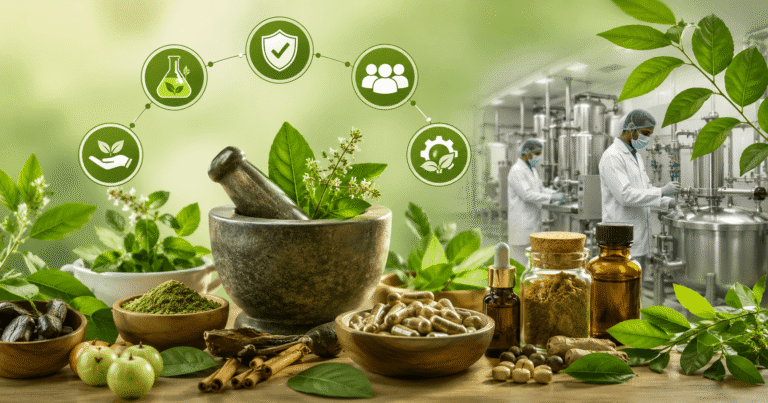
Key Features Of A Good Ayurvedic Medicine Manufacturing Company
Certifications And Licenses
Always choose a professional Ayurvedic manufacturer in India with proper certifications and regulatory approvals such as GMP, AYUSH, ISO, and FSSAI where applicable. These certifications indicate compliance with quality, safety, and manufacturing standards and help ensure product reliability.
Product Range
A reliable manufacturing company should offer a wide range of products including tablets, syrups, capsules, herbal oils, powders, and personal care items. A broad portfolio helps businesses expand product offerings more easily.
Quality Assurance
Quality assurance plays an important role in maintaining product effectiveness and safety. Check whether the company follows laboratory testing procedures, uses quality raw materials, and maintains batch consistency.
Packaging Support
Good manufacturers often provide additional support such as label designing, packaging customization, and private labeling services. Proper packaging improves product presentation and brand identity.
Research And Development Support
Strong research and development teams help create innovative formulations and customized products based on market demand. R&D support also helps businesses stay competitive in the industry.
Composition And Manufacturing Details
Ayurvedic products generally include:
Natural herbs
Examples:
- Ashwagandha
- Tulsi
- Neem
- Shatavari
- Giloy
- Aloe vera
- Brahmi
Other ingredients may include:
- Herbal extracts
- Minerals
- Plant concentrates
- Natural oils
Composition varies according to formulation goals.
Side Effects
Ayurvedic products generally use natural ingredients, but they still require proper usage.
Possible concerns include:
- Allergic reactions
- Digestive discomfort
- Ingredient sensitivity
- Herb-drug interactions
Important note:
People should avoid self-medication and seek advice from healthcare professionals before using any medicinal product.
Dosage Information
Dosage varies according to:
- Age
- Health condition
- Product type
- Formulation strength
Users should always follow:
- Product labels
- Physician recommendations
- Healthcare advice
Market Demand And Business Opportunity
India’s herbal and Ayurvedic industry continues to grow because consumers increasingly prefer natural wellness products.
Growing opportunities exist in:
PCD Pharma Business
The PCD pharma sector continues to create strong demand for Ayurvedic and herbal products. Distributors and franchise partners prefer herbal ranges because consumers increasingly choose natural healthcare solutions.
E-commerce
Online platforms have made Ayurvedic products easily accessible to customers across cities and rural areas. Growing digital awareness and convenient shopping continue to increase demand for herbal supplements.
Export Market
The global demand for Ayurvedic and herbal products has expanded significantly in recent years. Many countries now import Indian Ayurvedic medicines because of rising interest in traditional and natural healthcare.
Preventive Healthcare
People now focus more on preventing health issues instead of treating diseases later. Products related to immunity, wellness, stress management, and overall health continue to gain popularity.
Third-party Ayurvedic Manufacturing Opportunities
Businesses entering Third-party Ayurvedic manufacturing can start operations with lower investment and reduced infrastructure costs. This model also supports faster market entry and easier business expansion.
Expert Recommendations Before Choosing A Manufacturing Model
Choose Ayurvedic manufacturing if:
- You have high investment capacity
- You want complete operational control
- You plan long-term manufacturing expansion
Choose third-party manufacturing if:
- You are starting a new business
- You want lower risk
- You want faster market entry
- You want to focus on sales growth
Practical industry insight
Many successful PCD businesses start with third-party manufacturing and later establish their own production facilities after creating stable market demand.
Conclusion
Understanding the Difference Between Ayurvedic Manufacturing And Third-Party Manufacturing helps businesses make smarter decisions.
Ayurvedic manufacturing provides complete control but requires significant investment and infrastructure. Third-party manufacturing provides flexibility, lower risk, and quicker market entry.
Most startups, distributors, and PCD pharma companies prefer outsourcing during their early growth stage because it reduces operational challenges and improves scalability.
Choose the model that matches your budget, goals, and business strategy.
Difference Between Ayurvedic Manufacturing And Third-party Manufacturing - FAQs
Is third-party manufacturing legal in India?
Which option costs less?
Can I start my own Ayurvedic brand through third-party manufacturing?
Does third-party manufacturing affect quality?
Is Ayurvedic manufacturing profitable?
ABOUT THE AUTHOR

Mitesh Vyas
My name is Mitesh Vyas, and I am a Pharma Franchise Consultant and Industry Research Analyst specializing in India’s PCD pharma business ecosystem. My work focuses on helping beginners, distributors, and small pharma entrepreneurs understand the real-world functioning of the pharma franchise model. Unlike theoretical content, my insights are based on ground-level observations from Indian pharmaceutical markets, including Tier-1, Tier-2, and Tier-3 cities such as Ahmedabad, Indore, Lucknow, and surrounding business hubs. I regularly share insights on how the pharma franchise business in India works in real market conditions, including investment, product strategy, and growth challenges.