
Cosmetic manufacturing companies in India play a vital role in helping beauty brands, retailers, salons, and startups bring products to market without investing in their own production facilities. These manufacturers handle everything from formulation development and ingredient sourcing to quality testing, filling, labeling, and final packaging. Whether you want to launch a simple moisturizer or a complete skincare and haircare range, a reliable manufacturing partner can turn your product concept into a commercially viable product.
India has become a preferred destination for cosmetic manufacturing because it combines cost-effective production with strong technical expertise and access to a wide range of herbal, natural, and scientifically backed ingredients. Many cosmetic manufacturers in India operate GMP-certified facilities and offer services such as private label cosmetics, third-party manufacturing, and custom formulation development. This makes them suitable for both first-time entrepreneurs and established brands looking to expand their product portfolio.
The best cosmetic manufacturing companies do more than produce products. They help with stability testing, microbiological analysis, packaging selection, and regulatory documentation to ensure your products are safe, compliant, and ready for market. For startups, this end-to-end support can significantly reduce development time and operational complexity.
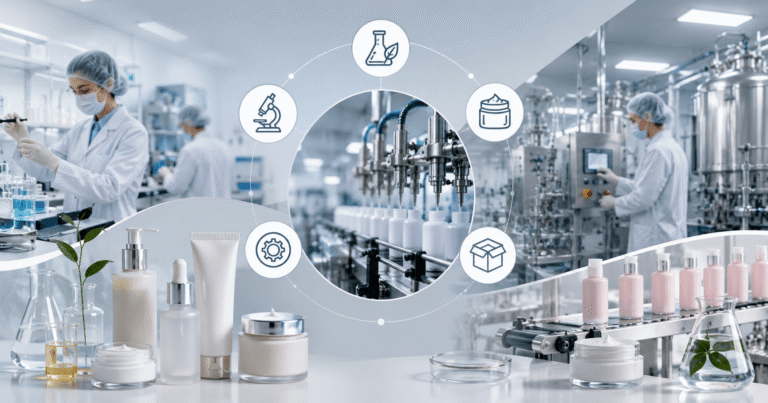
What Are Cosmetic Manufacturing Companies?
Cosmetic manufacturing companies are specialized facilities that formulate, test, produce, fill, and package cosmetic products such as face creams, serums, shampoos, sunscreens, body lotions, and lip care items.
These companies typically offer:
- Private label cosmetics
- Third-party manufacturing
- Contract manufacturing
- Custom formulation
- Packaging and labeling
- Regulatory documentation
- Stability and microbiological testing
In practical terms, they act as your backend production partner while you focus on branding, marketing, and sales.
Why Choosing the Right Manufacturer Matters
In the cosmetics industry, product quality is only one part of success. The real challenge is finding a manufacturer that can maintain batch consistency, deliver on time, and scale production as your orders grow.
Many beauty startups fail not because their product idea is weak, but because:
- Formulations are unstable
- Packaging leaks or breaks
- Delivery timelines slip repeatedly
- MOQ requirements strain cash flow
- Regulatory documents are incomplete
- Product performance differs from sample batches
A reliable cosmetic manufacturing partner reduces these operational risks and gives your brand a stronger foundation.
Why India Is a Preferred Destination for Cosmetic Manufacturing
India has become a major hub for cosmetic production because it offers:
- Cost-effective manufacturing
- Access to herbal and natural ingredients
- Skilled formulation chemists
- WHO-GMP and ISO-certified facilities
- Flexible low minimum order quantities
- Export-ready production capabilities
Manufacturers across states such as Gujarat, Maharashtra, Himachal Pradesh, Uttarakhand, and Punjab serve domestic and international brands.
Cities like Ahmedabad, Mumbai, Chandigarh, and Baddi have developed strong ecosystems for cosmetic, Ayurvedic, and personal care manufacturing.
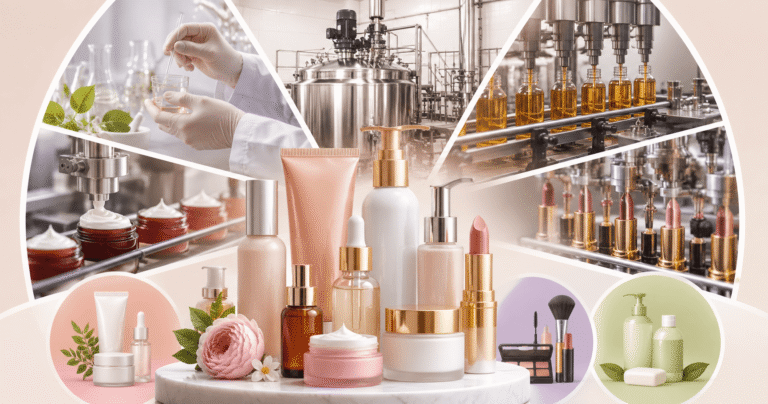
Types of Cosmetic Manufacturing Services in India
Private Label Cosmetic Manufacturing
The manufacturer provides ready-made formulations that you can brand under your own label.
Best for:
- Quick product launches
- Lower R&D costs
- Small to mid-sized businesses
Third-Party Cosmetic Manufacturing
You supply product specifications, and the manufacturer produces the product under your brand.
Best for:
- Distributors
- Marketing companies
- Established beauty brands
Contract Manufacturing
A broader arrangement covering formulation, sourcing, production, filling, and packaging.
Best for:
- Businesses seeking turnkey solutions
Custom Formulation Development
R&D teams create unique formulas based on your concept.
Best for:
- Premium and differentiated products
Products Commonly Manufactured by Cosmetic Companies
Skincare Manufacturing
- Face creams
- Serums
- Moisturizers
- Sunscreens
- Anti-aging products
- Face masks
Haircare Manufacturing
- Shampoos
- Conditioners
- Hair oils
- Hair masks
- Hair serums
Personal Care Manufacturing
- Body lotions
- Shower gels
- Deodorants
- Lip care
Specialized Categories
- Men’s grooming products
- Baby care products
- Cosmeceuticals
- Herbal and natural formulations
- Vegan skincare
- Organic cosmetics
- Cruelty-free products
What Services Leading Cosmetic Manufacturers Offer
Product Development
- Concept validation
- Formula design
- Sample preparation
Testing and Quality Control
- Stability testing
- Microbiological testing
- Compatibility testing
Regulatory Support
- Ingredient compliance
- Documentation
- Label review
Packaging Solutions
- Bottle sourcing
- Jar selection
- Custom packaging
- Filling and packing
Commercial Production
- Bulk production
- Batch coding
- Timely dispatch
Key Certifications to Check Before Finalizing a Manufacturer
Before selecting any cosmetic manufacturers in India, verify their certifications and systems.
Essential Certifications
- WHO-GMP
- ISO 9001
- ISO 22716 (Cosmetic GMP)
- MSME registration
- GST registration
Regulatory Considerations
Cosmetic products in India are regulated under the Cosmetics Rules, 2020, administered by the Central Drugs Standard Control Organization (CDSCO) under the Ministry of Health and Family Welfare.
If products are intended for export, additional country-specific compliance may be required.
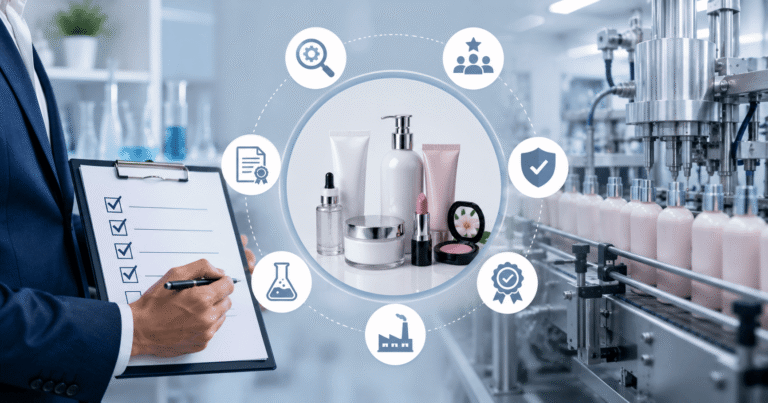
How to Evaluate Cosmetic Manufacturing Companies in India
1. Formulation Expertise
A capable cosmetic manufacturer should be able to develop products that match current market demand, such as sulfate-free shampoos, paraben-free skincare, and natural formulations. Strong R&D support is especially important if you want differentiated products rather than generic stock formulas.
2. Minimum Order Quantity
MOQ directly affects your initial investment and inventory risk. For startups, working with a manufacturer that offers lower MOQs is often more practical than choosing one with slightly lower pricing but larger batch requirements.
3. Batch Consistency
Your first production batch may perform well, but consistency across future batches is what builds customer trust. Variations in texture, fragrance, or color can lead to complaints and weaken repeat purchase rates.
4. Packaging Capabilities
Packaging is a common source of delays in cosmetic manufacturing. Working with experienced cosmetic production companies that offer in-house sourcing and filling capabilities usually provides better control over timelines and reduces coordination issues.
5. Delivery Reliability
Timely dispatch is critical when you are planning product launches, marketplace promotions, or distributor commitments. Repeated delivery delays can affect sales momentum and damage your brand reputation.
6. Quality Assurance Systems
A professional manufacturer should provide standard operating procedures, certificates of analysis, and testing reports for every batch. These documents demonstrate that the company follows structured quality control practices.
7. Communication Quality
Responsiveness during product development is often a good indicator of future service quality. If communication is slow during sampling, resolving production or dispatch issues later may become even more difficult.
Ground Reality: What Most Beauty Startups Don’t Realize
Many entrepreneurs focus on formulation and overlook operational realities.
Packaging Often Causes More Delays Than Manufacturing
A cream may be ready in two weeks, but imported pumps, jars, or cartons can delay dispatch by another three to four weeks.
A cheaper manufacturer may lead to:
- Higher rejection rates
- Leaking containers
- Customer complaints
- Repeat freight costs
Sample Success Does Not Guarantee Production Success
Lab samples are created under controlled conditions. Commercial batches introduce variables such as mixing scale, raw material variation, and filling speed.
Common Mistakes When Selecting a Cosmetic Manufacturer
Choosing Only on Price
The lowest quotation often looks attractive at the start, but it can lead to inconsistent formulations, poor packaging quality, and delayed deliveries. In cosmetic manufacturing, a slightly higher price from a reliable partner usually reduces complaints, returns, and long-term business risk.
Ignoring Testing Reports
Stability and microbiological testing confirm that your product remains safe and effective throughout its shelf life. Without these reports, you risk issues such as product separation, contamination, and customer complaints after launch.
Not Clarifying Ownership of Formula
Some manufacturers treat the formulation as their intellectual property, even if you paid for development. Always confirm in writing whether the formula is exclusively yours and whether the same product can be sold to other brands.
Overcommitting Inventory
Ordering large quantities before validating market demand can tie up capital and increase the risk of unsold stock. It is safer to begin with smaller batches and scale production based on actual customer response.
Assuming Marketing Support Equals Business Support
A manufacturer may provide brochures, packaging suggestions, or product ideas, but they do not generate customer demand for your brand. Sales growth still depends on your marketing strategy, distribution network, and ability to build consumer trust.
What to Check Before Investing
Before placing your first order, ask for:
- Manufacturing license details
- GMP and ISO certificates
- Product specifications
- COA samples
- Stability reports
- Microbiological reports
- Packaging timelines
- Payment terms
- Dispatch commitments
- Expiry replacement policy
Read More : Nutraceutical Manufacturing Companies In India
Typical Investment Required to Launch a Cosmetic Brand in India
Approximate Startup Costs
| Expense Head | Typical Range |
|---|---|
| Product Development | ₹10,000–₹75,000+ |
| Packaging Design | ₹15,000–₹1,00,000+ |
| Initial Inventory | ₹50,000–₹5,00,000+ |
| Regulatory and Legal Setup | ₹10,000–₹50,000+ |
| Marketing and Launch | Variable |
Margin Expectations in Cosmetic Products
Gross margins can look attractive, but real profitability depends on marketing costs and returns.
Common Margin Pressure Points
- Marketplace commissions
- Influencer fees
- Free samples
- Discounting
- Damaged stock
- Slow-moving inventory
A healthy product concept may still struggle if customer acquisition costs are too high.
How Long Does It Take to Launch?
| Stage | Estimated Time |
|---|---|
| Product Concept and Brief | 1 Week |
| Sampling and Revisions | 2–6 Weeks |
| Stability and Compatibility Checks | 4–12 Weeks |
| Packaging Development | 3–8 Weeks |
| Production and Filling | 2–4 Weeks |
Private Label vs Custom Formulation
| Factor | Private Label | Custom Formulation |
|---|---|---|
| Development Cost | Lower | Higher |
| Launch Speed | Faster | Slower |
| Differentiation | Limited | Stronger |
| Testing Needs | Lower | Higher |
| Brand Uniqueness | Moderate | High |
What Most Entrepreneurs Underestimate
The cosmetic business is not only about launching products. Success depends on:
- Customer retention
- Product performance
- Supply chain reliability
- Inventory planning
- Packaging quality
- Regulatory compliance
Brands often spend months perfecting formulas but ignore reorder logistics and packaging continuity.
Myth vs Fact
| Myth | Fact |
|---|---|
| Natural products do not need testing | Every formulation requires safety and stability evaluation. |
| Low MOQ always means startup-friendly | Unit costs may be significantly higher. |
| GMP certification guarantees quality | Execution and process discipline matter equally. |
| Manufacturers will handle all compliance automatically | Brand owners remain responsible for claims and labeling. |
| One successful product ensures brand success | Marketing and repeat purchase drive long-term growth. |
Conclusion
India offers a strong ecosystem for cosmetic manufacturing, but selecting the right partner requires more than comparing prices.
Focus on formulation expertise, testing standards, packaging capability, and delivery reliability. Start with realistic order quantities, validate product performance, and build a relationship with a manufacturer that can scale with your brand.
Compare companies carefully before making investment decisions.
Cosmetic Manufacturing Companies : FAQs
1. Which are the best cosmetic manufacturing companies in India?
2. What is the minimum order quantity for cosmetic manufacturing?
3. How much does it cost to start a cosmetic brand in India?
4. Is private label better than custom formulation?
5. How do I verify a cosmetic manufacturer?
ABOUT THE AUTHOR

Mitesh Vyas
My name is Mitesh Vyas, and I am a Pharma Franchise Consultant and Industry Research Analyst specializing in India’s PCD pharma business ecosystem. My work focuses on helping beginners, distributors, and small pharma entrepreneurs understand the real-world functioning of the pharma franchise model. Unlike theoretical content, my insights are based on ground-level observations from Indian pharmaceutical markets, including Tier-1, Tier-2, and Tier-3 cities such as Ahmedabad, Indore, Lucknow, and surrounding business hubs. I regularly share insights on how the pharma franchise business in India works in real market conditions, including investment, product strategy, and growth challenges.