
Selecting the right veterinary manufacturer plays a major role in the success of any veterinary business. Whether you are launching a new animal healthcare brand, expanding your product portfolio, or entering veterinary third-party manufacturing, the quality of your manufacturing partner directly affects product safety, regulatory compliance, and market reputation.
Many businesses focus only on pricing and overlook critical factors such as manufacturing standards, certifications, product quality, and supply reliability. These mistakes often lead to product recalls, delayed deliveries, customer complaints, and financial losses.
This guide explains the most common mistakes when choosing a veterinary manufacturer and provides practical tips to help you make an informed decision.
What Are the Most Common Mistakes When Choosing a Veterinary Manufacturer?
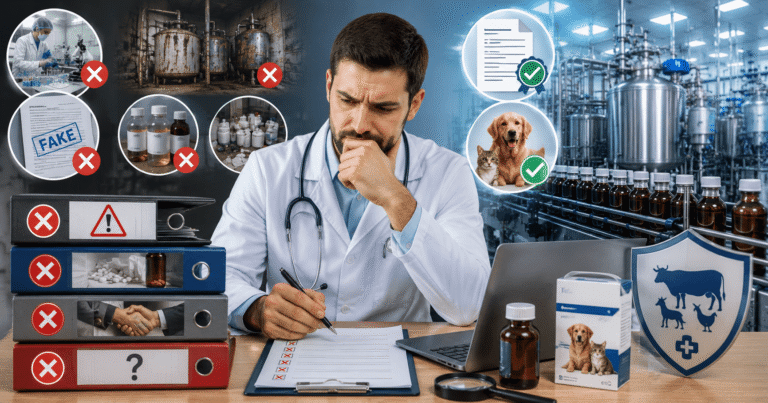
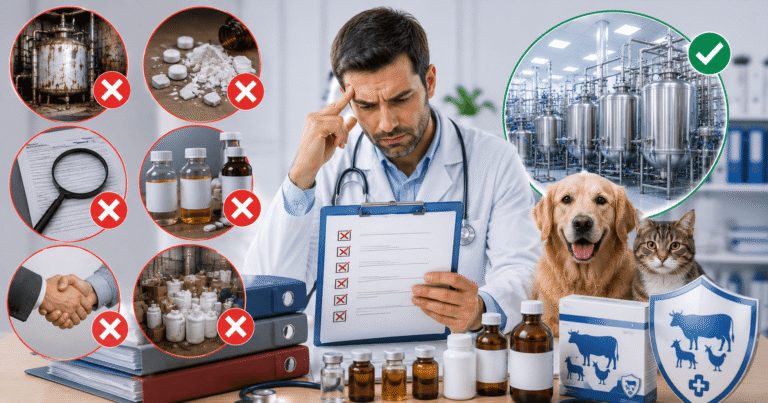
The most common mistakes include selecting a manufacturer based only on low pricing, ignoring GMP certifications, failing to verify manufacturing capacity, overlooking quality control systems, not checking regulatory compliance, and choosing suppliers without evaluating their reputation.
A reliable veterinary manufacturer should offer quality assurance, transparent documentation, regulatory support, scalable production, and consistent product quality. Taking time to evaluate these factors helps businesses avoid costly problems and build long-term success.
Why Choosing the Right Veterinary Manufacturer Matters
A veterinary medicine manufacturer does much more than produce medicines. They influence product quality, customer trust, brand growth, and regulatory compliance.
The right veterinary pharmaceutical manufacturer helps ensure:
- Consistent product quality
- Timely product delivery
- Regulatory compliance
- Product safety
- Better market reputation
- Long-term business growth
A poor manufacturing partner can damage your brand image and reduce customer confidence.
Common Mistakes When Choosing a Veterinary Manufacturer
1. Focusing Only on Low Pricing
One of the biggest mistakes businesses make is selecting a manufacturer solely because they offer the lowest rates.
Low-cost manufacturing may indicate:
- Inferior raw materials
- Weak quality control
- Poor packaging standards
- Limited testing procedures
Expert Tip
Always evaluate the overall value rather than just the manufacturing cost.
2. Ignoring GMP Certification
Many companies fail to verify whether the manufacturer follows Good Manufacturing Practices (GMP). According to the guidelines promoted by the World Health Organization, GMP helps ensure that pharmaceutical products are consistently manufactured and controlled according to established quality standards.
A GMP certified veterinary manufacturer follows strict quality standards for:
- Raw material sourcing
- Manufacturing processes
- Hygiene management
- Product testing
- Documentation
Without GMP compliance, product quality may become inconsistent.
3. Not Checking Manufacturing Capacity
Businesses often choose a manufacturer without assessing production capabilities.
Important questions include:
- Can they handle large orders?
- Can they scale production quickly?
- Do they have multiple production lines?
- What is their average turnaround time?
Limited production capacity can cause delays and stock shortages.
4. Overlooking Quality Control Systems
Quality control is one of the most important factors in veterinary manufacturer selection.
A reliable manufacturer should have:
- In-house testing laboratories
- Stability testing facilities
- Batch testing protocols
- Microbiological testing systems
- Quality assurance teams
Always ask for quality testing procedures before signing any agreement.
5. Failing to Verify Product Portfolio
Some businesses select manufacturers before reviewing their complete product range.
A strong veterinary product manufacturer should offer:
- Antibiotics
- Feed supplements
- Calcium supplements
- Liver tonics
- Dewormers
- Injectable products
- Boluses
- Oral liquids
- Nutritional supplements
A wider portfolio simplifies future expansion.
6. Ignoring Regulatory Compliance
Veterinary manufacturing compliance is essential for product approval and market acceptance.
Check whether the manufacturer follows:
- GMP guidelines
- State licensing requirements
- Drug regulatory standards
- Quality documentation procedures
Incomplete compliance can create legal complications later.
7. Not Evaluating Industry Experience
Experience often reflects reliability.
Before choosing a veterinary manufacturing partner, evaluate:
- Years in business
- Manufacturing expertise
- Existing client base
- Market reputation
- Product success stories
Experienced manufacturers typically understand industry challenges better, making them valuable when choosing a reliable veterinary manufacturer for long-term growth.
8. Skipping Facility Audits
Many businesses never visit the manufacturing facility.
A site visit helps assess:
- Infrastructure quality
- Production equipment
- Hygiene standards
- Warehousing systems
- Packaging facilities
- Quality control labs
Facility audits provide valuable insights that brochures cannot.
9. Ignoring Supply Chain Strength
A weak supply chain can disrupt product availability.
Assess whether the veterinary pharma manufacturing company has:
- Reliable raw material sourcing
- Inventory management systems
- Backup suppliers
- Efficient logistics support
Supply chain efficiency directly affects product availability.
10. Not Reviewing Client Feedback
Customer reviews reveal real-world performance.
Look for feedback regarding:
- Product quality
- Delivery timelines
- Customer support
- Manufacturing consistency
- Business ethics
Strong client satisfaction often indicates a dependable manufacturer.
Benefits of Choosing the Right Veterinary Manufacturer
Selecting the right partner offers several advantages:
Better Product Quality
A reliable veterinary manufacturer follows strict quality standards and testing procedures, helping ensure safe, effective, and consistent products for animal healthcare needs.
Strong Brand Reputation
Consistently delivering quality veterinary products helps build trust among veterinarians, distributors, livestock owners, and business partners, strengthening your brand’s market presence.
Regulatory Compliance
Manufacturers that maintain proper certifications and documentation help businesses meet regulatory requirements and avoid unnecessary legal or operational challenges.
Business Scalability
An experienced manufacturing partner can increase production capacity as your business grows, allowing you to expand into new markets without supply issues.
Reduced Operational Risks
Well-established manufacturing systems, quality controls, and supply chain processes help minimize delays, product inconsistencies, and disruptions to your business operations.
Uses of Veterinary Contract Manufacturing
Veterinary contract manufacturing helps businesses:
- Launch new veterinary brands
- Expand product portfolios
- Reduce infrastructure costs
- Enter new markets
- Improve operational efficiency
- Focus on sales and marketing
Many growing veterinary companies use contract manufacturing to accelerate market expansion.
Key Features of a Reliable Veterinary Manufacturer
Feature | Importance |
GMP Certification | Ensures quality compliance |
Modern Manufacturing Facility | Supports efficient production |
Quality Control Labs | Maintains product consistency |
Wide Product Portfolio | Supports business growth |
Regulatory Documentation | Simplifies approvals |
Timely Delivery | Prevents stock shortages |
Experienced Team | Improves manufacturing reliability |
Scalable Production | Handles future demand |
Important Manufacturing and Quality Details
When evaluating veterinary medicine production capabilities, review:
Raw Material Quality
High-quality raw materials form the foundation of effective veterinary products. Reliable manufacturers source ingredients from trusted suppliers to maintain safety, consistency, and product performance.
Manufacturing Technology
Modern manufacturing equipment helps maintain precise formulations and consistent production standards. Advanced technology also reduces errors and supports better product quality.
Packaging Standards
Proper packaging protects veterinary products from moisture, contamination, and environmental damage. It also helps preserve product quality during storage and transportation.
Product Stability Testing
Stability testing verifies that veterinary products remain safe, effective, and reliable throughout their intended shelf life under recommended storage conditions.
Documentation Support
Accurate documentation and quality records help businesses meet regulatory requirements, streamline audits, and maintain transparency throughout the manufacturing process.
Risks of Choosing the Wrong Manufacturer
Although veterinary medicines differ by formulation, poor manufacturing can lead to:
- Product quality issues
- Regulatory penalties
- Market recalls
- Customer dissatisfaction
- Business losses
- Brand reputation damage
This makes manufacturer evaluation a critical business decision.
Comparison Table: Reliable vs Unreliable Veterinary Manufacturer
Criteria | Reliable Manufacturer | Unreliable Manufacturer |
GMP Certification | Available | Missing |
Quality Testing | Comprehensive | Limited |
Delivery Performance | Consistent | Frequently Delayed |
Product Documentation | Complete | Incomplete |
Manufacturing Capacity | Scalable | Limited |
Customer Support | Responsive | Poor |
Market Reputation | Strong | Weak |
Market Demand and Business Opportunity
The veterinary healthcare sector continues to grow due to:
- Rising livestock populations
- Increased dairy production
- Growing pet ownership
- Higher awareness of animal health
- Expanding veterinary pharmaceutical market
As demand increases, businesses need reliable veterinary medicine suppliers capable of delivering quality products consistently.
Choosing the right manufacturing partner can provide a significant competitive advantage in this growing market.
Expert Recommendations for Veterinary Manufacturer Selection
Follow these best practices:
- Verify GMP certifications.
- Review manufacturing licenses.
- Visit the facility whenever possible.
- Evaluate quality control systems.
- Check production capacity.
- Review product portfolio depth.
- Assess customer feedback.
- Request sample products.
- Confirm regulatory support.
- Build long-term partnerships instead of choosing based on price alone.
Conclusion
Choosing a veterinary manufacturer is one of the most important decisions for any veterinary business. Focusing only on pricing can lead to quality issues, compliance problems, and long-term business losses. By evaluating certifications, manufacturing capabilities, quality systems, industry experience, and supply reliability, businesses can identify a trustworthy manufacturing partner that supports sustainable growth. Investing time in proper veterinary manufacturer selection today can protect your brand reputation and create a strong foundation for future success.
Common Mistakes When Choosing A Veterinary Manufacturer - FAQS
How do I choose a reliable veterinary manufacturer?
Why is GMP certification important in veterinary manufacturing?
What should I check before signing a manufacturing agreement?
Is veterinary third-party manufacturing profitable?
Can I visit a manufacturing facility before partnering?
ABOUT THE AUTHOR

Mitesh Vyas
My name is Mitesh Vyas, and I am a Pharma Franchise Consultant and Industry Research Analyst specializing in India’s PCD pharma business ecosystem. My work focuses on helping beginners, distributors, and small pharma entrepreneurs understand the real-world functioning of the pharma franchise model. Unlike theoretical content, my insights are based on ground-level observations from Indian pharmaceutical markets, including Tier-1, Tier-2, and Tier-3 cities such as Ahmedabad, Indore, Lucknow, and surrounding business hubs. I regularly share insights on how the pharma franchise business in India works in real market conditions, including investment, product strategy, and growth challenges.