
The Ayurvedic Product Manufacturing Process plays a crucial role in producing safe, effective, and high-quality herbal medicines. With the growing demand for natural healthcare products, Ayurvedic manufacturers must follow strict quality standards, scientific procedures, and regulatory guidelines to ensure product consistency and consumer safety.
From selecting medicinal herbs to final packaging, every stage impacts the quality of the finished product. Understanding the Ayurvedic medicine manufacturing process helps distributors, healthcare professionals, franchise seekers, and consumers evaluate product quality and manufacturing standards.
This guide explains every stage of Ayurvedic product manufacturing in a simple and practical way.
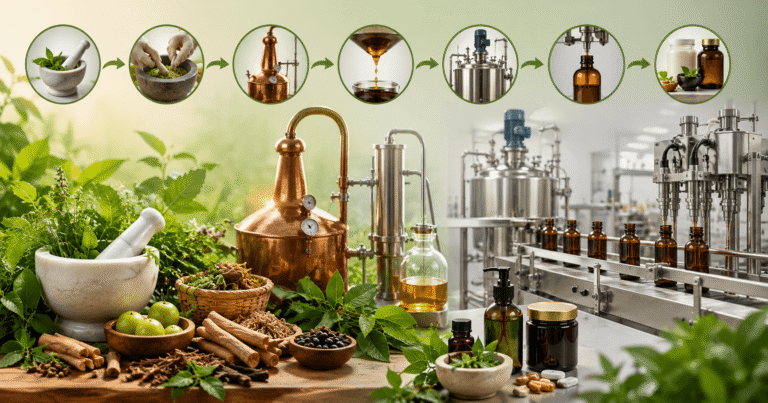
How do manufacturers ensure the quality of Ayurvedic products?
The Ayurvedic Product Manufacturing Process is a systematic method of producing herbal medicines using traditional Ayurvedic principles combined with modern quality control standards. The process includes raw material sourcing, herb identification, cleaning, drying, extraction, formulation, manufacturing, quality testing, packaging, and storage.
Manufacturers follow Good Manufacturing Practices (GMP) to ensure product safety, effectiveness, purity, and consistency. A well-managed manufacturing process helps maintain the therapeutic benefits of Ayurvedic ingredients while meeting regulatory requirements.
What Is Ayurvedic Product Manufacturing?
Ayurvedic product manufacturing refers to the production of herbal medicines, health supplements, syrups, capsules, tablets, oils, powders, and wellness products based on Ayurvedic formulations.
The process combines:
- Traditional Ayurvedic knowledge
- Modern pharmaceutical technology
- Quality assurance systems
- Regulatory compliance
- Scientific testing methods
The goal is to produce safe and effective herbal products that deliver consistent results to consumers.
Step-by-Step Ayurvedic Product Manufacturing Process
1. Selection of Raw Materials
Everything begins with selecting high-quality medicinal herbs and natural ingredients.
Manufacturers source:
- Medicinal plants
- Roots
- Leaves
- Flowers
- Seeds
- Fruits
- Minerals
- Natural extracts
Important Quality Checks
- Botanical identification
- Purity verification
- Moisture testing
- Contaminant screening
- Pesticide residue testing
The quality of raw materials directly affects the effectiveness of the final Ayurvedic medicine
2. Procurement from Certified Suppliers
Reputed manufacturers purchase herbs from verified suppliers and farmers.
This step ensures:
- Consistent quality
- Authentic medicinal plants
- Traceability
- Sustainable sourcing
Many Ayurvedic companies work directly with herbal farms to maintain ingredient quality.
3. Cleaning and Sorting
After procurement, the raw materials undergo thorough cleaning.
The process removes:
- Dust
- Soil particles
- Foreign matter
- Stones
- Insects
- Damaged plant parts
Proper cleaning prevents contamination during production.
4. Drying of Herbs
Fresh herbs contain moisture that can lead to microbial growth.
Manufacturers use:
- Shade drying
- Controlled drying chambers
- Mechanical drying systems
Benefits of proper drying include:
- Increased shelf life
- Better stability
- Improved extraction efficiency
- Reduced microbial contamination
5. Grinding and Pulverization
Once dried, herbs are converted into fine powders.
Specialized machines help achieve:
- Uniform particle size
- Better ingredient blending
- Improved absorption
- Consistent formulation quality
The powder produced is known as Ayurvedic churna.
6. Extraction Process
| Method | Purpose |
|---|---|
| Water Extraction | Traditional herbal decoctions |
| Hydro-Alcoholic Extraction | Improved active compound recovery |
| Solvent Extraction | Concentrated herbal extracts |
| Steam Distillation | Essential oil production |
7. Formulation Development
Experts develop formulations based on Ayurvedic texts, scientific research, and guidelines established by the World Health Organization to support quality and safety standards.
Formulation experts determine:
- Ingredient ratio
- Dosage strength
- Product type
- Stability requirements
- Therapeutic purpose
The formulation must maintain efficacy while ensuring safety.
8. Manufacturing of Ayurvedic Products
The manufacturing process varies depending on product type.
Tablets
- Mixing
- Granulation
- Compression
- Coating
Capsules
- Filling herbal powders
- Encapsulation
- Sealing
Syrups
- Herbal extract preparation
- Syrup base mixing
- Filtration
- Filling
Oils
- Herbal infusion
- Filtration
- Storage
Powders
- Blending
- Sieving
- Packing
Each category follows a specific production protocol.
9. Quality Control Testing
Quality testing is one of the most important stages in Ayurvedic medicine manufacturing.
Tests Performed
- Identity testing
- Purity testing
- Microbial testing
- Heavy metal testing
- Stability testing
- Moisture analysis
- pH testing
- Assay testing
These tests ensure product safety and consistency.
10. Packaging Process
Packaging protects Ayurvedic medicines from environmental damage.
Manufacturers use:
- HDPE bottles
- Glass bottles
- Blister packs
- Sachets
- Cartons
Good packaging prevents:
- Moisture exposure
- Light degradation
- Contamination
- Product damage
11. Labeling and Compliance
Every Ayurvedic product must contain accurate information.
Labels typically include:
- Product name
- Ingredients
- Dosage instructions
- Manufacturing date
- Batch number
- Expiry date
- Storage instructions
- Manufacturer details
Proper labeling improves transparency and consumer trust.
12. Storage and Distribution
Finished products are stored under controlled conditions.
Storage factors include:
- Temperature control
- Humidity control
- Inventory management
- Batch traceability
Proper storage maintains product quality until it reaches the end user.
Ayurvedic Manufacturing Process Flow
| Manufacturing Stage | Purpose |
|---|---|
| Raw Material Selection | Ensure ingredient quality |
| Procurement | Source authentic herbs |
| Cleaning | Remove impurities |
| Drying | Reduce moisture |
| Grinding | Produce fine powders |
| Extraction | Obtain active compounds |
| Formulation | Create final recipe |
| Manufacturing | Produce dosage forms |
| Quality Testing | Verify safety and efficacy |
| Packaging | Protect product |
| Labeling | Regulatory compliance |
| Distribution | Market supply |
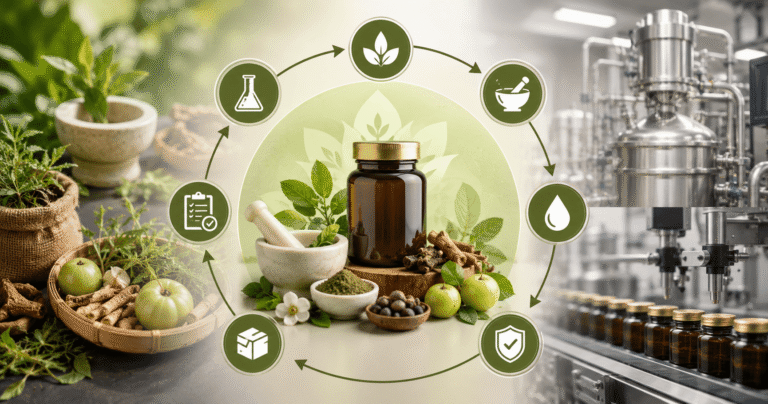
Benefits of a Standardized Ayurvedic Product Manufacturing Process
A well-structured manufacturing process provides several advantages.
For Manufacturers
- Consistent product quality
- Better regulatory compliance
- Improved brand reputation
- Reduced product recalls
For Consumers
- Safe herbal medicines
- Better therapeutic outcomes
- Reliable product quality
- Increased trust
For Distributors and Franchise Partners
- Easier product promotion
- Higher customer satisfaction
- Stronger market acceptance
Uses of Ayurvedic Manufacturing Standards
Manufacturing standards help produce:
- Ayurvedic tablets
- Herbal capsules
- Churna powders
- Herbal syrups
- Ayurvedic oils
- Wellness supplements
- Immunity boosters
- Personal care products
These standards ensure every batch maintains the same quality.
Key Features of a Good Ayurvedic Manufacturing Facility
A reliable manufacturing unit should have:
- GMP certification
- Quality control laboratory
- Experienced pharmacists
- Modern machinery
- Clean production area
- Raw material testing facility
- Documentation systems
- Regulatory compliance procedures
These features indicate a professional and trustworthy manufacturer.
Composition and Ingredients Used in Ayurvedic Manufacturing
Common ingredients include:
- Ashwagandha
- Giloy
- Tulsi
- Neem
- Shatavari
- Brahmi
- Amla
- Haritaki
- Baheda
- Guggul
Manufacturers combine these ingredients according to traditional formulations and scientific requirements.
Possible Side Effects and Safety Considerations
Ayurvedic products are generally well tolerated when manufactured correctly and consumed as directed.
However, improper manufacturing may lead to:
- Contamination
- Incorrect dosage
- Microbial growth
- Reduced effectiveness
Safety Tips
- Purchase products from GMP-certified manufacturers.
- Follow recommended dosage instructions.
- Consult a healthcare professional before long-term use.
- Avoid self-medication for serious medical conditions.
Ayurvedic Manufacturing vs Conventional Pharmaceutical Manufacturing
| Factor | Ayurvedic Manufacturing | Conventional Pharma Manufacturing |
|---|---|---|
| Raw Materials | Natural herbs and botanicals | Synthetic chemicals |
| Formulation Basis | Ayurvedic principles | Modern pharmacology |
| Extraction Process | Herbal extraction | Chemical synthesis |
| Product Types | Herbal medicines | Allopathic medicines |
| Consumer Preference | Natural wellness | Disease-specific treatment |
| Market Growth | Rapidly increasing | Established market |
Market Demand and Business Opportunity
The Ayurvedic industry continues to grow due to increasing awareness about natural healthcare.
Key Growth Drivers
- Rising demand for herbal products
- Preference for natural remedies
- Increasing wellness awareness
- Growing export opportunities
- Expansion of Ayurvedic pharma franchises
Opportunities for Businesses
- PCD pharma franchise
- Third-party manufacturing
- Ayurvedic product distribution
- Online herbal product sales
- Export business
Companies with strong manufacturing standards often gain better market credibility and long-term growth opportunities.
Expert Recommendations Before Choosing an Ayurvedic Manufacturer
Verify Certifications
Check whether the manufacturer holds recognized certifications and follows required industry standards. Certifications help indicate product safety, quality control, and regulatory compliance.
Check for: GMP Certification
GMP certification ensures products are manufactured using standardized procedures and strict quality controls. It helps maintain consistency, hygiene, and product safety.
Check for: ISO Certification
ISO certification reflects adherence to internationally accepted quality management standards. It shows the manufacturer’s commitment to operational efficiency and continuous improvement.
Check for: AYUSH Compliance
AYUSH compliance confirms that the manufacturer follows regulatory guidelines for Ayurvedic products. It ensures products meet approved standards for production and safety.
Review Product Portfolio
A broad product portfolio demonstrates the manufacturer’s expertise across multiple categories. It also indicates flexibility and strong production capabilities.
Check Testing Facilities
Advanced testing facilities help ensure products meet quality and safety standards before reaching the market. Proper testing reduces the risk of contamination and inconsistencies. To better understand how quality checks fit into production stages, you can explore our complete Ayurvedic manufacturing process guide, which explains the workflow from raw material selection to final product packaging.
Evaluate Production Capacity
Assess whether the manufacturer can handle current requirements and future demand growth. Strong production capacity supports timely delivery and scalability.
Assess Market Reputation
Customer feedback, industry presence, and distributor opinions provide insights into reliability. A strong reputation often reflects consistent product quality and trustworthy service.
Conclusion
The Ayurvedic Product Manufacturing Process combines traditional Ayurvedic wisdom with modern pharmaceutical quality standards. Every stage, from herb selection and extraction to formulation, testing, packaging, and distribution, contributes to the safety and effectiveness of the final product.
For distributors, franchise partners, healthcare professionals, and consumers, understanding these manufacturing steps helps identify trustworthy manufacturers and high-quality herbal medicines. Companies that follow standardized manufacturing practices, strict quality control, and regulatory compliance consistently deliver better products and build stronger market credibility.
Ayurvedic Product Manufacturing Process - FAQs
What is the Ayurvedic Product Manufacturing Process?
What certifications should an Ayurvedic manufacturer have?
How are herbal extracts prepared?
What are the major Ayurvedic products manufactured today?
Can Ayurvedic medicines have side effects?
ABOUT THE AUTHOR

Mitesh Vyas
My name is Mitesh Vyas, and I am a Pharma Franchise Consultant and Industry Research Analyst specializing in India’s PCD pharma business ecosystem. My work focuses on helping beginners, distributors, and small pharma entrepreneurs understand the real-world functioning of the pharma franchise model. Unlike theoretical content, my insights are based on ground-level observations from Indian pharmaceutical markets, including Tier-1, Tier-2, and Tier-3 cities such as Ahmedabad, Indore, Lucknow, and surrounding business hubs. I regularly share insights on how the pharma franchise business in India works in real market conditions, including investment, product strategy, and growth challenges.