
Table of Contents
TogglePediatric Pharma Franchise In India: The pediatric pharma franchise segment looks extremely attractive from the outside.
High demand. Repeat prescriptions. Emotional buying. Strong margins on syrups and drops.
But here’s the reality most beginners don’t understand:
Pediatric is one of the most sensitive and brand-dependent segments in the entire pharma franchise business model.
In my experience working with pediatric distributors across India, I’ve seen this pattern repeatedly:
- Some distributors grow 3–5x within a year
- Others get stuck with expired syrup stock within 6 months
The difference is not investment.
The difference is understanding how the pediatric market actually works.
And that’s exactly what you’ll learn in this guide.

What is Pediatric Pharma Franchise (Quick Context)
A Pediatric Pharma Franchise is a business model where you partner with a company that provides:
- Monopoly rights (on paper, not always in reality)
- Pediatric product range (syrups, drops, suspensions, antibiotics)
- Promotional support
You then sell these products to:
- Pediatricians
- Chemists
- Hospitals
It’s a sub-segment of the broader PCD Pharma Franchise Marketing in India, but with very different ground realities.

How Pediatric Pharma Franchise Actually Works in Real Market
Let’s break the myth first.
Most companies will tell you:
“Take monopoly, invest ₹1–2 lakh, and doctors will start prescribing.”
That’s not how it works.
Real Market Flow:
1. Doctor Trust Comes First
Pediatricians are extremely cautious when prescribing medicines for children. They rarely experiment with new brands unless there is strong trust and consistent results. In most real market cases, doctors stick to 2–3 reliable brands for years. Without earning that trust, entry into prescriptions becomes very difficult.
Pediatricians don’t experiment easily.
In 70% of cases I’ve seen, they stick to 2–3 trusted brands for years.
2. MR Activity Drives Prescriptions
In the pediatric pharma business, consistent doctor visits are the backbone of sales. If you or your MR stop meeting doctors regularly, prescription flow drops immediately. No prescriptions mean no product movement, leading to slow or dead stock. Regular follow-ups are non-negotiable for growth.
If you or your MR don’t meet doctors regularly:
- No prescriptions
- No sales
- Stock becomes dead
3.Chemist is Secondary but Important
While pediatricians decide which brand to prescribe, chemists still play an important supporting role. If your product is not available, chemists often suggest substitutes to customers. This can directly impact your sales and brand recall. Strong chemist relationships help maintain availability and prevent substitution loss.
In pediatric:
- Doctors prescribe brand
- But chemists influence substitutes if brand not available
4. Mother is the Final Decision Influencer
In pediatric medicines, mothers play a crucial role in repeat purchases. Factors like taste, packaging, and ease of consumption directly influence acceptance by the child. If a child refuses the medicine, the chances of repeat use drop significantly. This makes product experience just as important as doctor prescriptions, especially when you are working with a trusted pediatric pharma franchise opportunity that focuses on quality and patient acceptance.
1. High Margin Products
This is unique to pediatric segment:
- Taste matters
- Packaging matters
- Child acceptance matters
If the child refuses the syrup once, repeat purchase drops.

Why Pediatric Segment is High-Demand (With Conditions)
Why Demand Exists:
- High birth rate in India
- Frequent infections (fever, cough, diarrhea)
- Seasonal spikes (monsoon & winter)
- Increasing awareness among parents
But Here’s the Condition:
Demand ≠ Your Sales
In Tier-2 markets like Ahmedabad, Indore, Lucknow:
- Pediatric demand peaks during seasonal infections
But only established brands capture majority prescriptions
Key Insight:
n 60–70% of pediatric markets, syrups dominate sales over tablets.
So if your pediatric range pharma franchise is not strong in:
- Syrups
- Drops
- Suspensions
You’re already at a disadvantage.

Product-Level Reality (Syrups, Drops, Antibiotics)
1. Syrups (Core Revenue Driver)
Syrups are the backbone of the pediatric pharma business, contributing nearly 70% of total sales. Their success heavily depends on taste, as children are sensitive to flavor and often reject bitter medicines. If a child refuses a syrup, repeat demand drops instantly. This directly impacts doctor prescriptions and long-term product movement.
- Contribute ~70% of pediatric sales
- Taste decides repeat demand
- Shelf life risk is high
If taste is bitter → child rejects → doctor stops prescribing
2. Drops (High Trust Products)
Drops are primarily used for infants, making them one of the most sensitive pediatric products. Doctors are extremely cautious and prefer only trusted brands with consistent quality. Even a single issue in formulation or results can lead to permanent rejection. Building trust in this category takes time but ensures long-term stability.
- Used in infants
- Doctors are extremely brand-sensitive
One quality issue = permanent rejection
3. Antibiotics
Pediatric antibiotics are highly competitive and dominated by established brands. Doctors usually stick to trusted names due to safety concerns and proven results. Regular doctor visits and strong relationship-building are essential to gain prescriptions. Without consistent follow-up, it’s difficult to penetrate this segment.
- High competition
- Strong brand loyalty
- Requires consistent doctor visits
4. Multivitamins & Tonics
Multivitamins and tonics offer steady repeat business in the pediatric segment. Their demand is largely influenced by mothers who focus on child health and immunity. Taste, packaging, and visible benefits play a key role in repeat purchases. Once trust is built, these products can generate consistent long-term sales.
- Good repeat business
- Driven by mother’s trust
Read More:-Top PCD Pharma Franchise Companies In India – WHO-GMP Certified Companies
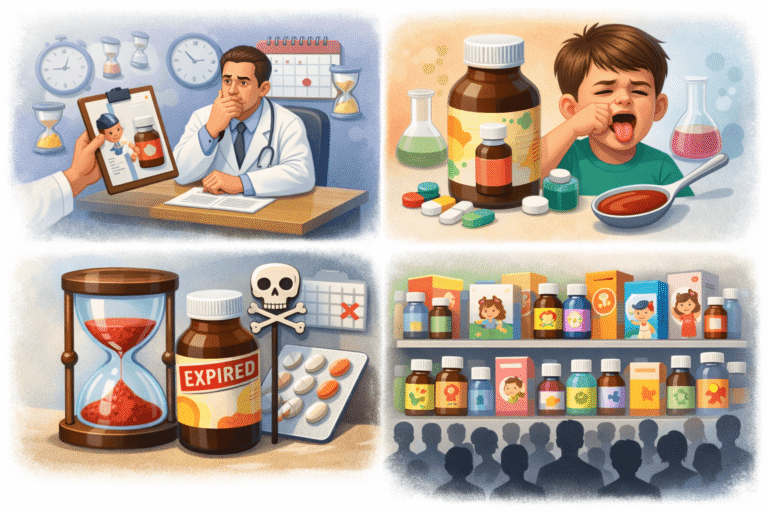
Hidden Challenges & Failure Reasons in Pediatric Franchise
1. Doctor Conversion Takes Time
Building trust with pediatricians is a slow and consistent process. In most cases, it takes at least 3–6 months of regular visits to start getting prescriptions. There are usually no immediate sales in the beginning phase. Many beginners fail because they expect quick returns and lose patience early.
In most cases:
- 3–6 months minimum to build trust
- No immediate sales
Beginners expect fast returns → lose patience → fail
2. Taste & Formulation Issues
Taste and formulation are critical factors in pediatric medicines but often ignored by many companies. Poor flavor or unstable formulation leads to rejection by children. Once a child refuses the medicine, doctors quickly switch to another brand. This makes product quality a key success factor in this segment.
Most pediatric pharma franchise companies don’t invest enough in:
- Flavor
- Stability
- Palatability
Result:
- Child refuses medicine
- Doctor switches brand
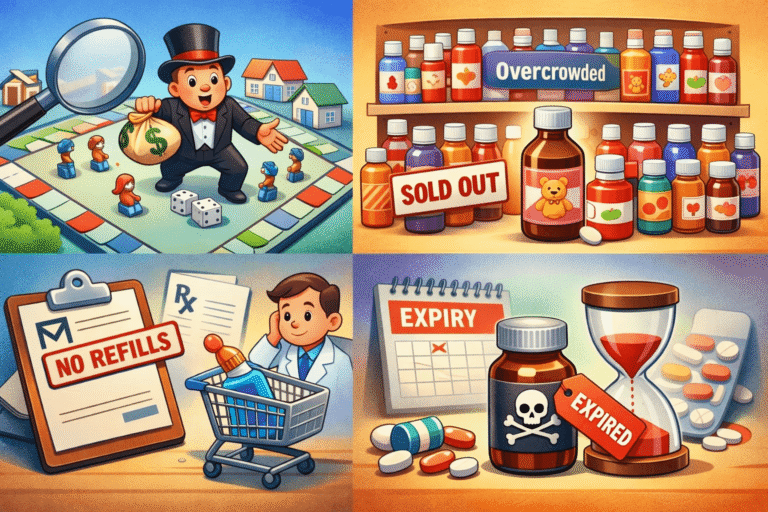
3. Expiry Risk (Very High)
Pediatric products, especially syrups, come with a higher expiry risk compared to general medicines. Their shorter shelf life and slower movement can lead to stock accumulation. If not managed properly, products expire within months. Many distributors face losses due to unsold inventory.
Unlike general medicines:
- Syrups have shorter shelf life
- Slow-moving SKUs expire quickly
I’ve seen ₹50,000–₹80,000 stock expire in 6–8 months
4. Overcrowded Market
The pediatric pharma segment is highly saturated with multiple companies offering similar products. Most brands have identical combinations, packaging, and monopoly claims. This makes it difficult to stand out in the market. Without strong differentiation, gaining doctor attention becomes a major challenge.
Every company offers:
- Same combinations
- Same packaging
- Same monopoly promise
Differentiation is extremely low
What Most Pediatric Pharma Companies Won’t Tell You
1. Monopoly is Mostly Theoretical
Monopoly rights often look attractive on paper but don’t guarantee real market control. Doctors may already be loyal to other established brands, making entry difficult. Chemists also stock alternative options, reducing your exclusivity. In reality, monopoly without prescriptions has little value.
Even if you have monopoly:
- Doctors may already be loyal to other brands
- Chemists stock competing brands
Monopoly ≠ market control
2. Syrup Market is Saturated
The pediatric syrup segment is overcrowded with similar combinations and products. Almost every company offers identical formulations, leading to intense price competition. This makes it hard for new brands to stand out. Only strong branding and doctor trust can drive consistent sales.
- Same combinations everywhere
- Price competition is high
Only branding + doctor trust works
3. Low Repeat Orders Without Prescription Base
Many companies push initial stock to distributors without ensuring prescription support. Without doctor prescriptions, products don’t move from chemists to customers. This results in weak secondary sales and no repeat orders. Sustainable business depends on building a strong prescription base.
Companies will push stock initially.
But:
- Without prescriptions
- No secondary sales
- No repeat orders
4. Expiry is Your Loss, Not Company’s
In most cases, pharma companies do not take responsibility for expired stock. The financial loss is entirely borne by the distributor. Poor inventory planning or slow-moving products can lead to heavy losses. Managing stock rotation is critical to avoid expiry risks.
Companies rarely take back expired stock.
Risk is 100% on distributor

Real Case Scenarios (Based on Market Experience)
Case 1: ₹2 Lakh Investment Failure
A distributor in Gujarat invested in a pediatric PCD pharma franchise.
Mistakes:
- Took 25+ SKUs
- No doctor network
- Weak MR activity
Result:
- 40% stock expired
- Business closed in 8 months
Case 2: Smart Growth Strategy
A distributor in Indore:
- Started with 8 key pediatric products
- Focused on 10 pediatricians only
- Regular follow-ups
Result:
- Stable prescriptions
- Break-even in 6 months
Case 3: Product Quality Failure
A franchise owner launched syrup with poor taste.
Result:
- Children rejected it
- Doctors stopped prescribing within 2 months
Entire brand collapsed
Who Should & Should NOT Start Pediatric Pharma Franchise
Suitable For:
- People with doctor network
- Medical representatives
- Existing pharma distributors
- Long-term mindset investors
Not Suitable For:
- Quick-profit seekers
- No field experience
- No doctor approach strategy
- Low patience

6-Step Practical Strategy to Succeed
Step 1: Select Demand-Based Pediatric Range
Choosing the right product range is the foundation of your success. Focus on high-demand categories like antibiotic syrups, fever & cough medicines, and multivitamins. These are frequently prescribed and have consistent market demand. Starting with the right products ensures faster movement and better returns.
Focus on:
- Antibiotic syrups
- Fever & cough range
- Multivitamins
Step 2: Validate Syrup Quality & Taste
Before finalizing products, always check syrup quality personally. Taste, stability, and packaging directly impact child acceptance and repeat usage. A good formulation increases doctor confidence and patient satisfaction. Ignoring this step can lead to poor sales and brand rejection.
Personally test:
- Taste
- Stability
- Packaging
Step 3: Start with Limited SKUs
Avoid the common mistake of investing in a large product range initially. Start with a focused portfolio of 8–12 products to manage inventory efficiently. This reduces expiry risk and allows better market control. A lean start helps you test what works before scaling.
Avoid bulk stock.
Start with 8–12 products max
Step 4: Build Pediatrician Network
Your growth depends on how strong your doctor network is. Start by targeting 10–15 pediatricians and build relationships through regular visits. Consistency is key to gaining trust and prescriptions. A small but strong network is more valuable than a large inactive one.
Target:
- 10–15 doctors initially
- Weekly visits
Step 5: Focus on Repeat Prescriptions
Instead of constantly chasing new doctors, focus on strengthening existing relationships. Repeat prescriptions create stable and predictable sales. Building trust with a few doctors ensures long-term growth. Depth in relationships always outperforms quantity.
Don’t chase new doctors daily.
Build depth, not width
Step 6: Control Expiry & Stock Rotation
Regularly monitor your inventory to identify slow-moving products. Push these items strategically to avoid expiry losses. Proper stock rotation ensures better cash flow and reduces financial risk. Effective inventory management is crucial in the pediatric segment.
- Monitor slow-moving items
- Push them actively

Expert Insights & Mistakes to Avoid
Mistake 1: Choosing Company Based on Price Only
Selecting a company just because it offers low prices is a common beginner mistake. Cheap products often compromise on quality, especially in pediatric formulations where taste and safety are critical. Poor quality leads to rejection by both doctors and patients. In the long run, this damages your reputation and sales potential.
Cheap products often mean poor quality.
Mistake 2: Ignoring Doctor Relationship Building
In the pediatric pharma business, doctors are the primary drivers of sales. Without strong relationships and regular follow-ups, getting prescriptions is nearly impossible. Many beginners underestimate this and focus only on stock. The reality is simple: no doctor connection means no business growth.
No doctor = no business
Mistake 3: Over-investing in Inventory
Investing heavily in a large stock at the beginning can backfire badly. Without confirmed prescription flow, products move slowly and increase the risk of expiry. This blocks your working capital and creates financial pressure. Starting lean and scaling gradually is a much safer approach.
Leads to expiry loss
Mistake 4: Expecting Fast Results
The pediatric segment requires patience and consistent effort. Building trust with doctors and establishing product acceptance takes time. Many beginners quit early due to unrealistic expectations of quick profits. Long-term commitment is essential for sustainable success in this business.
Pediatric segment needs patience
Key Expert Insight:
In my experience, most beginners in the pediatric segment fail because they focus on stock, not prescriptions.
Conclusion:
The pediatric pharma franchise in India is not a shortcut business.
It’s:
- High demand
- High competition
- High dependency on doctors
If you approach it like a real business (not a scheme):
- Build doctor trust
- Focus on product quality
- Control inventory
You can build a stable, long-term pediatric pharma business.
But if you rely only on:
- Monopoly
- Company promises
- Bulk stock
Failure is almost guaranteed.