
Table of Contents
ToggleStarting a pharma business in India often begins with one confusing question: “Is the pharma franchise business actually legal?”
On paper, it looks simple—partner with a company, get products, and start selling. But in real markets, especially across cities like Ahmedabad, Indore, and Lucknow, I’ve seen a very different reality.
Here’s the truth:
The pharma franchise business is 100% legal in India—but only when done with proper compliance. And this is where most beginners fail.
Many enter the PCD pharma franchise in India thinking GST + company agreement is enough. But legally, that’s just the surface. The real compliance lies deeper—in drug licensing, documentation, and regulatory adherence.
In this guide, I’ll break down:
- What law actually says
- What happens in real market
- Risks, loopholes, and mistakes most people ignore
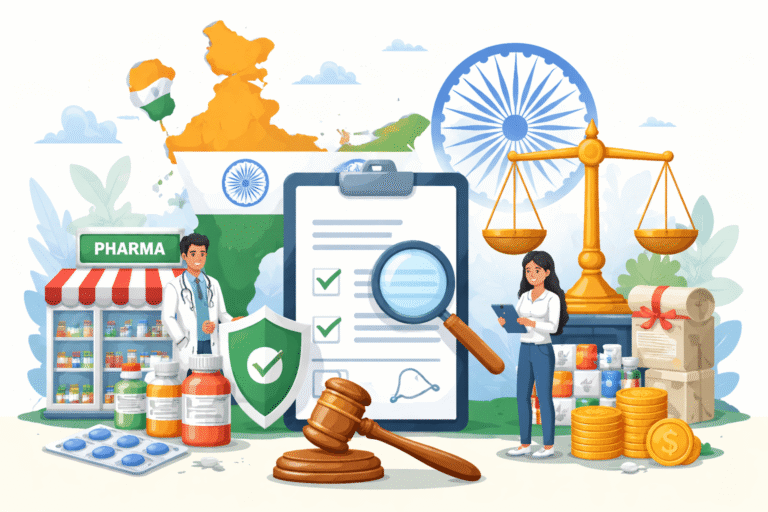
Is Pharma Franchise Business Legal In India?
Yes, the pharma franchise model is legal in India. It operates under:
- Drugs and Cosmetics Act, 1940
- Drugs Rules, 1945
- GST and business laws
The model itself is not illegal. But operating without proper licenses or compliance makes your business illegal.
In my experience working with distributors, 60–70% of new setups have compliance gaps, even though they believe they are operating legally.

Legal Framework Behind Pharma Franchise Business
The pharma franchise business model works as a distribution agreement between:
- Pharma company (manufacturer/marketer)
- Distributor/franchise partner
1. Drug Control Regulations
These are the core laws governing the pharma business, monitored by State Drug Authorities and CDSCO. They ensure that medicines are manufactured, stored, and distributed safely and legally. A valid drug license is mandatory at every level, and inspections can happen anytime. In real practice, enforcement varies, which is why many operate casually—until a compliance check exposes the gap.
2. Business & Tax Laws
Under GST and the Income Tax Act, every pharma franchise must maintain proper billing, taxation, and financial records. GST enables legal invoicing and input tax credit, while income tax compliance ensures financial transparency. Most businesses focus on GST because it’s easier, but ignore deeper compliance—leading to issues during audits. This is why understanding the legal requirements for starting a pharma franchise in India becomes crucial beyond just tax registration. Proper accounting is essential to avoid penalties and business disruption.
3. Contract Law
Franchise agreements define the relationship between the company and distributor, including rights, responsibilities, and territory terms. Legally, these agreements are valid, but most are drafted in favor of the company and lack strong enforceability for monopoly claims. In real scenarios, vague clauses often lead to disputes and confusion. Without proper review, many distributors assume protections that don’t actually exist.

Licenses & Registrations Required
1. Drug License
Types:
- Wholesale Drug License (WDL) → For distributors
- Retail Drug License (RDL) → For chemist shops
WHY it is required: To legally stock, distribute, and sell pharmaceutical drugs.
WHO needs it: Every pharma franchise distributor
WHAT happens if missing:
- Immediate stock seizure
- Heavy penalties
- Business shutdown
Ground Reality: Most beginners assume GST is enough, but drug licenses are where real issues start.
Inspection Reality:
- Drug inspectors can visit anytime
- They check:
- Storage conditions
- Purchase invoices
- Batch tracking
2. GST Registration
WHY: For billing and tax compliance
WHO: Distributor + company
Risk if missing:
- Cannot legally invoice
- Tax penalties
Reality: GST is easy to obtain, so people focus on it—but ignore drug licenses.
3. FSSAI License
WHY: For food-based supplements
WHO: Only if selling protein powders, syrups, etc.
Risk: Product seizure if misclassified
4. Company Certification
WHY: Quality assurance
Reality: Many companies misuse ISO/GMP claims—these are often marketing tools, not strict guarantees.

How It Actually Works in Real Market
| Legal Framework | Market Reality |
|---|---|
| Drug license mandatory | Many operate using borrowed licenses |
| Monopoly rights possible | Rarely enforced legally |
| Proper agreements required | Agreements often vague |
| Compliance strict | Enforcement inconsistent |

Real Benefit
1. Stable Recurring Income
When your product portfolio is well-selected and supply is consistent, pharma franchise businesses can generate repeat orders from doctors and chemists. Chronic therapies and daily-use medicines ensure continuous demand. Over time, this creates predictable monthly cash flow. However, this stability depends heavily on maintaining proper compliance and relationships.
2. Low Manufacturing Risk
In a pharma franchise model, you don’t handle production, which reduces risks related to manufacturing, quality control, and regulatory approvals. The company takes responsibility for formulation and production. This allows you to focus on sales and distribution. But you must still ensure the company is legally compliant and reliable.
3. Expandable Business Model
Once established, the business can be scaled by adding new product ranges or expanding into nearby areas. You can gradually increase your portfolio based on market demand and doctor preferences. Growth is flexible and doesn’t require heavy infrastructure investment. Still, expansion must align with licensing and legal boundaries.
4. Trust from Doctors & Chemists
Healthcare professionals prefer working with distributors who follow proper legal procedures and maintain genuine billing records. Compliance builds credibility in the market. Over time, this trust leads to stronger relationships and better product acceptance. Non-compliant operators often struggle to gain long-term trust.
Hidden Legal Risks & Common Mistakes
1. Operating Without Drug License
This is the most common and risky mistake beginners make, often assuming GST is enough to start. Without a valid drug license, your entire operation is considered illegal under drug regulations. During inspections, authorities can immediately seize your stock and halt business activities. In real cases, this often leads to heavy financial losses and long-term credibility damage.
2. Blind Trust in Monopoly Rights
Many distributors rely on verbal or loosely written monopoly promises, assuming they have exclusive rights in an area. In reality, these rights are rarely enforceable unless clearly defined in a strong legal agreement. Companies often appoint multiple distributors in the same region to increase sales. This creates direct competition and reduces your market control.
3. Fake or Misleading Certifications
Beginners often get influenced by labels like ISO or GMP without verifying their authenticity or relevance. ISO certification does not guarantee product quality, and GMP claims are sometimes exaggerated or misused for marketing. Without proper verification, you may partner with a non-compliant company. This can affect both your reputation and legal safety in the market.
4. Poor Documentation
In 50–60% of new franchise setups, documentation is either incomplete or poorly maintained. Missing invoices, improper stock records, or unclear agreements can create serious problems during audits or inspections. Even if your intentions are correct, weak documentation makes your business look non-compliant. Proper record-keeping is essential for long-term stability and legal protection.

What Most Pharma Companies Won’t Tell You About Legal Compliance
1. Monopoly is Mostly a Marketing Promise
Many pharma companies promote “monopoly rights” to attract distributors, but in reality, these are rarely legally protected unless the agreement is strongly and clearly drafted. Most contracts lack enforceable clauses that guarantee exclusivity. As a result, distributors assume security that doesn’t actually exist. This creates confusion and disappointment once market competition appears.
2. Same Area, Multiple Distributors
In practical markets, companies often appoint multiple distributors in the same territory to boost overall sales. While this may benefit the company, it directly impacts your margins and control over the area. Without strict legal protection, you have no authority to challenge this. This situation is far more common than most beginners expect.
3. Agreement Loopholes
Many franchise agreements are vague and drafted in favor of the company, leaving critical aspects like territory, pricing control, and dispute resolution unclear. There are often no solid protection clauses for the distributor. This leads to misunderstandings and weak legal standing during conflicts. Without proper review, these loopholes can become major business risks.
4. Fake Compliance Claims
Terms like “DCGI Approved” are often used loosely for marketing, even when they may not fully apply to all products. Similarly, certifications are rarely verified by beginners before signing up. This creates a false sense of security about the company’s credibility. From compliance audits I’ve seen, many beginners don’t verify company legality at all—leading to serious long-term risks.

Real Case Scenarios
Case 1: Stock Seized Due to No Drug License
A distributor started with GST only
Within 3 months, drug inspector seized full inventory
Loss: ₹3–5 lakh
Case 2: Monopoly Trap
Distributor paid premium for monopoly
Company appointed another distributor in same area
No legal recourse due to weak agreement
Case 3: GST-Only Operator
Operated without proper documentation
Faced issues during audit
Retailers stopped buying due to risk

Who Should & Should NOT Start This Business
Suitable For:
- People ready to follow compliance
- Long-term business mindset
- Willing to learn market dynamics
Not Suitable For:
- Quick-profit seekers
- People avoiding legal processes
- No patience for documentation

Step-by-Step Legal Setup Strategy
Step 1: Business Registration
Start by registering your business as a proprietorship, partnership, or private limited company based on your scale and future plans. This gives your operations a legal identity and is required for opening bank accounts and applying for further licenses. Many beginners choose proprietorship for simplicity, but structured entities offer better credibility. Your business structure also impacts taxation and compliance requirements.
Step 2: Drug License
Apply for a wholesale drug license through your State Drug Authority, as this is the most critical legal requirement. You must have a proper commercial premises and a qualified pharmacist or competent person. Authorities may inspect the location before approval. Without this license, even storing medicines is considered illegal.
Step 3: GST Registration
GST registration is mandatory for billing, invoicing, and claiming input tax credit. It allows you to operate transparently and deal with other registered businesses like stockists and retailers. While it’s easy to obtain, it must be properly maintained with regular filings. Incorrect or irregular GST compliance can lead to penalties and audit issues.
Step 4: Company Verification
Before partnering, thoroughly verify the pharma company you plan to work with. Check their manufacturing license, product approvals, and actual market presence. Don’t rely only on brochures or sales pitches—cross-check documents and reputation in the field. This step helps you avoid unreliable or non-compliant companies.
Step 5: Agreement Check
Carefully review the franchise agreement, especially clauses related to monopoly rights, territory, and pricing. Avoid vague terms that don’t clearly define your protection. If possible, get the agreement reviewed by a legal expert. A well-drafted agreement can prevent future disputes and protect your business interests.

Expert Insights / Legal Mistakes to Avoid
From my experience:
- Never operate without your own drug license
- Don’t rely only on company promises
- Verify certifications independently
- Maintain proper billing records
- Avoid “shortcut setups”
Most compliance-related issues arise within the first 6 months.
Conclusion
The pharma franchise business is legal in India—but not automatically safe. Legality depends on how you operate, not what you call your business.
If you:
- Follow licensing
- Verify companies
- Maintain compliance
You can build a stable, scalable business. If you ignore these: You’re operating in a legal grey zone with high risk