
Table of Contents
ToggleHow To Handle Logistics For Pharma Franchises?: Logistics is the most ignored — yet most dangerous — part of the pharma franchise business. Everyone talks about products, margins, and monopoly rights. But in my experience managing pharma supply chains across India, logistics is where most distributors silently lose money.
- Stock comes late → prescriptions are lost
- Wrong batch arrives → retailer loses trust
- Expiry builds up → capital gets blocked
- Transport damage → no replacement, direct loss
In 60–70% of cases I’ve seen, delivery delays and stock mismanagement are the real reason distributors fail, not competition. If you’re involved in a PCD pharma franchise in India, or planning on starting a pharma franchise, this guide will give you a ground-level understanding of:
- How pharma logistics actually works
- Where things break in real markets
- How to build a practical logistics system that protects your profit

What Logistics Means in Pharma Franchise
In a pharma franchise business model, logistics is not just delivery. It includes:
- Order planning
- Dispatch coordination
- Transport management
- Stock handling
- Expiry tracking
- Retailer-level supply
In simple terms, pharma franchise logistics management = how medicines move + how efficiently they convert into sales.
Most beginners think: “Company will send stock, I will sell it”
Reality: If logistics fails, your sales pipeline collapses — even with good products.

How Pharma Logistics Actually Works in Real Market
Let’s break down the actual medicine distribution system in India for PCD:
Step-by-step flow
Company → CNF (Carrying & Forwarding Agent) → Transporter → Distributor → Retailer → Doctor Prescription
Where delays actually happen
Order Processing Delay
Most pharma companies follow strict daily cut-off times, usually between 1–2 PM. If your order is placed after that, it automatically moves to the next day’s processing cycle. This small delay often adds 24–48 hours to dispatch time. In fast-moving markets, even a one-day delay can cost you active prescriptions.
Stock Availability Issues
Companies often confirm product availability at a central level, but the actual stock depends on what’s available at the CNF. Many times, specific batches or SKUs are missing, leading to partial dispatch or backorders. This creates gaps in supply and affects your credibility with retailers. You end up committing stock you don’t actually have.
Dispatch Delays
Even after order confirmation, dispatch doesn’t always happen immediately. CNFs usually take 24–48 hours due to batching, workload, or internal prioritization. Larger distributors often get faster processing, while smaller ones face delays. This uneven handling directly impacts your market responsiveness.
Transporter Issues
Transport delays are very common in pharma logistics, especially with third-party transporters. Trucks wait for full loads, routes are not optimized, and external factors like monsoon or strikes add unpredictability. These delays stretch delivery timelines beyond expectations. You lose control once the shipment is in transit.
Last-mile Distributor Handling
Once stock reaches you, the real responsibility begins. Without a proper inward and tracking system, stock may remain unused for days. Delays in supplying retailers can lead to missed prescriptions and lost demand. Efficient last-mile delivery is what actually converts stock into sales.
In real markets like Ahmedabad, Jaipur, Nagpur:
- Tier-1 delivery: 2–4 days
- Tier-2: 3–7 days
- Tier-3: 5–10 days
Now imagine: Doctor prescribes your brand → retailer doesn’t have stock → patient shifts to another brand.
That one delay kills future prescriptions.

Key Components of Pharma Franchise Logistics
To run a stable supply chain in pharma franchise business, you must control these:
1. Order Planning
Smart ordering is the foundation of smooth pharma operations. Instead of placing bulk monthly orders, experienced distributors prefer weekly or need-based ordering to maintain cash flow. Demand-based ordering—based on prescriptions and movement—is far safer than chasing schemes. Overordering may look profitable initially but often leads to dead stock and expiry losses.
2. Supplier Coordination
Strong coordination with the company or CNF helps avoid unnecessary delays and confusion. Always confirm real-time stock availability before placing an order, especially for fast-moving products. Batch availability is equally important, as different batches come with different expiry dates. Lack of coordination often results in partial orders and broken supply cycles.
3. Transport Selection
Choosing the right transporter directly affects delivery speed and product safety. Local transporters may offer faster last-mile delivery, while company logistics can be cheaper but slower. You must balance transit time with cost depending on urgency and product type. Poor transporter selection leads to delays, damage, and inconsistent supply.
4. Stock Management in PCD Pharma
Effective stock management means knowing exactly what is selling and what is not. Fast-moving products should always be available, while slow-moving ones need careful monitoring. Dead stock identification is critical to prevent capital from getting blocked. Around 20–30% beginners face stock mismanagement in the first 3 months due to lack of tracking systems.
5. Expiry Monitoring
Expiry management is one of the biggest risk areas in pharma distribution. A proper system should alert you at least 6 months before stock expires. This gives enough time to push products into the market or rotate them to retailers. Ignoring expiry tracking often results in direct financial losses.
6. Retailer Supply Chain
Your job doesn’t end when stock reaches your godown—it ends when it reaches the retailer on time. Regular and timely supply to chemists ensures your brand stays available for prescriptions. Stock-outs at the shop level can immediately shift demand to competitors. Consistent retailer supply is what converts logistics into actual sales.

Real Benefits of Strong Logistics
1. Faster Prescription Conversion
When stock reaches the retailer within 24–48 hours, prescriptions convert into actual sales without delay. Doctors expect quick availability, and any gap leads to substitution by competitors. Fast delivery ensures your brand stays consistent in the prescription cycle. Speed here directly impacts repeat business.
2. Better Retailer Trust
Retailers rely on distributors who can supply medicines consistently without stock gaps. When you maintain regular availability, chemists start preferring your products over others. This trust builds long-term relationships and priority placement at the shop level. Inconsistent supply, on the other hand, quickly breaks confidence.
3. Lower Expiry Loss
Active stock rotation helps move products before they reach critical expiry periods. By regularly pushing slow-moving or near-expiry stock into the market, you reduce the chances of unsold inventory. This keeps your working capital active instead of getting locked. Without rotation, expiry losses can silently eat into profits.
4. Faster Break-even
When your capital is continuously moving through fast-selling stock, recovery becomes quicker. Dead stock or slow-moving inventory delays cash flow and extends your break-even timeline. Efficient logistics ensures that money is not stuck in unsold products. The faster your stock cycles, the sooner your business becomes profitable.
Across multiple distributors I’ve worked with:
| Factor | Strong Logistics | Poor Logistics |
|---|---|---|
| Delivery Time | 2–3 days | 5–10 days |
| Retailer Trust | High | Low |
| Expiry Loss | 2–5% | 10–20% |
| Sales Growth | Stable | Fluctuating |

Hidden Challenges & Failure Reasons
1. Poor Demand Forecasting
Cause: Ordering based on schemes
Effect: Overstocking
Impact: Expiry + cash block
2. Transport Dependency
Cause: Single transporter
Effect: Delay during overload
Impact: Missed prescriptions
3. No Inventory System
Cause: Manual tracking
Effect: Stock mismatch
Impact: Lost sales
4. Cold Chain Ignorance
- Injections, insulin, vaccines need temperature control
- Most distributors ignore this
Result: Product damage + no claim

What Most Pharma Companies Won’t Tell You About Logistics
1. “Pan-India Delivery” Is Misleading
- They dispatch, not deliver
- Responsibility ends after transporter pickup
2. Hidden Costs
- Freight charges
- Loading/unloading
- Damage loss (often yours)
3. No Expiry Responsibility
- Companies rarely take back slow-moving stock
- Expiry risk is pushed to you
4. Priority Bias
- Big distributors get faster dispatch
- Small ones wait longer
5. Batch & Packing Issues
- Wrong batch sent
- Leakage in syrups
- Breakage in injections

Real Case Scenarios
Case 1: ₹50,000 Loss Due to Expiry
A distributor ordered bulk antibiotics due to the scheme.
- Demand was low
- No rotation strategy
- 8-month expiry stock remained
Result: ₹50,000 direct loss
Case 2: Doctor Shift Due to Delivery Delay
In a Tier-2 city:
- Doctor started prescribing a brand
- Distributor delayed delivery by 4 days
Retailers pushed alternative brands. Within 2 weeks, doctor permanently shifted.
Case 3: Cold Chain Failure
A distributor handled insulin without refrigeration:
- Transport in normal conditions
- Product potency affected
Retailer complained, company denied claim Entire batch wasted
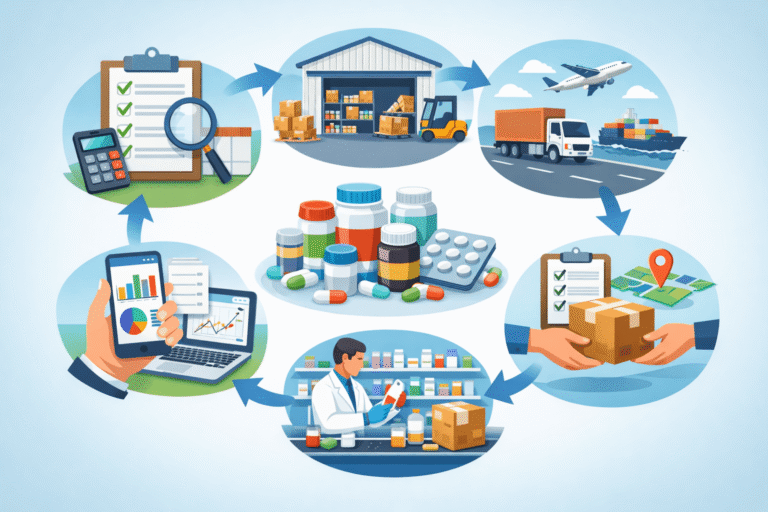
6-Step Logistics Management System for Pharma Franchise
Step 1: Order Planning
Order planning should be driven by actual market demand, not company schemes. Track weekly sales and prescription trends to decide what to reorder and in what quantity. Overordering just to get extra margin often leads to dead stock and expiry. A controlled, demand-based approach keeps your cash flow stable.
Step 2: Supplier Coordination
Before making any payment, always confirm real-time stock availability with the company or CNF. Also verify batch details and expiry to avoid receiving short-expiry or mismatched stock. Poor coordination often results in partial dispatch or unusable inventory. Clear communication here prevents major downstream issues.
Step 3: Transport Selection
Choosing a reliable transporter is critical for timely and safe delivery. Don’t just go for the cheapest option—consider consistency, handling quality, and delivery timelines. Balancing speed and cost is important, especially for urgent or sensitive products. A poor transporter can disrupt your entire supply chain.
Step 4: Stock Tracking
Maintain a simple but disciplined system to track all incoming and outgoing stock. Even an Excel sheet can help you monitor fast-moving and slow-moving products effectively. Without tracking, you lose visibility on inventory and risk overstocking or stock-outs. This step is the backbone of stock management in PCD pharma.
Step 5: Expiry Monitoring
Review your stock at least once every month to identify near-expiry products. Create a system to flag items with less than 6 months shelf life. Push these products aggressively into the market through retailers or schemes. Ignoring expiry monitoring often results in direct financial loss.
Step 6: Retailer Supply Optimization
Ensure that your key retailers always have minimum stock available for fast-moving products. Regular follow-ups and timely delivery help avoid stock-outs at the shop level. If a retailer doesn’t have your product when a prescription comes, the sale is lost instantly. Strong retailer supply is what converts logistics into consistent revenue.

Expert Mistakes to Avoid
- Ordering based on schemes instead of demand
- Ignoring expiry tracking
- Depending on single transporter
- Not checking stock at retailer level
- Overestimating company support
- Poor handling of injections and syrups
Conclusion
Logistics is not a backend activity in pharma — it is your profit engine. In the real world:
- Good products don’t sell without availability
- Doctors don’t wait for delayed stock
- Retailers don’t trust inconsistent supply
If you’re serious about building a sustainable pharma franchise business model, you must treat logistics as a core function — not an afterthought.
Because in this business: The fastest supplier wins — not the cheapest one.