
Table of Contents
ToggleMost people think success in a PCD pharma franchise in India depends on product quality, marketing, and doctor connections. But in real-world operations, regulation is the biggest hidden factor that decides survival. In my experience handling audits, license renewals, and compliance failures across multiple states, I’ve seen one consistent pattern:
Strong distributors fail not because of sales—but because of regulatory gaps.
What makes it worse is that:
- Pharma companies rarely explain full compliance risks
- Distributors underestimate documentation and legal responsibilities
- Small mistakes can stop business operations instantly
This blog breaks down how regulatory changes actually affect your pharma franchise business model, not just theoretically—but from ground-level experience in markets like Ahmedabad, Jaipur, and Lucknow.
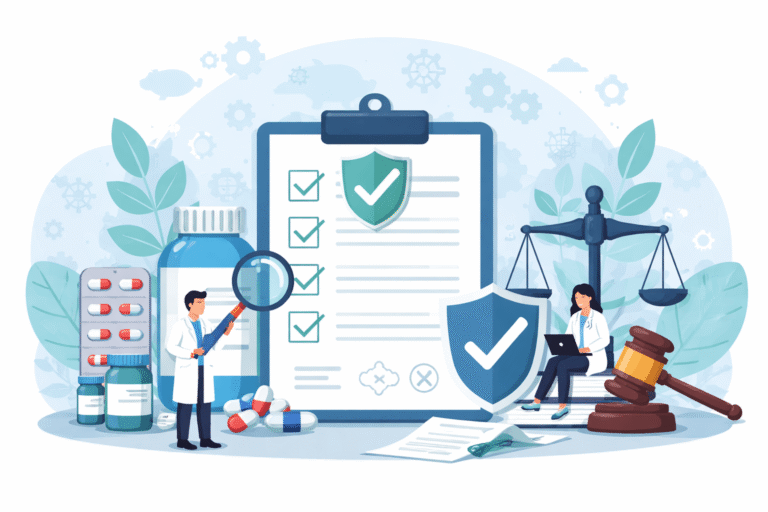
Understanding Regulatory Framework in Pharma Franchise
Central Drugs Standard Control Organization (CDSCO)
CDSCO is the central regulatory authority responsible for approving drugs, clinical trials, and ensuring overall drug safety in India. It sets national standards that pharma companies must follow before launching products. For franchise holders, CDSCO compliance ensures that the products they distribute are legally approved and safe for the market. Any non-compliance at this level can lead to stock seizure or legal action.
State Drug Control Departments
State Drug Control Departments handle drug license issuance, renewals, and on-ground inspections of distributors and retailers. They ensure storage conditions, documentation, and sales practices comply with the Drugs & Cosmetics Act. For pharma franchise businesses, these authorities are the most directly involved, as they conduct audits and can suspend or cancel licenses for violations.
Goods and Services Tax Department
The GST Department governs taxation, billing, and input tax credit in pharma distribution. It ensures transparency in transactions and proper tax collection across the supply chain. For franchise owners, GST compliance affects pricing, margins, and cash flow, especially due to ITC matching and return filings. Errors here often lead to penalties or working capital blockage.
National Pharmaceutical Pricing Authority
NPPA regulates the pricing of essential medicines to keep them affordable for the public. It fixes price ceilings on scheduled drugs under the Drug Price Control Order (DPCO). For pharma franchise businesses, this directly impacts profit margins, as sudden price revisions can reduce earnings or create losses on existing stock.

How Regulatory Changes Actually Impact Pharma Franchise Business
Regulatory changes don’t just affect paperwork—they directly impact:
- Stock movement
- Billing cycles
- Margins
- Doctor prescriptions
- Business continuity
Ground Reality
- In 60–70% of cases, distributors struggle during license renewal due to incomplete documentation
- Regulatory delays can halt operations for 30–90 days in Tier-2 cities
- Around 50–60% small distributors are not fully GST-compliant, leading to penalties or blocked input credit

Key Regulatory Areas That Affect Franchise
1. Drug License Rules
Drug license regulations are introduced to ensure that only qualified and authorized entities handle pharmaceutical distribution. For pharma franchise holders, having a valid wholesale drug license, a registered pharmacist, and proper storage conditions is mandatory. On the ground level, many applications get rejected due to improper premises or weak documentation, and renewals are often delayed due to missing records. In real audits, even small lapses like not maintaining refrigerator temperature logs have led to temporary business shutdowns.
2. GST Impact on Pharma Distribution
GST was implemented to unify the indirect tax system and bring transparency to business transactions. In pharma distribution, it directly affects input tax credit (ITC), billing accuracy, and monthly return filings. However, in real scenarios, ITC mismatches due to supplier errors and retailer resistance to GST billing create serious cash flow issues. Many distributors unknowingly lose 2–5% of their margins purely due to improper GST handling rather than pricing problems.
3. Price Control
Price control regulations by NPPA aim to make essential medicines affordable for the public by capping their maximum retail price. While this benefits consumers, it limits pricing flexibility for distributors and directly impacts profit margins. In real market situations, sudden price revisions often lead to unsold stock becoming loss-making. I’ve seen distributors stuck with inventory worth ₹2–5 lakhs after unexpected price cuts.
4. CDSCO Compliance & Product Approvals
CDSCO regulations are designed to ensure the safety, efficacy, and quality of pharmaceutical products in the market. Pharma companies must obtain proper approvals before launching products, but distributors are often unaware of the compliance status. On the ground level, this creates serious risks, as drug inspectors can seize non-compliant stock or issue legal notices. In many cases, companies fail to fully inform franchise partners about product approvals, increasing liability.
5. Schedule H / H1 Drug Restrictions
Schedule H and H1 regulations are introduced to prevent misuse and over-the-counter sale of prescription drugs. These rules require strict record-keeping and ensure that such medicines are sold only against valid prescriptions. However, in real market conditions, retailers often demand supply without prescriptions, putting pressure on distributors to compromise. This becomes one of the most common and risky compliance challenges in day-to-day pharma operations.

Real Benefits of Regulatory Compliance
Builds Trust with Doctors and Retailers
Regulatory compliance creates a strong credibility factor in the market, especially among doctors and chemists. When your billing, documentation, and product quality are consistently compliant, it signals professionalism and reliability. In real scenarios, doctors prefer prescribing brands from distributors who follow proper norms. Over time, this trust directly improves repeat business and prescription flow.
Reduces Risk of Stock Seizure
Proper compliance significantly lowers the chances of stock seizure during drug inspections. When invoices, batch records, and storage conditions are well-maintained, drug inspectors find no grounds for action. In many real cases, stock is seized not due to product issues but due to missing documentation. A compliant setup acts as a safety shield during audits.
Ensures Smooth Audits and Renewals
Maintaining regulatory discipline ensures that drug license audits and renewals happen without delays or objections. When records like purchase bills, stock registers, and temperature logs are updated regularly, inspections become routine rather than stressful. In practice, compliant distributors face faster approvals and fewer disruptions. This continuity keeps business operations stable.
Improves Long-Term Business Stability
Compliance is not just about avoiding penalties—it builds a strong foundation for long-term growth. Businesses that follow regulations consistently face fewer operational risks, legal issues, and financial shocks. In real markets, compliant distributors sustain longer and scale better compared to those taking shortcuts. Stability ultimately leads to better expansion opportunities and profitability.

Hidden Challenges & Failure Reasons Due to Regulations
Lack of Documentation System
A weak or unorganized documentation system is one of the most common reasons for compliance failure in pharma franchise businesses. Many distributors maintain incomplete stock records, missing invoices, or irregular logs, which creates problems during inspections. In real audits, even profitable businesses get penalized due to poor record management. Proper documentation is not optional—it’s the backbone of compliance.
Overdependence on Pharma Company Guidance
Many franchise holders rely completely on pharma companies for compliance guidance, which is a major mistake. While companies support marketing and product supply, regulatory responsibility lies entirely with the distributor. In real scenarios, companies rarely provide audit-level compliance support. This gap often leads to legal risks that distributors are unprepared to handle.
Ignoring Small Compliance Details
Small compliance lapses like missing temperature logs, unsigned invoices, or incomplete registers are often ignored in daily operations. However, during inspections, these minor issues become major objections. In my experience, many penalties and warnings arise from such overlooked details rather than serious violations. Consistency in small practices makes a big difference in compliance outcomes.
Reactive Approach
A reactive approach—where compliance is addressed only after receiving notices or during inspections—creates continuous risk. Many distributors delay corrective actions until issues escalate, leading to penalties or business interruptions. In real markets, proactive compliance planning is what separates stable businesses from struggling ones. Prevention is always more cost-effective than correction.
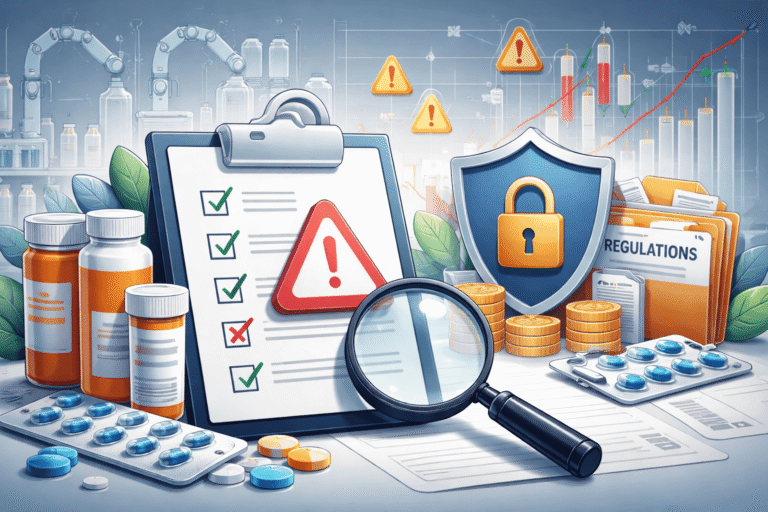
What Pharma Companies Don’t Tell You About Regulatory Risks
1. “We Provide Full Support” – Not Entirely True
Many pharma companies claim to offer complete support, but in reality, their focus is mainly on marketing and product supply. Compliance responsibilities like drug license management, GST filing, and audit handling remain entirely with the distributor. In real scenarios, this gap creates confusion and risk for new franchise owners. Relying blindly on company support often leads to unexpected legal issues.
2. Hidden Compliance Burden
Running a pharma franchise involves more compliance work than most companies disclose upfront. Daily responsibilities include maintaining stock records, ensuring billing accuracy, and tracking prescription-based sales. These tasks require consistency and attention to detail, not just occasional effort. Many distributors underestimate this burden and struggle to manage it alongside sales operations.
3. No Audit Preparation Guidance
Most pharma companies do not provide proper training or guidance for handling drug inspections and audits. When a drug inspector visits, distributors are expected to manage documentation and answer compliance queries on their own. In real situations, lack of preparation leads to panic, errors, and penalties. This is why many distributors feel unprepared during inspections despite having good sales performance.

Real Case Scenarios from Market
Case 1: License Renewal Delay
A distributor in Ahmedabad faced a 45-day delay due to:
- Missing purchase records
- Incomplete documentation
Result
Zero business during that period + loss of retailer trust
Case 2: GST Mismatch Issue
Distributor in Jaipur:
- Supplier uploaded wrong GST data
- ITC blocked for 3 months
Result
Working capital crisis
Case 3: NPPA Price Cut Loss
Lucknow distributor:
- Stock purchased at old MRP
- Price reduced by NPPA
Result
₹3 lakh dead stock

6-Step Compliance Safety Framework for Pharma Franchise
Step 1: Verify Drug License Validity
Before starting or continuing operations, always ensure your drug license is valid and up to date. Check expiration dates in advance and confirm that a qualified pharmacist or competent person is officially registered. In real cases, many businesses face sudden shutdowns simply because they overlooked renewal timelines. Regular monitoring avoids last-minute compliance risks.
Step 2: Check Company Compliance History
Never rely only on marketing claims—verify the pharma company’s compliance background thoroughly. Ask for product approvals, certifications, and regulatory documents before onboarding. In practice, many distributors unknowingly deal with non-compliant products due to lack of verification. A compliant company reduces your legal exposure significantly.
Step 3: Understand Product Category Regulations
Each product category comes with specific legal requirements, especially Schedule H and H1 drugs. You must clearly identify which products require prescription control and strict record-keeping. On the ground level, confusion in this area often leads to violations during inspections. Knowing these rules helps avoid daily operational risks.
Step 4: Prepare Documentation System
A strong documentation system is the backbone of compliance in pharma distribution. Maintain updated stock registers, purchase and sales records, and temperature logs for sensitive products. In real audits, incomplete or disorganized records are one of the biggest reasons for penalties. Proper documentation ensures smooth inspections and builds operational discipline.
Step 5: Monitor GST & Billing Accuracy
GST compliance requires continuous monitoring of billing accuracy and tax filings. Monthly reconciliation and supplier data verification are critical to avoid input tax credit (ITC) mismatches. In many cases, small billing errors lead to blocked funds and reduced margins. A proactive approach helps maintain cash flow and financial stability.
Step 6: Plan Renewal & Inspections
Always start your license renewal process at least 60–90 days before expiry to avoid delays. Keep all documents audit-ready so that inspections can be handled confidently at any time. In real scenarios, unprepared distributors face unnecessary stress and operational interruptions. Planning ahead ensures business continuity without disruption.
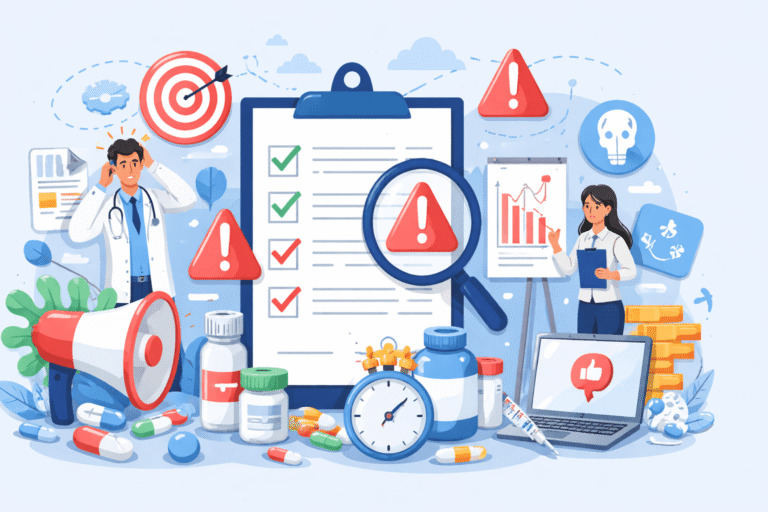
Expert Insights & Common Mistakes to Avoid
Common Mistakes
- Ignoring minor documentation
- Trusting company blindly
- Delaying renewals
- Poor GST reconciliation
Expert Advice
- Treat compliance like daily operations, not yearly work
- Train staff for inspections
- Keep digital + physical records
- Stay updated with regulatory changes
Conclusion
Regulatory changes are not just legal updates—they are business survival factors. A pharma franchise business model can look highly profitable on paper, but without compliance:
- Operations can stop overnight
- Stock can be seized
- Licenses can be suspended
The difference between a successful and failed pharma franchise is often compliance discipline—not sales skill. If you’re starting a pharma franchise, focus as much on regulations as you do on marketing.