
Table of Contents
ToggleIf you’ve been exploring the PCD pharma franchise in India, you’ve probably noticed one thing—metro cities are crowded, competitive, and expensive to crack.
In my experience working across cities like Ahmedabad, Lucknow, Indore, and Nagpur, I’ve seen a clear shift: real growth is no longer in Tier-1 cities—it’s moving toward Tier-2 and Tier-3 markets.
But here’s the reality most companies won’t tell you:
- Not every “emerging city” is profitable
- Demand exists, but conversion takes time
- Stock movement depends more on doctor trust than population size
In this blog, I’ll break down real, ground-level insights from working with 50+ distributors—so you can make smarter decisions while starting a pharma franchise or scaling your existing network.

What Are Emerging Cities in Pharma Franchise Context
In the pharma franchise business model, “emerging cities” are not just smaller cities—they are markets with growing healthcare demand but relatively low pharma saturation.
These typically include:
- Tier-2 cities (Indore, Lucknow, Nagpur, Surat)
- Tier-3 cities (Rajkot, Gorakhpur, Hubli, Gwalior)
In 70% of emerging cities I’ve worked in, the common pattern is:
- Increasing patient load due to urbanization
- Rising awareness of generic medicines
- Limited presence of organized pharma franchise players
This creates a high-opportunity, low-competition environment—if executed correctly.

Why Emerging Cities Are Becoming Growth Hubs
1. Rising Chronic Disease Demand
Smaller cities are witnessing a steady rise in lifestyle diseases like diabetes, hypertension, and cardiac issues, which directly increases demand for long-term medications. Unlike acute treatments, these therapies ensure repeat prescriptions and stable business flow. In most Tier-2 markets, around 60–70% prescriptions are shifting toward cost-effective generics, making them highly suitable for PCD franchise players.
2. Doctor Accessibility Is Higher
In emerging cities, doctors are comparatively more accessible, making it easier for pharma representatives to build relationships. Unlike metro cities where doctors are overbooked and brand-loyal, smaller city practitioners are open to trying new products. Regular MR visits, consistent follow-ups, and personal engagement often lead to better prescription conversions.
3. Lower Competition = Faster Entry
Many distributors overlook cities like Ahmedabad, Indore, and Nagpur, assuming metros offer better opportunities. However, lower competition in these regions allows quicker entry into the market. This results in faster doctor onboarding, smoother stock placement, and better margin negotiations, especially for new entrants.
4. Faster Trust Building
In Tier-3 cities, once a doctor gains confidence in your product quality and results, long-term loyalty is much stronger than in metro markets. While initial conversion may take time, consistent follow-ups and product performance help build lasting trust. This ultimately leads to stable prescriptions and repeat business over time.
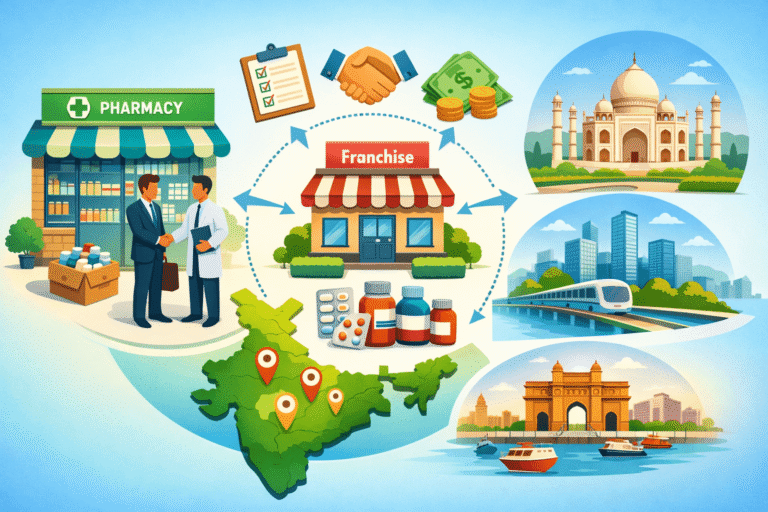
How Pharma Franchise Actually Works in These Cities
Let’s talk practical—not theory. In smaller cities, the pharma franchise business model works differently:
1. MR Visits Doctors → Builds Relationships
The first step in smaller cities is consistent MR visits to doctors, which focus more on relationship-building than direct selling. Doctors in Tier-2 and Tier-3 markets value personal interaction and trust over aggressive promotion. Regular visits help create familiarity, which is the foundation for future prescriptions.
2. Small Sample Distribution
After initial meetings, providing limited but strategic samples allows doctors to test the product quality. Instead of pushing bulk, smart sampling builds curiosity and reduces risk from the doctor’s side. This step is critical in initiating product trials without pressure.
3. Doctors Try 1–2 Prescriptions
Once samples are accepted, doctors usually start with 1–2 prescriptions to evaluate patient response. This stage is slow but important, as doctors carefully observe effectiveness, patient feedback, and affordability. Positive results at this level open the door for further usage.
4. Gradual Increase in Trust
If the initial prescriptions deliver good results, trust begins to build gradually. Doctors start becoming more confident in recommending the product to more patients. Consistency in quality and MR follow-up plays a major role in strengthening this trust.
5. Distributor Places Repeat Orders
As prescriptions increase, demand at the chemist level improves, leading to repeat orders from distributors. This is where actual business stability begins, as stock movement becomes consistent. Over time, this cycle creates a reliable and scalable revenue stream.

Top Emerging Cities for PCD Pharma Franchise in India
1. Ahmedabad
Ahmedabad offers a strong and stable market, especially for cardiac and diabetic products due to rising lifestyle diseases. The city has a high number of private clinics, creating multiple entry points for new players. While central areas are competitive, suburban zones still offer untapped opportunities. Focusing on doctor clusters in developing areas can deliver consistent results.
2. Indore
Indore is one of the fastest-growing Tier-2 pharma markets with excellent doctor density and strong acceptance of generic medicines. Product movement, especially in antibiotics and gastro range, is noticeably faster here. In my experience, distributors see quicker stock rotation compared to many other similar cities. It’s ideal for those looking for early traction.
3. Lucknow
Lucknow’s large population ensures high prescription volume across both acute and chronic segments. The demand base is strong, but payment cycles can sometimes be slower, requiring better follow-up and credit management. Consistent MR activity is key to maintaining doctor engagement. With patience, this market can deliver long-term stability.
4. Nagpur
Nagpur’s central location makes it a strategic distribution hub, allowing smooth supply to nearby regions. The demand is well-balanced across different product categories, reducing dependency on a single segment. It is a practical choice for scaling operations in a structured way. Many distributors use Nagpur as a base for expansion.
5. Surat (Gujarat)
Surat has a high patient load and rapidly growing private healthcare infrastructure, which supports strong medicine demand. However, competition is increasing as more players enter the market. Success here depends heavily on smart positioning and differentiation. A clear entry strategy is essential to avoid slow movement.
6. Rajkot / Smaller Gujarat Cities
In most smaller cities of Gujarat, generic medicines dominate prescriptions due to price sensitivity. Doctors often prefer cost-effective brands that deliver reliable results. This creates an environment of high margins combined with steady demand. With the right product mix, these markets can be very profitable.
7. Gorakhpur / Tier-3 UP Cities
Tier-3 cities like Gorakhpur offer low competition and strong dependence on local distributor networks. While initial growth is slow due to limited doctor reach, stability improves over time. Once established, these markets provide consistent and predictable business. They are ideal for long-term, low-risk expansion strategies.

Real Benefits of Targeting Emerging Cities
Lower Investment Risk
When starting a pharma franchise in smaller cities, the financial risk is significantly lower compared to metros. You can begin with limited stock, test market response, and expand gradually without heavy upfront investment. Operational costs like marketing, staffing, and logistics are also more manageable, making it ideal for new entrants.
Faster Break-even
Emerging cities often offer quicker break-even timelines due to lower competition and steady demand. In most practical cases, businesses achieve break-even within 4–8 months, provided the product selection and doctor targeting are accurate. Consistent MR activity further accelerates this process.
Strong Long-Term Stability
Unlike metro markets where intense competition reduces margins and brand switching is frequent, smaller cities provide more stability. Once doctors trust your products, they tend to stick with them for longer periods. This results in consistent repeat orders and a more predictable revenue stream over time.

Hidden Challenges & Failure Reasons
Slow Initial Sales
Let’s be honest—this is where most new entrants lose patience. In Tier-2 markets, doctors rarely switch brands immediately, even if your product is good. They prefer observing results over time before increasing prescriptions. This makes the initial 2–3 months slow, but it’s a normal part of the market cycle.
Wrong Product Selection
One of the most common mistakes I’ve seen is choosing products based only on high margins. In reality, if there’s no local demand or doctor preference, those products simply don’t move. Even a 70% margin product is useless if it sits in stock. Market-driven selection always beats margin-driven decisions.
Weak MR Activity
In smaller cities, business growth is directly tied to consistent fieldwork. Without regular MR visits, doctor engagement drops and prescriptions don’t happen. Unlike metro cities where brand recall can help, PCD Pharma Franchise in Tier 2 Cities in India relies heavily on personal follow-ups. No MR effort essentially means no business growth.

Real Benefits of Targeting What Most Pharma Companies Won’t Tell You About Emerging Cities
“Untapped Market” Is Overhyped
This is one of the biggest myths in the pharma franchise space. Yes, emerging cities have demand—but awareness is often limited, and doctors are cautious about new brands. Conversion doesn’t happen instantly; it requires consistent follow-ups and proven product results. Without effort, even a “high-potential” market can stay inactive.
Rural Belts Are Not Easy
Many companies promote rural expansion as a quick-win strategy, but the ground reality is different. Doctor availability is limited, prescription volumes are lower, and patients are highly price-sensitive. This makes product movement slower and margins harder to sustain. Rural markets need a different, more patient approach.
Slower Prescription Cycle
In emerging cities, doctors take time to trust new products and brands. It’s common for them to observe results over 2–3 months before increasing prescriptions. This slower cycle is completely normal but often misunderstood by new distributors. Those who stay consistent during this phase usually see long-term gains.

Real Case Scenarios
Case 1: Fast Growth in a Tier-3 City
A distributor in Rajkot:
- Started with limited antibiotic range
- Focused on 15–20 doctors only
Within 6 months:
- Achieved stable monthly orders
- Expanded product range gradually
Case 2: Failure Due to Wrong City Choice
A new entrant chose a highly competitive zone in Surat:
- High competition
- No differentiation
Result:
- Stock stuck for 5+ months
- Cash flow blocked
Case 3: Slow Start but Strong Growth
In Lucknow:
- Initial 3 months = very low sales
- Strong MR activity maintained
After 6 months:
- Doctor trust improved
- Orders increased steadily

Who Should & Should NOT Target Emerging Cities
Ideal For:
- New entrants in PCD pharma business in India
- Low-investment startups
- Long-term growth-focused distributors
Not Ideal For:
- People expecting quick profits
- No fieldwork capability
- No patience for relationship-building

How to Select the Right Emerging City (Step-by-Step Framework)
Step 1: Check Doctor Density
Start by evaluating how many doctors are actually available in the target city. Count clinics, hospitals, and specialists to understand the real prescription base. A city may have a large population, but without sufficient doctors, business potential remains limited. Higher doctor density directly increases your chances of consistent prescriptions.
Step 2: Analyze Competition
Visit local chemist shops and observe which brands are already performing well. Identify dominant companies, their pricing strategies, and product positioning. This gives you a clear picture of market saturation and gaps you can target. Real ground-level observation is far more accurate than assumptions.
Step 3: Evaluate Product Demand
Understand what type of medicines are actually moving in that area. Acute segments like antibiotics move faster, while chronic segments like cardiac and diabetic ensure long-term repeat business. Derma products offer higher margins but require patience. A balanced product mix is key to steady growth.
Step 4: Understand Distribution Network
A strong local stockist or distributor network ensures smooth product availability and faster delivery. Without proper distribution support, even good products fail to reach chemists on time. Check how efficiently medicines are supplied in that region. Logistics strength often defines business success in smaller cities.
Step 5: Start Small
Avoid heavy investment in the beginning and enter the market with limited stock. This allows you to test real demand without risking large capital. Observe prescription trends, doctor response, and stock movement before expanding. Smart scaling always works better than aggressive entry.

Step-by-Step Strategy to Enter These Markets
- Select 1 city + 1 focused product segment
- Appoint a local MR or handle personally
- Target 20–30 doctors initially
- Provide samples strategically
- Track prescriptions weekly
- Expand only after repeat demand

Expert Mistakes to Avoid
- Choosing city based on population only
- Ignoring doctor behavior
- Overloading stock initially
- Expecting fast ROI
- Not doing field visits
Conclusion:
Emerging cities are not shortcut opportunities—they are smart opportunities.
In my experience:
- 70% of successful pharma franchise businesses today are growing from Tier-2 and Tier-3 cities
- But success depends on execution, patience, and correct city selection
If you understand ground reality and follow a structured approach, these cities can offer:
Lower risk
Stable growth
Strong long-term returns