
The Antibiotic Pharma Franchise Business In India looks highly attractive on the surface—constant demand, essential medicines, and strong doctor dependency. But after working with 50+ PCD distributors and auditing multiple antibiotic-focused setups, I can tell you this:
Antibiotics are one of the most misunderstood segments in the pharma franchise model.
There is demand, yes—but access to that demand is tightly controlled by doctors, brand trust, and prescription behavior.
In this guide, I’ll break down:
- What really works in antibiotic franchise
- Why most beginners struggle
- Real ground-level patterns from Tier-2 & Tier-3 markets
- A safe entry strategy based on actual field experience

Understanding the Antibiotic Pharma Franchise Model
In a typical Best PCD pharma franchise in India , a distributor partners with a pharmaceutical company, obtains rights to market specific products in a defined area, and sells medicines through doctors, chemists, and hospitals. On paper, the model looks straightforward—supply products, build a network, and generate sales. However, when it comes to the antibiotic segment, the dynamics change significantly. Unlike general pharma products where demand can sometimes be driven by retailers or over-the-counter movement, antibiotics operate in a highly prescription-controlled ecosystem.
What makes antibiotics fundamentally different is the level of control and trust involved in their usage. Most antibiotics fall under Schedule H or H1, which means they cannot legally be sold without a valid doctor’s prescription. This immediately removes the possibility of direct consumer-driven demand. In reality, doctors become the primary gatekeepers of your business, and without their approval, even the best-stocked products will not move from the shelves.
Another critical factor is strong brand loyalty among doctors. In my experience working with antibiotic distributors, doctors are extremely cautious when prescribing antibiotics because they directly impact patient recovery and resistance patterns. They tend to stick with brands they have used for years and trust clinically. Convincing them to switch to a new or lesser-known brand is not easy—it requires consistent follow-ups, proven results, and confidence in the company behind the product.
Additionally, antibiotics are typically used for acute conditions, meaning they are prescribed for short durations (5–7 days or as required) rather than long-term use like chronic medicines for diabetes or hypertension. This limits repeat purchases and makes demand less predictable, especially for new brands trying to establish themselves in the market.
In simple terms: You are not directly selling antibiotics to patients—you are earning prescriptions from doctors.
And that shift—from product selling to prescription earning—is what defines success or failure in the antibiotic pharma franchise business.
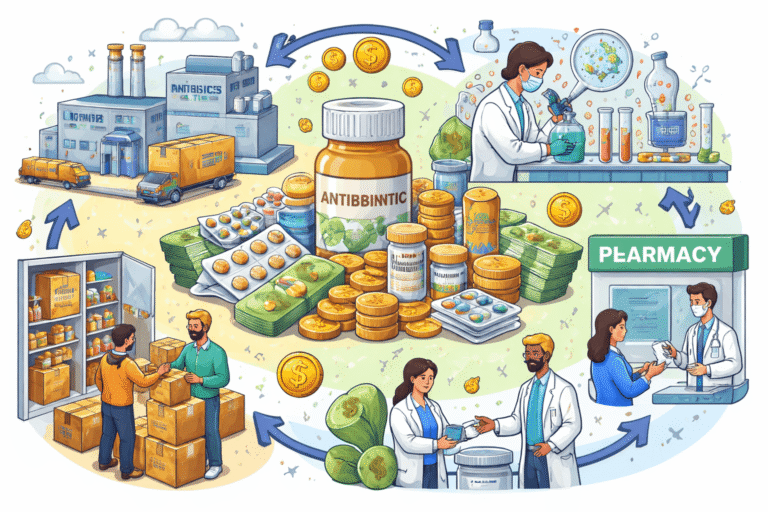
How Antibiotic Business Actually Works in Real Market
Reality #1: Demand exists—but not for your brand
While antibiotic demand is consistently high, it is largely captured by established brands with strong doctor trust. In most cases, doctors stick to brands they’ve used for years due to reliability and patient outcomes. Chemists also prefer stocking fast-moving, well-known products to avoid dead inventory. As a result, new brands struggle to gain initial traction despite market demand.
Reality #2: Top molecules dominate—but are overcrowded
Popular antibiotic molecules like Amoxicillin-Clavulanate and Azithromycin drive a large portion of prescriptions, but they are heavily saturated with competing brands. This intense competition limits pricing power and reduces margin flexibility for new entrants. Doctors tend to prescribe familiar brands, making it difficult for new players to enter. Without differentiation, survival in these molecules becomes challenging.
Reality #3: Prescription conversion is slow
Antibiotic prescriptions are highly brand-loyal, with most doctors hesitant to switch to new brands quickly. Factors like patient safety, clinical confidence, and past experience heavily influence prescribing behavior. Building trust takes time, consistent follow-ups, and proven results. This makes the antibiotic segment a gradual-growth business rather than a quick-return opportunity.

Real Benefits
Consistent Demand (Conditional)
Antibiotics are essential medicines, so demand exists throughout the year, especially during infection-heavy seasons like monsoon and winter. However, this demand is not evenly distributed across all brands. Doctors usually prescribe only those brands they trust and have used consistently. As a result, new entrants don’t automatically benefit from market demand.
Good Margins
Antibiotic products often come with higher MRPs, allowing scope for decent margins at distributor and retailer levels. Combination molecules can further improve profitability if positioned well. However, these margins are only meaningful when prescriptions are generated consistently. Without doctor support, even high-margin products may remain unsold.
Scalability
Once your antibiotic brand gains acceptance among doctors, it can lead to repeat prescriptions and stable monthly sales. This creates an opportunity to scale the business over time and expand product range. However, reaching this stage requires consistent effort, relationship building, and patience. The initial phase is usually slow and challenging before growth stabilizes.

Hidden Challenges & Failure Reasons
1. Overestimating Demand Access
Many beginners assume antibiotics will sell automatically due to high demand, but this is a major misconception. Without doctor prescriptions, even high-demand products won’t move from shelves. Chemists also avoid pushing unknown brands due to low customer demand. As a result, stock remains idle despite market need.
2. Wrong Molecule Selection
A common mistake while building a franchise in the antibiotic segment is choosing overcrowded antibiotic molecules already dominated by established brands. In most failed cases, distributors enter highly competitive segments without any differentiation. This leads to price wars and low visibility among doctors. Without a strategic molecule selection, survival becomes difficult.
3. Weak Company Support
Many pharma companies make attractive promises like monopoly rights and high margins to attract distributors. However, they often lack real on-ground support such as MR assistance, doctor coverage planning, and brand-building strategies. Without this support, distributors struggle to generate prescriptions. This gap directly impacts sales growth.
4. Expiry Losses
Antibiotics come with a limited shelf life and require steady movement to avoid losses. Since initial sales are usually slow, stock may remain unsold for long periods. This increases the risk of product expiry, especially for new brands. Expired inventory directly leads to financial loss and reduced confidence.
5. Credit Cycle Pressure
Retailers typically demand 30–60 days of credit, which puts pressure on new distributors. At the same time, your antibiotic stock may not be moving fast enough to generate cash flow. This creates a mismatch between incoming and outgoing money. Poor credit control can quickly lead to liquidity issues.

What Most Pharma Companies Won’t Tell You About Antibiotic Franchise
“Monopoly Rights” Are Mostly Illusion
Many pharma companies promote monopoly rights as a major advantage, but in reality, it has limited impact in the antibiotic segment. The same molecules are sold under multiple brand names across the market. Doctors prescribe based on brand trust, not territorial exclusivity. Without prescriptions, monopoly rights offer no real business benefit.
High Competition in Core Molecules
Top antibiotic molecules are already saturated with numerous established brands dominating prescriptions. Large pharma companies hold strong relationships with doctors, making entry difficult for new players. Competing in these crowded segments often leads to low visibility and margin pressure. Entering late means facing intense competition from day one.
Doctor Resistance Is Real
Doctors are highly cautious when prescribing antibiotics, especially for serious infections. They prefer brands with proven results and consistent quality. New or unknown brands face hesitation due to patient safety concerns and lack of clinical confidence. Building trust requires time, consistent follow-ups, and strong product positioning.
Slow Movement Risk
Unlike chronic medicines, antibiotics are used for short durations and are not consumed daily. This results in irregular demand patterns, especially for new brands. Initial stock movement is often slow, leading to inventory sitting idle for weeks or months. Without proper planning, this increases the risk of expiry and financial loss.

Real Case Scenarios
Case 1: ₹2 Lakh Investment – Slow Movement
A distributor in Ahmedabad
- Invested ₹1.8 lakh in antibiotic range
- Focused on common molecules
Outcome
- Doctors didn’t shift brands
- Chemists refused bulk stocking
- 40% stock moved in 5 months
Case 2: Overcrowded Molecule Failure
New entrant chose
- Amoxicillin-Clavulanate
- Azithromycin
Without differentiation:
- Competing with 50+ brands locally
Outcome
- No recall
- Heavy discounting
- Loss of confidence
Case 3: Strategic Entry Success
Smart distributor
- Focused on less crowded cephalosporin combinations
- Targeted specific doctors (pediatric + GP)
Outcome
- Slow start (3 months)
- Stable prescriptions after 6 months
- Break-even in 8 months

Who Should & Should NOT Start
Ideal for
- People with doctor network
- Existing pharma distributors expanding portfolio
- Those with patience (6–12 months runway)
Not ideal for
- Beginners expecting quick returns
- Investors without field execution
- People relying only on company promises

6-Step Safe Entry Strategy for Antibiotic Pharma Franchise
Step 1: Smart Molecule Selection
Choosing the right molecules is critical for survival in the antibiotic segment. Avoid highly overcrowded combinations where brand competition is intense and doctor loyalty is already fixed. Instead, focus on moderately competitive or niche segments like pediatric antibiotics or infection-specific therapies. This increases your chances of getting initial prescriptions and reduces direct competition pressure.
Step 2: Company Verification
Before partnering, thoroughly verify the pharma company beyond marketing claims. Check for quality certifications, manufacturing standards, and actual market presence of their products. Speak with existing distributors to understand real support and product movement. Ground-level verification helps avoid companies that promise more but deliver less.
Step 3: Doctor Targeting Strategy
Antibiotic sales depend heavily on the right doctor network. Focus on General Physicians, pediatricians, and small clinics that generate frequent prescriptions. Instead of random visits, build consistent relationships and trust over time. Strong doctor engagement is the foundation for steady prescription flow.
Step 4: Controlled Inventory Planning
Start with a limited number of products and maintain low stock levels in the beginning. Since antibiotic movement is slow initially, overstocking can lead to expiry losses. Gradually increase inventory based on actual demand and prescription trends. This approach minimizes financial risk and improves stock efficiency.
Step 5: MR Support or Self-Promotion
Active promotion is essential in the antibiotic segment to gain doctor attention. You can either hire a Medical Representative (MR) or personally visit doctors to build connections. Regular follow-ups and product detailing are key to generating prescriptions. Without consistent promotion, even good products may not move.
Step 6: Strong Credit Control
Managing credit is crucial to maintaining healthy cash flow in the early stages. Avoid offering long credit periods to retailers until your products gain steady movement. Work only with reliable chemists who have a good payment track record. Strong credit discipline helps prevent financial stress and ensures business sustainability.

Expert Insights / Mistakes to Avoid
Don’t chase margins—chase prescriptions
High margins may look attractive, but without prescriptions, products won’t move. In the antibiotic segment, doctor approval is the real driver of sales, not pricing. Even low-margin products can generate steady income if prescriptions are consistent. Focus on building doctor trust first—profits will follow.
Avoid bulk buying in first 3 months
In the initial phase, product movement is unpredictable due to low brand awareness. Bulk purchasing increases the risk of unsold stock and expiry losses. It’s better to start small and scale inventory based on actual demand. This approach protects your capital and reduces unnecessary risk.
Never depend only on chemist push
Chemists usually prefer selling fast-moving and well-known brands to avoid dead stock. They rarely push new or unknown antibiotic brands without demand. Relying only on chemists limits your growth potential. Doctor prescriptions are essential to create real demand in the market.
Doctor recall matters more than product quality initially
Even if your product quality is good, it won’t matter unless doctors recognize and trust your brand. In the early stage, brand recall plays a bigger role in prescription decisions. Doctors tend to prescribe familiar names they are confident about. Building recall through regular visits is key to success.
Patience is your biggest asset
The antibiotic franchise business does not deliver instant results, especially for new entrants. Building doctor relationships and gaining trust takes time and consistent effort. Many distributors fail because they expect quick returns and give up early. Staying patient and focused is crucial for long-term success.
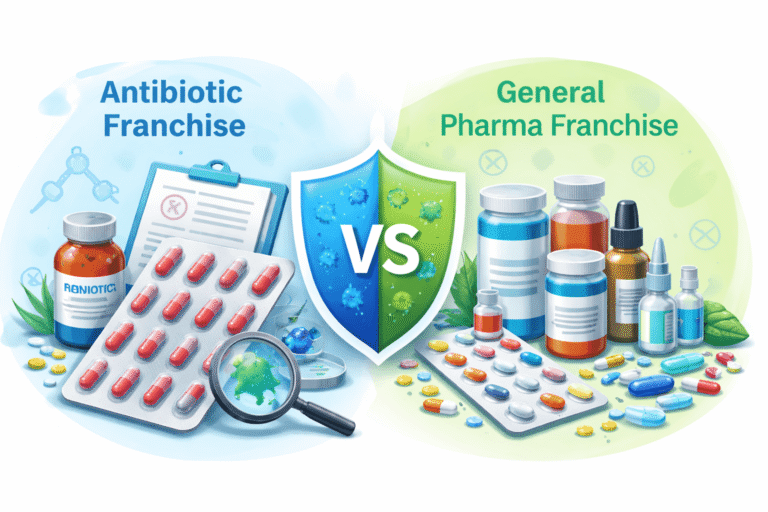
Antibiotic Franchise vs General Pharma Franchise
| Factor | Antibiotic Franchise | General Pharma Franchise |
|---|---|---|
| Demand Type | Prescription-driven | Mixed |
| Entry Difficulty | High | Moderate |
| Brand Dependency | Very High | Medium |
| Risk | Higher | Balanced |
| Break-even | 6–10 months | 3–6 months |
Conclusion
The antibiotic pharma franchise business in India is not a shortcut to profit—it’s a relationship-driven, trust-based, and execution-heavy business.
If you:
- Understand doctor psychology
- Choose molecules wisely
- Control inventory
- Stay consistent for 6–10 months
You can build a stable and scalable business
But if you:
- Rely only on company promises
- Expect fast returns
- Ignore doctor engagement
Failure is highly likely.