
If you’re planning to start a PCD pharma franchise in India in 2026, here’s the reality most blogs won’t tell you:
This is not a “buy stock and earn profit” business. In my experience working with 50+ distributors across Tier-1, Tier-2, and Tier-3 cities, the biggest shock for beginners is this — sales don’t happen automatically just because you have products.
- Doctors don’t trust new brands easily
- Retailers don’t stock slow-moving medicines
- Companies often overpromise and underdeliver
In fact, 70% of first-time distributors struggle in their first 6 months, not because the model is wrong, but because expectations are unrealistic.
In this guide, I’ll break down:
- How the pharma franchise business model actually works on the ground
- Step-by-step process to start in 2026
- Real investment and timelines
- Mistakes I’ve personally seen distributors make
- What companies won’t tell you

What is PCD Pharma Franchise
A PCD pharma franchise in India is a business model where an individual or distributor collaborates with a pharmaceutical company to market and sell its products within a specific geographical area.
In this model, the company provides:
- Finished medicines (tablets, syrups, injectables, nutraceuticals)
- Marketing support (visual aids, samples, product literature)
- Monopoly or semi-monopoly rights for a defined territory
In return, the distributor (you) is responsible for:
- Promoting products to doctors
- Generating prescriptions
- Supplying medicines to chemists and hospitals
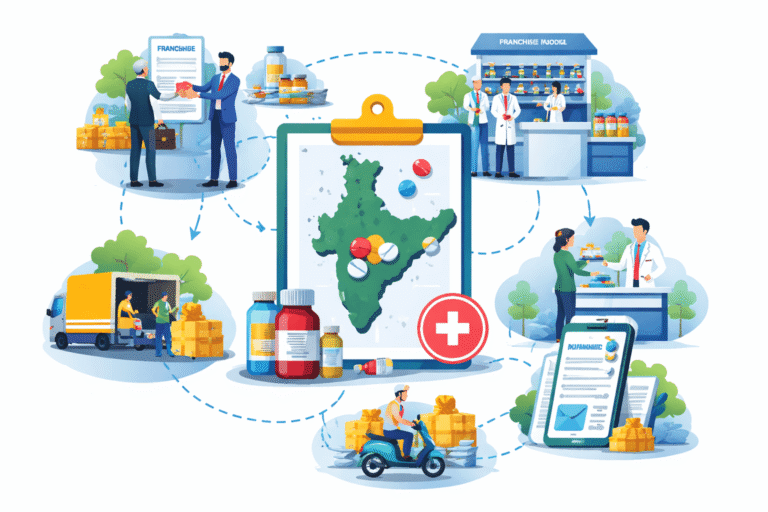
How PCD Pharma Franchise Actually Works in India
1. Doctor Dependency
In 80% of cases I’ve seen:
- Sales come only after doctor prescriptions
- Retailers don’t push unknown brands
Why doctors don’t shift easily:
- They trust existing brands
- They avoid risk with new companies
- They need repeated follow-ups
Timeline:
- Initial visits: No response
- 1–2 months: Recognition
- 2–5 months: Trial prescriptions
- 4–6 months: Consistent prescribing (if product works)
2. Retailer Behavior
In most Indian markets (60–70%):
- Retailers prefer fast-moving brands
- They avoid stocking new or slow products
Cause → Effect → Outcome:
- No prescriptions → Retailer doesn’t stock
- No stock → Patient doesn’t get product
- Result → Sales cycle breaks
3. MR Activity is Critical
Even if you are a distributor, you are the Medical Representative (MR) initially.
Without:
- Daily doctor visits
- Product explanation
- Follow-ups
Your business will not move.

Step-by-Step Process to Start PCD Pharma Franchise in India
Step 1: Market Research
In Tier-2 cities like Ahmedabad and Indore, understanding local demand is critical before starting. Categories like antibiotics, gastro, and pain relief dominate, while nutraceuticals are rapidly growing. You should also evaluate doctor availability, prescription trends, and competitor presence. Strong research helps you avoid entering saturated or low-demand segments.
Step 2: Company Selection
Choosing the right pharma company is the most crucial decision for beginners. A reliable company offers consistent product quality, timely delivery, clear monopoly rights, and ongoing support. Poor company selection often leads to delays, complaints, and weak market trust. In most failed cases, this is the root cause of losses.
Step 3: Documentation & Licensing
Proper legal setup is essential to operate smoothly in the pharma business. You must have a valid Drug License and GST Registration to work with distributors and retailers. Without these, chemists and doctors won’t trust your business. Compliance builds credibility and ensures long-term stability.
Step 4: Product Selection
Instead of choosing a large product range, start with a focused portfolio of 10–20 fast-moving products. Prioritize essential categories like tablets, syrups, injectables, and nutraceuticals. Selecting too many products increases the risk of unsold inventory. A targeted approach improves cash flow and sales efficiency.
Step 5: Investment Planning
Smart investment planning helps reduce financial risk in the initial stage. Starting with ₹50,000 to ₹1.5 lakh allows you to test the market with a focused product range. Investing heavily without demand analysis can lead to dead stock and losses. Controlled spending ensures sustainable growth.
Step 6: Doctor & Retailer Network Building
Building strong relationships with doctors and chemists is key to generating consistent sales. Daily visits to 8–12 doctors and 5–10 retailers help establish trust and product awareness. Success in this business depends more on consistency than short-term effort. Regular follow-ups lead to repeat prescriptions.
Step 7: First 90 Days Execution Plan
The first three months are crucial for building a foundation in the market. Month one focuses on introductions and sampling, while month two brings initial prescriptions through follow-ups. By month three, the goal is to create repeat demand and expand your network. Many beginners quit early, missing the real growth phase.

Investment Required & Cost Breakdown
Pharma Franchise Investment Breakdown
| Expense | Approx Cost |
|---|---|
| Initial Stock | ₹50,000 – ₹1,50,000 |
| Licensing | ₹5,000 – ₹15,000 |
| Marketing (Visual aids, samples) | ₹10,000 – ₹25,000 |
| Travel & Field Work | ₹5,000 – ₹15,000/month |
| Total Realistic Starting Budget | ₹70,000 – ₹2,00,000 |

Real Benefits
1. Low Entry Barrier
The pharma franchise business is easy to start since it doesn’t require manufacturing or heavy infrastructure. However, success depends on consistent fieldwork, strong patience, and building trust with doctors. Regular visits and relationship management are essential for generating prescriptions. It’s simple to enter, but demanding to sustain.
2. Scalable Business
This business becomes highly scalable once your products start getting regular prescriptions. As demand stabilizes, revenue becomes more predictable and consistent over time. Repeat orders from chemists and patients increase steadily. With the right strategy, you can expand your product range and territory.
3. Monopoly Advantage
Monopoly rights can give you a strong competitive edge in your area. However, this advantage only works if the company genuinely honors exclusive distribution. If multiple distributors are appointed in the same territory, your growth can be affected. Always verify monopoly terms before finalizing the company.

Hidden Challenges & Failure Reasons
1. Slow Initial Sales
In the beginning, sales growth is usually slow and inconsistent for most distributors. In around 60% of cases, there is little to no profit during the first 3–4 months. This phase is mainly about building doctor trust and market presence. Patience and consistent follow-ups are key to crossing this stage.
2. Stock Expiry Risk
Stock expiry is a common issue caused by over-purchasing without proper demand analysis. When products don’t move quickly, they turn into dead inventory. This directly leads to financial losses and blocked capital. Smart inventory planning is essential to avoid this risk.
3. Credit Cycle Pressure
One major challenge is the mismatch between incoming and outgoing payments. Retailers usually demand 15–30 days of credit, while pharma companies expect advance payment. This creates a cash flow gap that can strain your finances. Managing credit wisely is crucial for survival in this business.

What Most Pharma Companies Won’t Tell You in 2026
1. Monopoly is Often Not Strict
Many pharma companies claim to offer monopoly rights, but in reality, they appoint multiple distributors in the same area. This increases competition and reduces your market control. As a result, pricing pressure and sales conflicts arise. Always verify the exclusivity before partnering.
2. High Margin ≠ High Sales
Attractive margins of 50–60% often look appealing, but they usually come with low-demand products. High margins don’t guarantee strong market movement or prescriptions. If doctors aren’t prescribing, margins become meaningless. Focus on demand-driven products rather than just profit percentage.
3. Delivery Delays Are Common
In many cases, companies fail to deliver orders on time, with delays ranging from 1 to 3 weeks. This affects your ability to supply retailers consistently. As a result, chemists lose trust and may switch to other brands. Doctors may also stop prescribing due to product unavailability
4. Marketing Support is Limited
Many companies provide strong support only during the onboarding phase. After that, follow-ups, promotional help, and guidance often reduce significantly. This leaves distributors to manage everything on their own. Consistent company support is crucial for long-term growth and stability.

Real Case Scenarios
Case 1: ₹1.5 Lakh Investment Failure
A beginner in a Tier-2 city:
- Invested ₹1.5 lakh
- Bought 80+ products
Result:
- 50% stock didn’t move
- Expiry loss started
Mistake: No demand validation
Case 2: High Margin Trap
Distributor chose:
- 60% margin company
Reality:
- No doctor prescriptions
Outcome:
- Zero rotation
Case 3: Smart Starter Success
Started with:
- ₹70,000 investment
- 15 focused products
Strategy:
- Daily doctor visits
Result:
- Break-even in 5 months

Who Should Start & Who Should Avoid
Ideal For:
- People ready for field work
- Long-term mindset
- Basic sales understanding
Avoid If:
- You expect passive income
- You can’t meet doctors regularly
- You want quick returns

5-Step Safe Entry Strategy
1. Start Small
Begin your pharma franchise journey with a controlled investment to minimize risk. Starting small allows you to test the market and understand demand patterns. It also helps you manage cash flow efficiently in the early stage. If you’re planning to Start a PCD Pharma Franchise in India, this approach ensures you avoid unnecessary financial pressure while building a strong foundation. Gradual expansion is always safer than heavy initial investment.
2. Select 15–20 Proven Products
Choose a limited range of well-established and fast-moving products. Proven molecules already have demand, making it easier to generate prescriptions. This reduces the chances of stock expiry and dead inventory. A focused portfolio ensures better sales conversion.
3. Choose a Reliable Company
Don’t get attracted only to companies offering high margins. A reliable company with consistent quality, timely delivery, and proper support is more important. Trust and product availability matter more in the long run. A good company helps you build a stable business.
4. Focus on 20–30 Doctors Initially
Instead of targeting a large number of doctors, focus on building strong relationships with a smaller group. Regular visits and follow-ups help build trust and increase prescription chances. Quality interactions are more effective than quantity. This approach creates a solid base for growth.
5. Track Prescriptions Weekly
Monitoring prescriptions on a weekly basis helps you understand what’s working and what’s not. It allows you to adjust your strategy and focus on high-performing products. Tracking ensures accountability and better planning. Consistent analysis leads to steady business improvement.

Expert Insights & Mistakes to Avoid
Choosing Company Based Only on Margin
Many beginners select a company just because it offers high profit margins. However, without strong product demand and reliable service, high margins mean nothing. Poor quality or delayed delivery can damage your reputation. Always prioritize trust, quality, and support over margins
Buying Too Many Products
Purchasing a large number of products at the start increases the risk of unsold inventory. Without proper demand, many items may remain in stock and expire. This blocks your capital and creates financial pressure. A focused product range is always a smarter approach.
Ignoring MR Activity
Medical Representative (MR) activity is the backbone of pharma sales. Ignoring regular doctor visits and follow-ups reduces prescription chances. Without consistent fieldwork, even good products won’t sell. Daily MR activity is essential for building long-term demand.
Expecting Profit in 1–2 Months
Unrealistic expectations of quick profits often lead to frustration and early exit. The pharma franchise business takes time to build trust and generate prescriptions. Initial months are more about investment and relationship-building. Patience is key to long-term success.
Not Tracking Doctor Response
Failing to monitor doctor feedback and prescription trends is a major mistake. Without tracking, you won’t know which products are performing well. This leads to poor decision-making and wasted effort. Regular tracking helps optimize your strategy and improve results.
Conclusion
Starting a PCD pharma franchise in India in 2026 is a real opportunity, but only if you treat it like a field-driven business, not a passive investment.
The winners in this industry are not:
- The ones with highest margins
- The ones with biggest stock
They are the ones who:
- Stay consistent
- Build doctor trust
- Manage inventory smartly
If you approach it with patience and strategy, this business can become stable and scalable over time.
Conclusion
Starting a PCD pharma franchise in India in 2026 is a real opportunity, but only if you treat it like a field-driven business, not a passive investment.
The winners in this industry are not:
- The ones with highest margins
- The ones with biggest stock
They are the ones who:
- Stay consistent
- Build doctor trust
- Manage inventory smartly
If you approach it with patience and strategy, this business can become stable and scalable over time.
References
ABOUT THE AUTHOR

Mitesh Vyas
My name is Mitesh Vyas, and I am a Pharma Franchise Consultant and Industry Research Analyst specializing in India’s PCD pharma business ecosystem. My work focuses on helping beginners, distributors, and small pharma entrepreneurs understand the real-world functioning of the pharma franchise model. Unlike theoretical content, my insights are based on ground-level observations from Indian pharmaceutical markets, including Tier-1, Tier-2, and Tier-3 cities such as Ahmedabad, Indore, Lucknow, and surrounding business hubs. I regularly share insights on how the pharma franchise business in India works in real market conditions, including investment, product strategy, and growth challenges.