
Starting a pharma business sounds simple—tie up with a company, buy stock, and sell. But in reality, GST is where most beginners get stuck or make costly mistakes.
In my experience working with 50+ pharma distributors across India, GST-related issues are one of the top 3 reasons why new franchise businesses struggle in their first year.
- Some delay registration → can’t purchase stock properly
- Some choose the wrong GST type → lose margins
- Many don’t understand Input Tax Credit (ITC) → profits silently shrink
What most blogs and even consultants won’t tell you is this:
GST is not just a legal formality — it directly impacts your profit, supply chain, and business scalability.
In this guide, I’ll break down GST Registration for Pharma Franchise from a real business perspective, not just theory.
What is GST in Pharma Franchise (Quick but Practical Explanation)
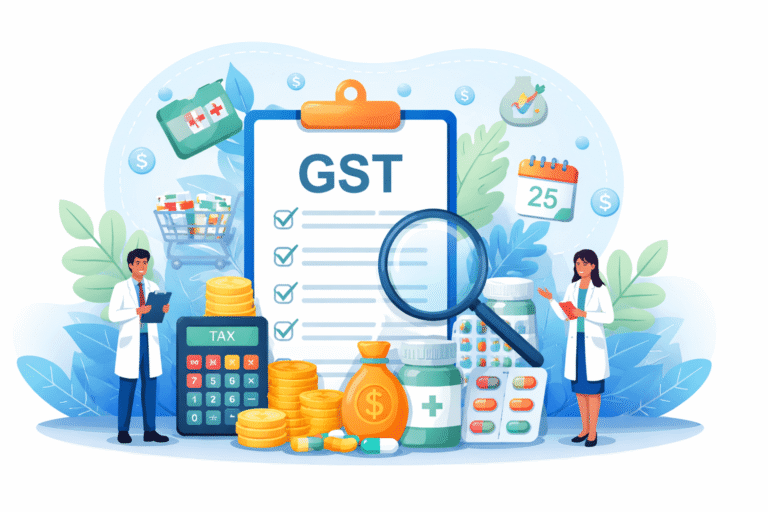
GST (Goods and Services Tax) in pharma is not just a tax you charge customers.
It’s a flow system:
- You pay GST when purchasing stock
- You collect GST when selling
- You adjust the difference using Input Tax Credit (ITC)
In pharma, this system is critical because:
- Stock moves through company → distributor → retailer → patient
- Every stage depends on proper GST billing
Why GST is Mandatory in Pharma Franchise Business
1. Legal Requirement (But That’s Not the Real Reason)
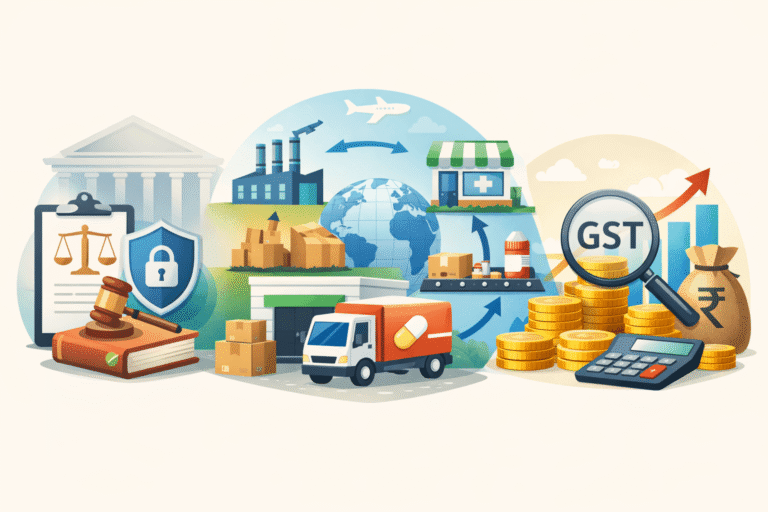
GST is legally required once your turnover crosses the threshold, but in pharma, the real reason goes beyond compliance. Without GST, you cannot operate smoothly in the organized supply chain. Most companies and stockists prefer dealing only with registered businesses. So even before legal necessity, business practicality makes GST essential.
Yes, GST registration is mandatory if turnover crosses ₹40 lakh (for goods).
But in pharma, you need GST even before reaching that limit.
2. Supply Chain Dependency
Pharma operates on a structured supply chain where every transaction is GST-linked. Without GST, you cannot purchase directly from pharma companies or authorized distributors. This forces you into unofficial channels with higher costs and lower trust. Ultimately, your business growth becomes restricted from day one.
Pharma companies and super stockists only supply to GST-registered distributors.
Without GST:
- You can’t get proper invoices
- You won’t receive official stock
- You lose trust with companies
In real markets like Ahmedabad, I’ve seen beginners forced to buy stock from secondary dealers at higher prices due to no GST.
3. Input Tax Credit (ITC) = Your Hidden Profit
ITC is one of the biggest profit drivers in pharma distribution, yet most beginners ignore it. When you claim ITC, you reduce your effective tax burden and protect your margins. Without it, GST becomes an extra cost instead of a neutral tax. Proper ITC usage can significantly improve your profitability.
For anyone exploring How to Start PCD Pharma Franchise in India, understanding ITC and GST is not just important—it’s essential for maximizing margins and sustaining long-term growth. This is exactly where most beginners fail.
Example:
- You purchase stock worth ₹1,00,000 + 12% GST = ₹1,12,000
- GST paid = ₹12,000
If you are GST registered:
- You can claim ₹12,000 back as ITC
If not:
- That ₹12,000 becomes your extra cost
That directly reduces your margin by 10–15%
How GST Actually Works in Pharma Business (Real Market Flow)
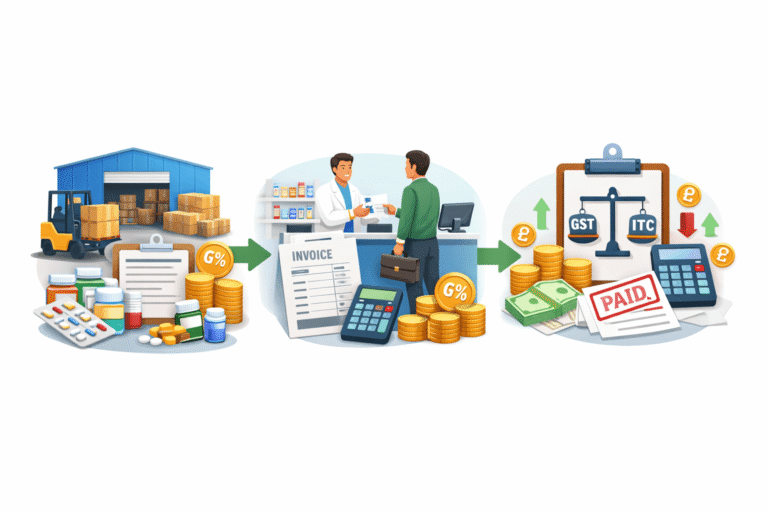
Step 1: Purchase
The GST journey starts when you purchase stock from a pharma company or distributor. Every purchase invoice includes GST, which you pay upfront. This tax is not a loss—it becomes your input credit if managed properly. Correct purchase billing is the foundation of your GST system.
You buy from pharma company:
- Invoice includes GST (12% or 18%)
Step 2: Billing
When you sell products to retailers or hospitals, you must generate GST-compliant invoices. This includes applying the correct GST rate and mentioning proper HSN codes. Billing mistakes can lead to compliance issues and penalties. Accurate billing ensures smooth operations and trust in the market.
You sell to retailers:
- Add GST on your sale price
- Generate proper invoice
Step 3: Input Tax Credit Adjustment
After purchase and sales, GST is adjusted through ITC. You subtract the GST paid on purchases from the GST collected on sales. Only the remaining amount is paid to the government. This system ensures you are not taxed twice and helps maintain healthy margins.
- GST paid (purchase) → minus
- GST collected (sales) → payable
You only pay the difference, not full tax.
Real Margin Impact
In pharma:
- Average distributor margin: 20–30%
- If ITC is not claimed properly → margin drops to 12–18%
In my audits, 60–70% of new distributors don’t utilize ITC efficiently, leading to silent losses.
Read More:- Is PCD Pharma Franchise Profitable In India?
GST Rates in Pharma Products
| Product Type | GST Rate | Business Impact |
|---|---|---|
| Tablets / Capsules | 12% | Most common segment |
| Syrups | 12% | High-volume products |
| Injections | 12% / 18% | Depends on formulation |
| Nutraceuticals | 18% | Higher margin but slower |
Important Insight:
Higher GST products don’t always mean higher profit.
If your ITC flow is not managed, higher GST can block working capital.
Types of GST Registration (Which One is Right for You)
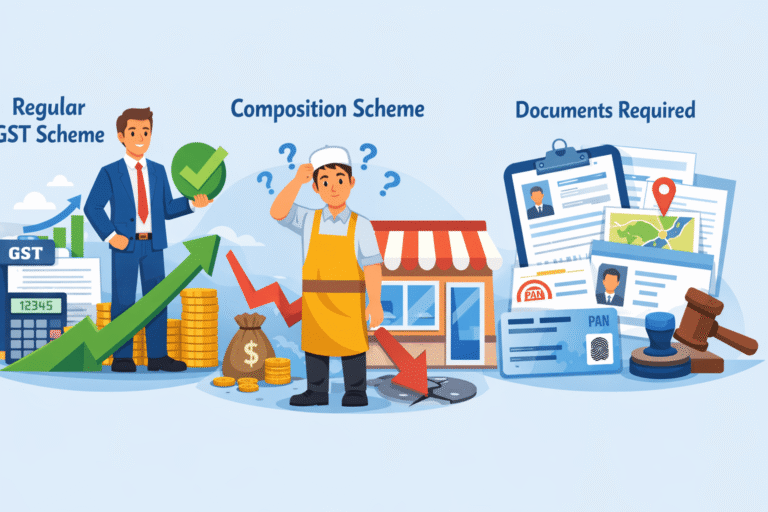
1. Regular GST Scheme (Recommended)
The regular GST scheme allows you to claim input tax credit and operate freely in the pharma supply chain. It supports business scalability and proper compliance. Most pharma companies require distributors to be under this scheme. It is the only practical choice for serious pharma businesses.
- You can claim ITC
- Suitable for pharma distribution
- Required for working with companies
2. Composition Scheme (Not Suitable)
The composition scheme may look simple due to lower compliance, but it restricts your business heavily. You cannot claim ITC or supply easily to other registered businesses. In pharma, this leads to reduced margins and limited growth. It is generally unsuitable for franchise distributors.
- Cannot claim ITC
- Cannot supply to other businesses easily
Limited scalability
In pharma, composition scheme is almost a business mistake.
In my experience:
“Around 30% beginners choose composition to avoid compliance, but later shift to regular after facing supply and margin issues.”
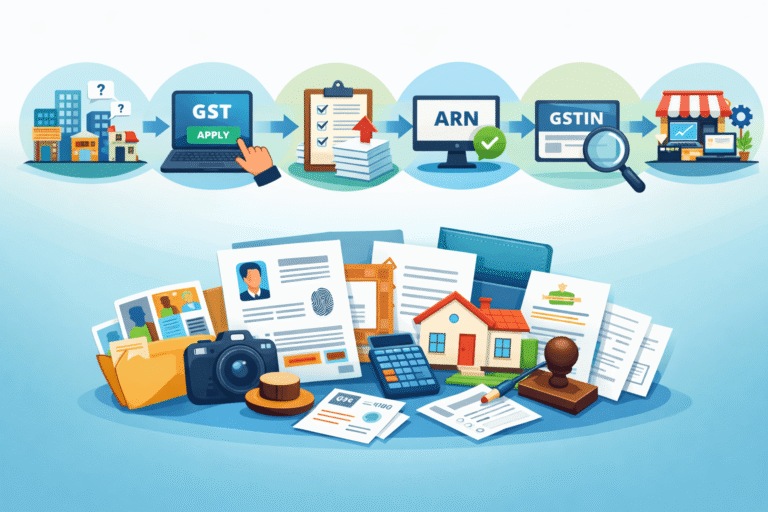
Documents Required for GST Registration
You’ll need:
- PAN Card (Individual/Company)
- Aadhaar Card
- Business address proof (electricity bill/rent agreement)
- Bank account details
- Passport-size photo
- Business registration (if applicable)
Pro Tip:
Ensure your business name matches drug license application to avoid future issues.
Step-by-Step GST Registration Process (Practical)
Step 1: Decide Business Structure
Choosing the right business structure impacts your taxation, compliance, and scalability. Proprietorship is simple and ideal for beginners, while partnership or LLP suits expansion plans. This decision should align with your long-term goals. A wrong structure can create complications later.
- Proprietorship (most common for beginners)
- Partnership / LLP (for scaling)
Step 2: Apply on GST Portal
GST registration begins with filling out your application on the official portal. You need to provide basic details and verify your identity via OTP. The process is simple but must be done carefully to avoid errors. Incorrect information can delay approval or create future issues.
- Fill basic details
- Verify via OTP
Step 3: Submit Documents
You must upload essential documents like PAN, address proof, and bank details. These documents are verified by authorities before approval. Any mismatch or unclear file can lead to rejection or delays. Proper documentation ensures smooth and quick registration.
- Upload required documents
- Address verification
Step 4: ARN Generation
Once your application is submitted, an Application Reference Number (ARN) is generated. This helps you track the status of your GST application. It confirms that your request is under process. ARN is important for follow-ups and verification.
- Application Reference Number generated
Step 5: GSTIN Allotment
After successful verification, you receive your GST Identification Number (GSTIN). This is your official business identity under GST. It allows you to start billing and purchasing stock legally. Without GSTIN, your pharma operations remain incomplete.
- Usually within 3–7 working days
Step 6: Post-Registration Setup
Registration is just the beginning; real work starts after that. You need billing software, ITC tracking, and proper accounting systems. Without setup, compliance errors become common. This step determines how efficiently your GST system runs.
This is where real work begins:
- Billing software setup
- HSN code mapping
- ITC tracking system
- Accountant coordination
Most consultants stop at registration.
But compliance setup is what actually matters.
Hidden Challenges & Common Mistakes
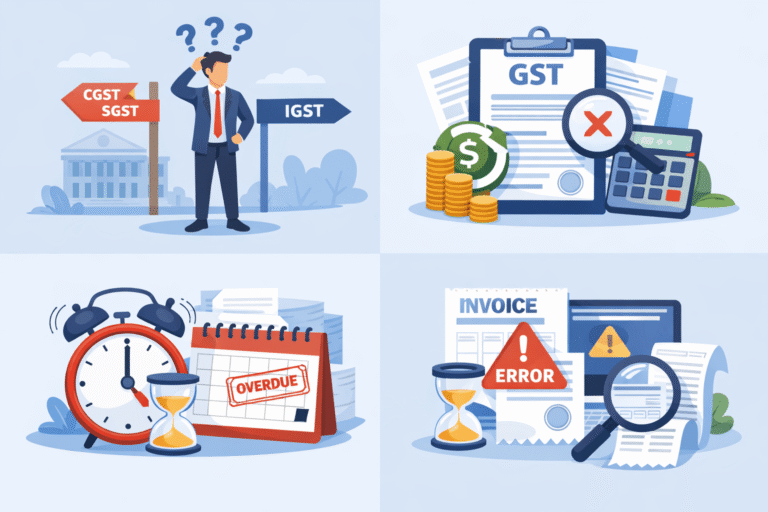
1. Choosing Wrong GST Type
Selecting the wrong GST scheme can damage your business from the start. It may restrict ITC, reduce margins, and limit your supply options. Many beginners make this mistake to save compliance effort. But it often leads to long-term financial loss.
Leads to:
- No ITC
- Reduced margins
- Supply restrictions
2. Not Claiming ITC Properly
Improper ITC handling results from missing invoices, mismatches, or incorrect entries. This leads to loss of credit that you are legally entitled to. Over time, these small losses add up significantly. Proper ITC management is critical for profitability.
- Bills mismatch
- Missing invoices
- Wrong entries
Result: Direct loss
3. Filing Delays
GST returns must be filed monthly, and delays attract penalties and late fees. Many businesses ignore timelines until notices start coming. After a few months, the financial burden increases sharply. Timely filing is essential to avoid unnecessary losses.
- Monthly returns (GSTR-1, GSTR-3B)
- Late fees + penalties
After 3–6 months, penalties become significant.
4. Billing Errors
Incorrect GST rates, wrong HSN codes, or manual mistakes can create compliance issues. These errors often go unnoticed until audits or notices occur. Fixing them later becomes costly and time-consuming. Accurate billing is non-negotiable in pharma business.
- Wrong GST rate
- Incorrect HSN code
- Manual billing mistakes
These errors often show up during audits.
What Most Pharma Companies & GST Consultants Won’t Tell You
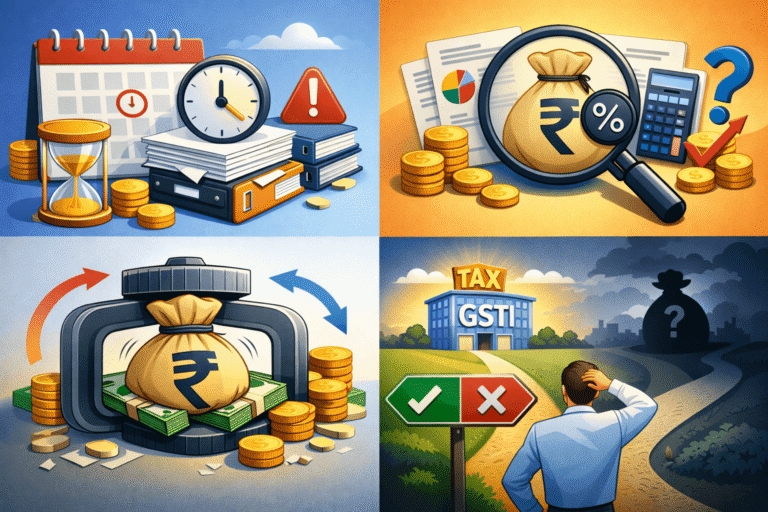
1. GST Compliance is Monthly Pressure
GST is not a one-time task but an ongoing responsibility. Monthly filings, reconciliation, and ITC matching require consistency. Many beginners underestimate this workload. Ignoring it leads to penalties and operational stress.
- Filing every month
- Reconciliation
- ITC matching
It’s not “one-time registration
2. Hidden Costs
GST compliance involves additional expenses like accountant fees, software subscriptions, and correction charges. These costs are often not discussed upfront. Over time, they become a fixed business expense. Proper budgeting is necessary to manage these costs.
- Accountant fees (₹1,000–₹3,000/month)
- Software costs
- Compliance corrections
3. Working Capital Block
If ITC is not claimed or utilized on time, your money gets stuck in the system. This reduces your available cash for stock purchases. In pharma, where stock movement is crucial, this can slow down growth. Efficient ITC handling improves cash flow.
If ITC is not claimed timely:
- Money gets stuck
- Cash flow slows
4. “GST Optional” Myth
Some consultants suggest delaying GST to simplify the starting phase. In pharma, this advice is misleading and risky. It limits your supply options and reduces credibility. Starting without GST often creates bigger problems later.
Some agents say:
“Start without GST, register later”
In pharma, this is dangerous.
You lose:
- Company supply access
- ITC benefits
- Market credibility
Real Business Scenarios (Case-Based Learning)
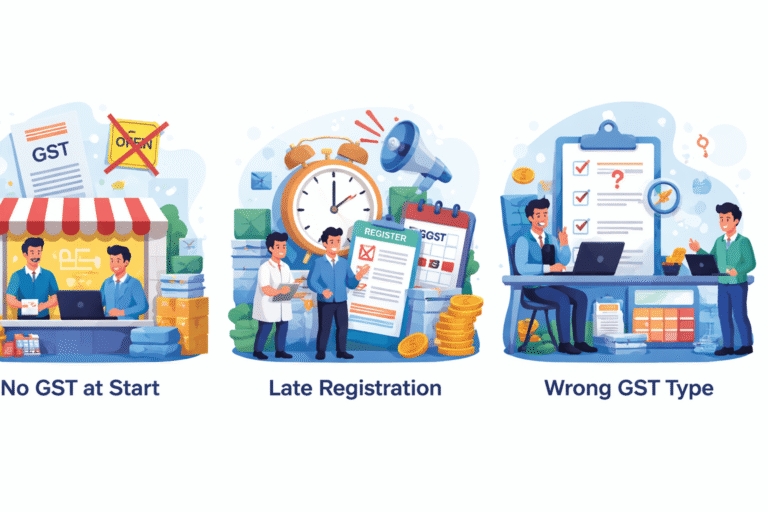
Scenario 1: No GST at Start
A distributor without GST had to depend on local traders for stock. This increased purchase costs and reduced margins. Lack of proper billing also limited scalability. Eventually, switching to GST caused financial loss and operational delays.
A distributor in Ahmedabad started without GST:
- Bought stock from local trader
- Paid higher rates
- Couldn’t scale
Result: Switched to GST after 4 months with losses.
Scenario 2: Late Registration
Delaying GST registration resulted in loss of input tax credit on early purchases. This directly reduced profit margins. Many beginners underestimate this impact. Late registration often leads to avoidable financial losses.
A beginner delayed GST:
- Purchased stock without ITC
- Lost ₹30,000–₹50,000 in tax credit
This is very common in Tier-2 cities.
Scenario 3: Wrong GST Type
Choosing the composition scheme restricted business operations and blocked ITC benefits. The distributor faced issues working with pharma companies. Eventually, switching schemes created compliance complications. A wrong start made growth difficult and costly.
A distributor chose composition scheme:
- Couldn’t work with pharma companies
- No ITC benefit
Forced to migrate later with compliance issues.
Who Should & Should NOT Register Immediately
Should Register Immediately:
- Planning serious pharma distribution
- Working with companies
- Want long-term growth
Can Delay (Rare Cases):
- Very small local trading (not recommended)
- Testing business model
- But even in these cases, delay comes with risks.
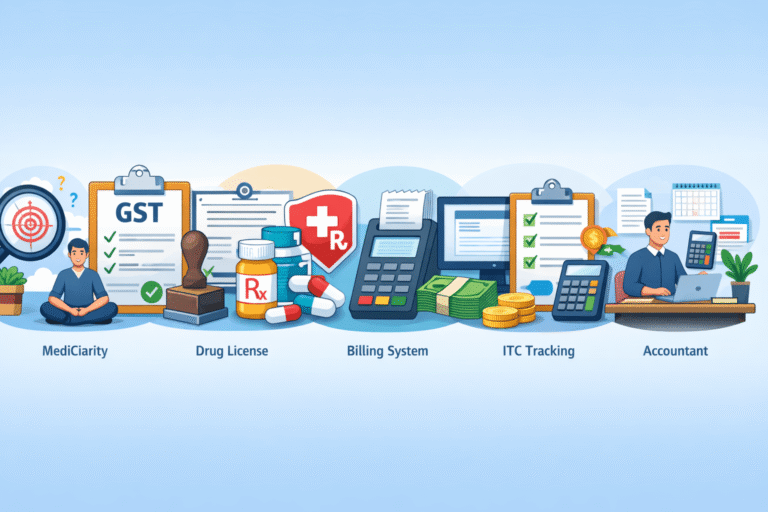
Actionable GST Setup Strategy (Beginner Framework)
If you’re starting a PCD pharma franchise in India or exploring the pharma franchise business model, follow this:
Step 1: Get Clarity First
- Product segment
- Target market
- Investment capacity
Step 2: Register GST (Regular Scheme Only)
- Avoid shortcuts
Step 3: Align with Drug License
Your GST + drug license for pharma business must match.
Step 4: Setup Billing System
- Use software (avoid manual billing)
- Track HSN codes
Step 5: Build ITC Tracking Discipline
- Maintain purchase records
- Reconcile monthly
Step 6: Hire a Practical Accountant
Not just for filing, but for:
- ITC optimization
- Error prevention
Expert Mistakes to Avoid
- Starting without GST
- Choosing composition scheme
- Ignoring ITC
- Delaying filings
- Using manual billing
- Not aligning GST with business model
Conclusion:
GST in pharma is not optional, not simple, and definitely not something to ignore.
It directly controls:
- Your profit margin
- Your supply chain
- Your business growth
In my experience:
“The distributors who understand GST early grow faster, while those who ignore it struggle silently.”
If you’re serious about starting a pharma franchise, treat GST as a business tool, not just compliance.