
If you’ve been researching “Is PCD Pharma Franchise Profitable in India”, you’ve probably seen bold claims like:
- “30% margin guaranteed”
- “Earn ₹1 lakh per month”
- “Monopoly rights = assured success”
Let’s cut through that.
In my 10+ years working with 50+ distributors across Tier-1, Tier-2, and Tier-3 markets, I’ve seen both sides:
- People making consistent ₹40–80K/month
- People losing their entire ₹1.5–2 lakh investment
The truth: This business is profitable—but only under specific conditions.
This blog will give you the actual profitability reality, not brochure-level promises.

Understanding the Pharma Franchise Business Model
The pharma franchise business model is simple on paper:
- You buy medicines from a pharma company
- Promote them to doctors
- Doctors prescribe your brand
- Retailers sell → you get repeat orders
Sounds easy. In reality, it depends on one thing:
Prescription generation
No prescription = no sales = no profit

Is PCD Pharma Franchise Really Profitable?
Short Answer:
Yes — it can be profitable
No — it is not easy or guaranteed
Real Insight:
- In 30–40% of cases, people become stable within 6–8 months
- In 40–50% of cases, growth is slow but sustainable
- In 20–30% of cases, business fails due to stock blockage or no demand
Profitability depends on:
- Doctor network
- Product selection
- Consistency in fieldwork
- Credit control

Actual Profit Margin Breakdown
Let’s break the biggest myth:
30% Margin Means 30% Profit
This is the biggest misconception in the pharma franchise business. Margin is what you get on paper, but profit is what remains after all real-world expenses and the gap between the two is significant.
Claimed Margins (Company Level)
Most companies offer 20–30% margins on products. This looks attractive initially and is often used as a selling point to convince new distributors.
Realized Margins (After Expenses)
In actual market conditions, your net profit usually comes down to 8–15%. This is after accounting for doctor promotions, retailer discounts, travel costs, and expiry losses.
Actual Profit Calculation Example
Initial Investment: ₹1.5 lakh
Monthly Sales (after 3–4 months): ₹80,000
Gross Margin (25%):= ₹20,000
Expenses:
- Doctor promotion (samples, gifts): ₹5,000–₹8,000
- Travel / field expense: ₹3,000–₹6,000
- Retailer schemes/discounts: ₹2,000–₹4,000
- Expiry/damage buffer: ₹2,000–₹3,000
Total Expenses: ₹12,000–₹18,000
Net Profit:
₹5,000 to ₹10,000/month
Reality Check:
On paper → ₹20K profit
In real → ₹5K–₹10K profit
Profit comes from volume, not margin
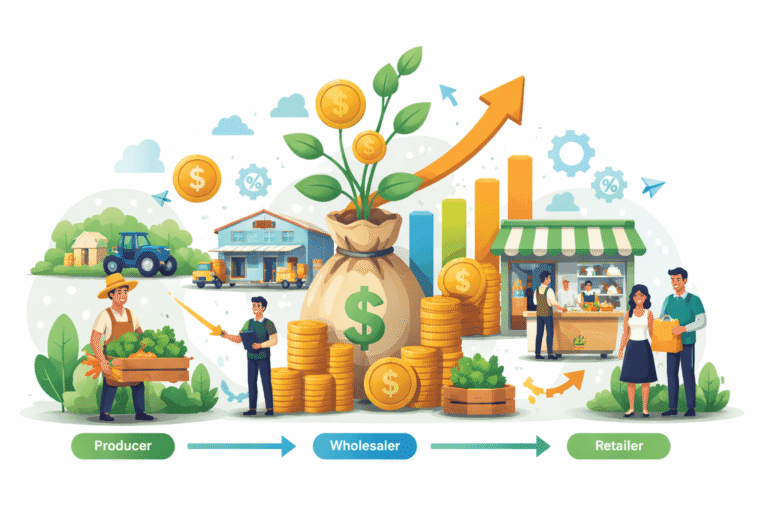
How Profit Works in Real Market (Ground-Level Flow)
Most beginners misunderstand this:
Step-by-step reality:
- You launch products
- Doctors don’t prescribe immediately
- You follow up for 2–6 months
- Small prescriptions start
- Retailers push known brands first
Ground Insight:
- 60–70% retailers prefer fast-moving brands
- New brands struggle initially
- Doctors rarely switch quickly unless:
- Strong relationship
- Better results
- Consistent follow-up
If prescriptions don’t come → stock doesn’t move → expiry risk increases

Real Benefits
Let’s be honest—there are advantages:
- Low entry investment (₹1–2 lakh)
- Scalable business
- No manufacturing required
- High repeat demand (if prescriptions build)
But
These benefits work only with consistent field effort

Hidden Challenges That Kill Profit
1. Slow Prescription Build
Doctors don’t switch brands quickly—they rely on trust, patient outcomes, and consistency. In real practice, it often takes 2–6 months of regular follow-ups before even small prescriptions start coming.
2. Stock Expiry Risk
Beginners often purchase stock based on company recommendations rather than actual demand. When products don’t move, they sit on shelves—leading to expiry losses in 20–30% of new cases.
3. Credit Cycle Pressure
Retailers usually expect 15–30 days credit, but payments often get delayed beyond that. This blocks your working capital, making it difficult to restock fast-moving products and maintain business flow.
4. Overloaded Product Range
Many companies push a large portfolio, but in real markets, only 20–30 products generate consistent demand. The rest remain slow-moving, increasing your risk of dead stock and capital blockage.

What Most Pharma Companies Won’t Tell You
This is where most people get trapped, especially when they skip understanding the fundamentals explained in the Best PCD Pharma Franchise in India before starting their business. Without this knowledge, beginners often struggle with investment planning, distributor networks, and marketing strategies that are crucial for long-term success.
Fake Monopoly Claims
Many companies promise “monopoly rights,” but in reality, the same products are often supplied to multiple distributors in nearby areas. This creates internal competition and makes it harder to build a stable market.
Unrealistic Income Promises
Claims like “₹50K/month guaranteed” are marketing tactics, not ground reality. Without doctor connections and consistent fieldwork, these numbers are rarely achievable—especially in the first 6–8 months.
No Real MR Support
In most cases, you are expected to handle everything—from doctor visits to order collection. Companies rarely provide active field support, so your growth depends entirely on your own efforts.
Forced Bulk Purchase
To close deals, companies often push full product ranges or large opening orders. This leads to unnecessary stock, where slow-moving products block your money and increase expiry risk.
In reality:
Company earns when you buy stock, not when you sell it
Real Case Scenarios
Case 1: Stock Blockage & Loss
- Investment: ₹1.5 lakh
- Mistake: Bought full product range
- Result: ₹50K stock expired
No demand validation
Case 2: Good Company, No Network
- Strong brand, good quality
- Distributor had no doctor contacts
Sales stayed below ₹30K/month for 6 months
Case 3: Smart Distributor (Profitable)
- Started with 15 focused products
- Targeted 20 doctors only
- Consistent follow-up
Broke even in 5 months
Stable profit in 7th month

Who Should & Should NOT Start This Business
Good Fit:
- Medical Representatives
- People with doctor network
- Those ready for daily fieldwork
Bad Fit:
- Passive income seekers
- Investors with no pharma knowledge
- People avoiding sales work
This is not a “set and forget” business
6-Step Strategy to Make It Profitable
Step 1: Start with Limited Products
Don’t try to sell everything at once. In real markets, success comes from focusing on a small set of high-demand molecules that doctors already prescribe frequently.
Step 2: Validate Doctor Demand First
Before investing, speak directly with doctors and understand their prescribing habits. This simple step helps you avoid dead stock and ensures you’re entering with real demand, not assumptions.
Step 3: Start Small Inventory
Avoid the common mistake of bulk buying to get better schemes. Starting with limited stock protects your capital and reduces the risk of expiry if products don’t move as expected.
Step 4: Track Movement Weekly
Your profit depends on how fast products move. Regularly tracking sales helps you identify which medicines are working and which are blocking your money.
Step 5: Control Credit Cycle
Uncontrolled credit is one of the biggest reasons for cash flow problems. Keep retailer credit tight (15–20 days) so your money keeps circulating and your business stays stable.
Step 6: Scale Only After Repeat Orders
Growth should be based on proven demand, not excitement. Once you start getting repeat orders from doctors and retailers, that’s the right time to expand confidently.

Expert Insights & Common Mistakes
Biggest Mistake Beginners Make:
Buying stock based on company pitch, not market demand
Hard Truth:
Profit doesn’t come from margin—it comes from movement
Another Insight:
- First 3 months → survival phase
- 4–8 months → break-even phase
- After 8 months → profit phase (if consistent)
Conclusion
So, is the PCD pharma franchise profitable in India?
Yes—but only if you treat it like a field-driven business, not an investment scheme.
If you:
- Build doctor relationships
- Focus on demand-driven products
- Stay consistent for 6+ months
You can build a stable income
If you:
- Expect quick returns
- Avoid fieldwork
- Over-invest in stock
You will likely face losses