
The Ayurvedic healthcare market in India continues to grow at a fast pace. People now prefer herbal and natural healthcare products for immunity support, wellness management, digestion, skin care, and lifestyle health concerns. Because of this growing demand, many distributors, startups, healthcare brands, and pharma franchise companies look for a reliable Private Label Ayurvedic Products Manufacturer to launch their own product range.
A trusted manufacturing partner does more than produce medicines. The right company helps with product formulation, packaging, labeling, compliance, quality testing, and market support.
Whether you want to start your own herbal brand or expand your healthcare portfolio, understanding private labels and third-party Ayurvedic manufacturing can help you make better business decisions.
How does Private Label Ayurvedic Manufacturing work?
A Private Label Ayurvedic Products Manufacturer produces herbal products under your brand name while following approved manufacturing standards and quality processes. The manufacturer handles formulation, production, packaging, quality testing, and documentation, while you sell products under your own label.
Private label manufacturing helps businesses:
- Launch products quickly
- Reduce manufacturing investment
- Build their own brand identity
- Access GMP-certified production
- Expand product portfolios
- Scale operations with lower risk
Many healthcare startups, distributors, and pharma franchise companies choose private labeling because it saves time and reduces operational burden.
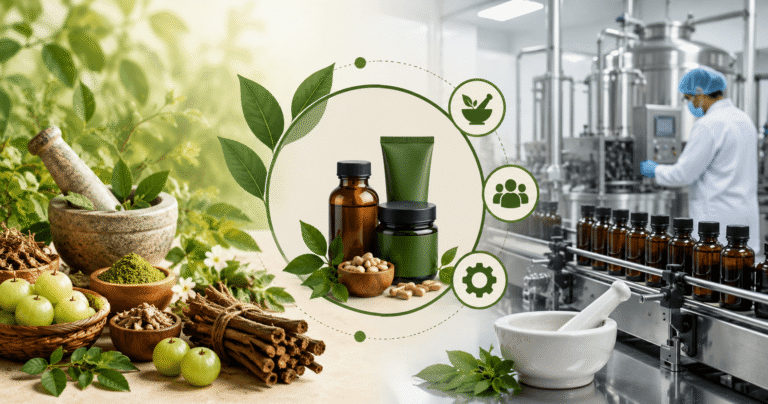
Understanding Private Label Ayurvedic Manufacturing
Private label manufacturing means producing herbal formulations that carry your company name rather than the manufacturer’s name.
For example:
A healthcare startup wants to sell immunity boosters. Instead of building a manufacturing plant, hiring staff, and purchasing equipment, they partner with a Private label Ayurvedic manufacturer.
The manufacturer creates:
- Herbal tablets
- Capsules
- Syrups
- Powders
- Oils
- Juices
- Skin care products
- Personal care products
The products then reach the market under the startup’s own brand identity.
How Ayurvedic Third Party Manufacturing Works
Step 1: Product Selection
The first step involves selecting products based on current market demand and customer needs. Businesses commonly choose products such as immunity boosters, liver care formulations, women’s wellness products, digestive syrups, herbal pain oils, protein supplements, and skin care products.
Step 2: Finalize Formula
After selecting products, the formulation gets finalized according to business goals and target customers. Manufacturers may provide existing formulations, customized solutions, classical Ayurvedic products, or proprietary herbal combinations.
Step 3: Packaging Selection
Packaging plays an important role in product presentation and brand identity. Businesses can choose from various packaging options such as bottles, blister packs, pouches, sachets, jars, and cartons based on product type and branding requirements.
Step 4: Production
Once all approvals are completed, the third-party Ayurvedic manufacturer begins the production process. Companies that offer GMP-certified Ayurvedic manufacturing services follow standardized procedures and quality protocols to maintain product consistency, safety, and reliable manufacturing standards.
Step 5: Quality Testing
Quality testing ensures that every product meets safety and quality standards before reaching the market. The process usually includes raw material checks, microbial testing, stability studies, packaging inspections, and batch consistency verification.
Step 6: Delivery
After successful production and quality approval, the finished products are packed and dispatched. The products reach your warehouse ready for distribution and market launch.
Benefits of Choosing a Private Label Ayurvedic Products Manufacturer
1. Lower Initial Investment
Private label manufacturing helps businesses avoid the high cost of setting up a manufacturing unit. You do not need to invest in machinery, infrastructure, or a large technical workforce, which reduces overall business risk.
2. Faster Market Entry
With an established manufacturing partner, you can launch products in a shorter time. Instead of spending months creating production facilities, you can focus directly on marketing and sales activities.
3. Access to Manufacturing Expertise
An experienced Ayurvedic products manufacturer brings industry knowledge and technical expertise. They understand regulatory standards, formulation development, quality control, and packaging requirements to ensure reliable products.
4. Scalability
Businesses can easily increase production according to market demand without worrying about expanding manufacturing facilities. This flexibility supports long-term growth and changing customer requirements.
5. Strong Brand Building
Since the manufacturer handles production responsibilities, you get more time to focus on growing your brand. You can concentrate on marketing strategies, customer engagement, sales expansion, and distribution networks.

Common Uses of Private Label Ayurvedic Products
Wellness Products
Wellness products help support overall health and maintain a healthy lifestyle. These products commonly include immunity support products, energy boosters, and stress support formulations that promote daily well-being.
Digestive Health Products
Digestive health products help improve gut health and support proper digestion. Herbal digestive syrups, liver support tablets, and constipation management products are commonly used for digestive wellness.
Skin Care Products
Ayurvedic skin care products help maintain healthy and nourished skin using natural ingredients. Popular products include face washes, herbal creams, and anti-acne formulations designed for different skin concerns.
Hair Care Products
Hair care products support healthy hair growth and help manage common hair-related issues. Products such as herbal hair oils, shampoos, and serums help nourish the scalp and improve hair health.
Nutraceutical Products
Nutraceutical products combine nutritional benefits with health support for overall wellness. Protein powders, herbal supplements, and multivitamin products help meet nutritional requirements and support daily health needs.
Key Features of a Reliable Ayurvedic Products Manufacturer
| Feature | Why It Matters |
|---|---|
| GMP Certification | Ensures manufacturing quality and adherence to industry standards. |
| Quality Testing | Maintains product consistency and ensures safety before market release. |
| Custom Formulations | Supports the development of unique products according to market needs. |
| Packaging Support | Improves product presentation and strengthens brand identity. |
| Documentation Assistance | Helps maintain regulatory compliance and proper records. |
| Large Production Capacity | Supports business growth and increasing market demand. |
| Research Team | Improves product innovation and formulation development. |
Composition and Product Development Details
Different formulations may include herbal ingredients such as:
- Ashwagandha
- Giloy
- Tulsi
- Shatavari
- Aloe vera
- Neem
- Brahmi
- Amla
- Guggul
- Triphala
Manufacturers often combine classical Ayurvedic knowledge with modern production methods.
Research teams also focus on:
- Ingredient quality
- Standardized extracts
- Product stability
- Taste improvement
- Shelf life
Side Effects and Safety Information
Ayurvedic products generally use natural ingredients, but natural does not always mean risk-free.
Possible concerns include:
- Allergic reactions
- Digestive discomfort
- Herb-drug interactions
- Incorrect dosage effects
Safety Note
Healthcare professionals should review ingredients before recommending products to pregnant women, children, elderly patients, or people with existing medical conditions. Always use products according to approved labeling and medical guidance.
Dosage Information
Dosage information plays an important role in ensuring the safe and effective use of Ayurvedic products. The recommended dosage may vary depending on the product formulation, age group, health condition, and intended use.
Always use Ayurvedic products according to the instructions provided on the label or as advised by a healthcare professional. Following safety recommendations and quality guidelines shared by organizations such as the World Health Organization can support responsible product use. Avoid exceeding the recommended dosage, as improper use may reduce effectiveness or increase the risk of unwanted effects.
The dosage for herbal tablets, capsules, syrups, powders, and wellness supplements may differ based on ingredient strength and product composition. Following the correct usage guidelines helps achieve better results and supports overall health benefits.
Private Label vs Third Party Ayurvedic Manufacturing
| Parameters | Private Label Manufacturing | Third Party Manufacturing |
|---|---|---|
| Brand Ownership | Your brand | Your brand |
| Product Customization | High | Moderate to high |
| Investment Requirement | Low | Low |
| Production Responsibility | Manufacturer | Manufacturer |
| Market Launch Speed | Fast | Fast |
| Product Uniqueness | Higher flexibility | Depends on agreement |
Market Demand and Business Opportunity
India’s herbal healthcare market continues to expand because consumers increasingly prefer natural products.
Major demand areas include:
- Immunity products
- Digestive wellness
- Women’s health
- Nutritional supplements
- Skin care
- Personal care products
- Lifestyle disease support products
Business opportunities exist for:
- Pharma franchise companies
- Distributors
- Medical store owners
- Healthcare startups
- Export businesses
- Online healthcare brands
Growing awareness about herbal wellness creates strong opportunities for businesses entering this segment.
Expert Recommendations Before Choosing an Ayurvedic Third Party Manufacturing Partner
Verify Certifications
Before selecting a manufacturing partner, always verify important certifications and legal documents. Check GMP certification, manufacturing licenses, product approvals, and quality documentation to ensure the company follows industry standards.
Review Manufacturing Capabilities
Understanding the manufacturer’s production capabilities helps you evaluate long-term business potential. Review factors such as production capacity, equipment quality, research and development support, and available packaging options.
Request Sample Products
Always ask for sample products before making a final decision. Evaluate product appearance, packaging quality, formulation consistency, and ingredient quality to ensure they match your expectations.
Discuss Timelines
Clear communication about timelines helps avoid delays in product launches. Confirm the minimum order quantity, estimated production period, and delivery schedules before starting the project.
Understand Support Services
A reliable manufacturing company often provides additional support beyond production. Services such as packaging design assistance, documentation support, label development, and marketing guidance can add value to your business.
Conclusion
Choosing a reliable Private Label Ayurvedic Products Manufacturer can help businesses enter the growing herbal healthcare market with less investment and lower operational complexity.
An experienced Ayurvedic products manufacturer provides quality production, formulation expertise, compliance support, and scalable manufacturing solutions. The right manufacturing partner does not simply make products. They support long-term brand growth and business success.
Private Label Ayurvedic Products Manufacturer - FAQs
What does a Private Label Ayurvedic Products Manufacturer do?
Is private label manufacturing profitable?
What certifications should I check before selecting an Ayurvedic manufacturer?
What is the minimum order quantity?
ABOUT THE AUTHOR

Mitesh Vyas
My name is Mitesh Vyas, and I am a Pharma Franchise Consultant and Industry Research Analyst specializing in India’s PCD pharma business ecosystem. My work focuses on helping beginners, distributors, and small pharma entrepreneurs understand the real-world functioning of the pharma franchise model. Unlike theoretical content, my insights are based on ground-level observations from Indian pharmaceutical markets, including Tier-1, Tier-2, and Tier-3 cities such as Ahmedabad, Indore, Lucknow, and surrounding business hubs. I regularly share insights on how the pharma franchise business in India works in real market conditions, including investment, product strategy, and growth challenges.