
An Ayurvedic Syrup Manufacturer in India is a company that develops and produces herbal liquid formulations such as cough syrups, liver tonics, digestive syrups, and immunity boosters under its own brand or for third-party clients. The best manufacturers combine WHO-GMP-certified facilities, regulatory compliance, stable formulations, and dependable supply support.
India has become a global hub for herbal and Ayurvedic healthcare products, with Ayurvedic syrups being one of the fastest-growing dosage forms in the market. Their pleasant taste, easy consumption, and faster absorption make them a preferred choice for children and adults alike. As demand rises for immunity boosters, digestive tonics, liver syrups, and cough formulations, businesses are increasingly seeking the Ayurvedic Syrup Manufacturer in India to ensure consistent quality, effective formulations, and reliable supply.
A trusted Ayurvedic syrup manufacturer combines traditional Ayurvedic knowledge with modern pharmaceutical technology to produce safe, stable, and clinically effective liquid formulations. These manufacturers operate GMP-certified facilities equipped with advanced mixing, filtration, and bottling systems, while following strict quality control standards. With capabilities such as custom formulation development, private labeling, and third-party manufacturing, India’s leading Ayurvedic syrup manufacturers help startups, distributors, and established brands launch high-quality herbal syrups with confidence.
What Is an Ayurvedic Syrup Manufacturer?
An Ayurvedic syrup manufacturer is a company that formulates and produces herbal liquid medicines using traditional Ayurvedic ingredients such as Tulsi, Mulethi, Ashwagandha, Amla, and Giloy.
These manufacturers typically offer:
- Own-brand products
- Third-party manufacturing
- Private label manufacturing
- Contract manufacturing
- Export services
Products may include:
- Cough syrups
- Digestive syrups
- Pediatric tonics
- Liver syrups
- Women’s health syrups
- Immunity boosters
Why This Matters for Pharma Entrepreneurs
For distributors and PCD franchise holders, syrup products often become high-repeat items because they are widely prescribed by doctors and frequently purchased over the counter. But choosing the wrong manufacturer can lead to delayed supplies, poor taste acceptance, leakage issues, and stock expiry losses.
The manufacturer you select directly affects product quality, doctor trust, and repeat business.

Why Ayurvedic Syrups Remain a Strong Product Category in India
The Indian consumer is comfortable with herbal syrups for common conditions like cough, appetite loss, liver support, and immunity enhancement. This creates sustained demand in both urban and rural markets.
Popular segments include:
- Ayurvedic cough syrups
- Pediatric syrups
- Women wellness tonics
- Digestive syrups
- Iron and calcium syrups
- Stress and sleep support syrups
Unlike tablets, syrups are often preferred for children and elderly patients, which broadens market reach.
Key Characteristics of the Best Ayurvedic Syrup Manufacturer in India
When evaluating a Best Ayurvedic Syrup Manufacturer in India, focus on operational capability rather than marketing claims.
1. WHO-GMP Certified Manufacturing
A reliable manufacturer should operate in a WHO-GMP-compliant facility with:
- Stainless steel processing tanks
- Filtration systems
- Bottle filling lines
- Leak testing equipment
- In-house quality control labs
WHO-GMP standards help ensure batch consistency and hygiene.
2. Regulatory Compliance
Check that the company follows applicable requirements from:
- CDSCO
- State AYUSH authorities
- GST regulations
- Labeling and packaging norms
For exports, additional documentation may be needed depending on destination country regulations.
3. Proven Formulations
A strong portfolio should include market-tested products with acceptable taste, shelf stability, and consumer repeat rates.
4. Packaging Capability
The manufacturer should offer:
- PET and glass bottles
- Measuring caps
- Mono cartons
- Shrink wrapping
- Customized label design
5. Batch Stability and Leakage Control
Liquid products are more sensitive than tablets. Poor closures or viscosity issues can cause transit leakage and retailer complaints.
Leading Product Categories Offered by Ayurvedic Syrup Manufacturing Companies in India
A typical Ayurvedic Syrup Manufacturing Company in India offers:
Respiratory Care
- Tulsi cough syrup
- Mulethi syrup
- Bronchial support formulations
Digestive Range
- Appetizer syrup
- Liver tonic
- Antacid syrup
Immunity and Wellness
- Giloy Tulsi syrup
- Amla-based tonics
- Chyawanprash liquid variants
Women’s Health
- Uterine tonic
- Iron syrups
Pediatric Products
- Multivitamin syrups
- Calcium syrups

Ayurvedic Syrup Third Party Manufacturing Explained
Ayurvedic Syrup Third Party Manufacturing allows you to market products under your own brand while the manufacturer handles production.
This model is widely used by:
- PCD pharma companies
- Doctors launching brands
- Wellness startups
- Exporters
What the Manufacturer Handles
- Procurement of raw materials
- Production
- Testing
- Packaging
- Documentation
- Dispatch
What You Handle
- Branding
- Marketing
- Distribution
- Sales collections
This approach reduces capital expenditure and speeds up market entry.
Private Label Ayurvedic Syrup Manufacturing
A Private Label Ayurvedic Syrup Manufacturer creates products with your logo, brand name, and packaging design.
Suitable for:
- Online supplement sellers
- Clinic chains
- Ayurveda practitioners
- Export businesses
Some companies also help with label design and regulatory content.
Ground Reality: What Most Distributors Don’t Realize
Many new franchise partners focus only on product rates and monopoly promises. In practice, business success depends more on market execution, product acceptance, and partnering with a certified Ayurvedic medicine manufacturer in India that maintains consistent quality and regulatory compliance.
Slow Doctor Conversion
Even when the formulation is effective, doctors rarely switch prescribing habits immediately. It often takes repeated follow-ups, sample distribution, and patient feedback before a new Ayurvedic syrup gains consistent prescription support.
Retailer Credit Pressure
Retail chemists commonly request 15 to 45 days of credit, along with replacement support for damaged or near-expiry stock. If collections are delayed, your working capital can get stretched quickly.
Repeat Orders Depend on Product Performance
The first order may come from your marketing effort, but repeat business depends on patient satisfaction. If the syrup has poor taste, inconsistent results, or packaging issues, retailers and doctors are unlikely to reorder.
Delivery Delays Hurt Momentum
When a manufacturer delays dispatch by 10 to 15 days, doctors may switch to alternative brands and retailers may lose confidence in your supply reliability. Consistent availability is critical for building long-term prescriptions.
Stock Expiry Risk
Ordering large quantities of slow-moving products can lock up cash and create expiry losses. It is safer to begin with conservative quantities and increase stock only after sales patterns become predictable.
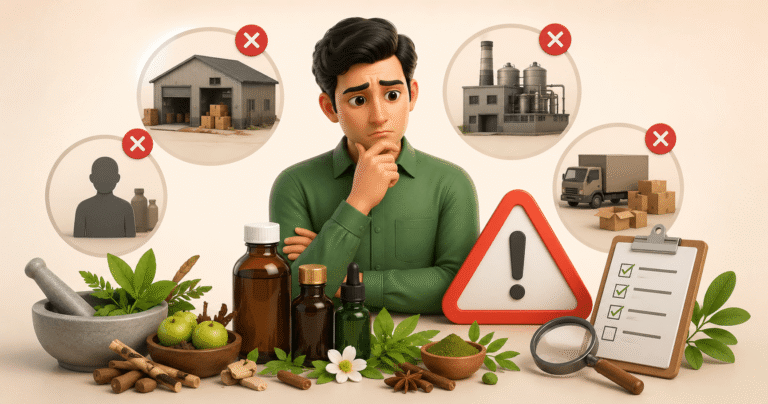
Common Mistakes While Selecting Ayurvedic Syrup Suppliers in India
Choosing Solely on Lowest Price
Many new buyers focus only on the lowest quoted rate, but unusually cheap syrups often come with compromises in herbal extract quality, sugar base, bottle strength, or packaging finish. A slightly higher-priced product with better taste and consistency usually performs better in the market and generates stronger repeat orders. Choosing a manufacturer that follows guidelines set by the Central Drugs Standard Control Organization and the World Health Organization adds another layer of confidence in the product’s quality, safety, and manufacturing standards.
Ignoring Minimum Order Quantities
Minimum Order Quantity (MOQ) directly affects how much capital gets locked into inventory. If the MOQ is too high, you may end up stocking products that move slowly and increase the risk of expiry before the next sales cycle.
Not Asking About Expiry Replacement
Expiry replacement policies differ significantly between manufacturers, and some offer limited or no support. Confirm the terms in writing before placing an order so you understand how unsold stock will be handled if products do not move as expected.
Overestimating Monopoly Rights
Exclusive territory rights can reduce internal competition, but they do not guarantee sales. Actual market growth depends on doctor prescriptions, retailer relationships, and your ability to generate consistent product demand.
Ordering Too Many SKUs Initially
Launching with too many products spreads your investment across slow-moving inventory and makes stock management difficult. It is usually better to start with a focused range of high-demand syrups and expand only after you identify products with consistent repeat orders.
What to Check Before Investing
Use this due diligence checklist:
- WHO-GMP certification
- Manufacturing license
- Product list
- Batch testing reports
- MOQ and lead time
- Payment terms
- Expiry replacement policy
- Packaging options
- Label approval process
- Logistics capabilities
Typical Investment for Launching Your Ayurvedic Syrup Brand
| Expense Head | Approximate Range |
|---|---|
| Initial manufacturing order | ₹50,000 to ₹2,50,000+ |
| Packaging design | ₹5,000 to ₹25,000 |
| Trademark application | Separate professional cost |
| Promotional material | ₹10,000 to ₹50,000 |
| Working capital | Depends on credit cycle |
Expected Margins in Ayurvedic Syrup Business
Margin potential varies by formulation and channel.
Typical considerations:
- Trade margins to retailers and distributors
- Promotional expenses
- Credit risk
- Replacement costs
- Freight charges
A product with a high gross margin may still deliver weak net returns if movement is slow.
Myth vs Fact
| Myth | Fact |
|---|---|
| Monopoly rights guarantee sales | Sales depend on doctor and retailer acceptance |
| Lower prices ensure success | Product quality and repeat demand matter more |
| More SKUs mean higher revenue | Focused portfolios are easier to manage |
| Ayurvedic products sell automatically | Active marketing is still required |
How to Evaluate an Ayurvedic Syrup Contract Manufacturing Company
An Ayurvedic Syrup Contract Manufacturing Company should be evaluated on:
- Manufacturing infrastructure
- Documentation support
- Quality systems
- Packaging quality
- Lead times
- Commercial transparency
- Communication responsiveness
Request samples and place a small initial order before scaling.
Export Opportunities: Ayurvedic Syrup Exporter from India
India is a significant supplier of herbal products to international markets.
An experienced Ayurvedic Syrup Exporter from India should provide:
- Certificate of Analysis
- MSDS (if required)
- Product specifications
- Country-specific documentation
Export success depends on compliance with destination-country import regulations.
Read More : Best Ayurvedic Tablets Manufacturer In India
Ayurvedic Cough Syrup Manufacturer: One of the Most Demanded Segments
Among all categories, cough syrups remain consistently in demand.
Popular ingredients include:
- Tulsi
- Vasaka
- Mulethi
- Kantakari
- Honey
Doctor acceptance usually depends on taste, symptom relief, and patient repeat purchases.
What Most Companies Don’t Tell You About Marketing Support
Many manufacturers advertise “full marketing support,” but actual support may be limited to:
- Visual aids
- Product cards
- MR bags
- Sample packs
Real business growth still depends on:
- Field visits
- Doctor relationships
- Retail follow-up
- Timely collections
Why Some Pharma Distributors Fail in the First Year
Common reasons include:
- Excessive inventory
- Weak doctor conversion
- Poor collection discipline
- Choosing crowded therapeutic categories
- Underestimating marketing costs
- Depending only on monopoly claims
The business usually takes time to stabilize.
Conclusion
Choosing the right Ayurvedic Syrup Manufacturer in India is less about glossy brochures and more about operational reliability, product consistency, and commercial transparency.
Evaluate quality systems, lead times, packaging, and replacement policies before placing your first order. Start with a focused product range, monitor market response, and scale only after repeat demand is established.
Compare companies carefully before making investment decisions.
Ayurvedic Syrup Manufacturer In India - FAQs
Which is the best Ayurvedic Syrup Manufacturer in India?
What is the MOQ for Ayurvedic syrup manufacturing?
Is third-party manufacturing suitable for startups?
How much investment is required?
Do monopoly rights guarantee sales?
ABOUT THE AUTHOR

Mitesh Vyas
My name is Mitesh Vyas, and I am a Pharma Franchise Consultant and Industry Research Analyst specializing in India’s PCD pharma business ecosystem. My work focuses on helping beginners, distributors, and small pharma entrepreneurs understand the real-world functioning of the pharma franchise model. Unlike theoretical content, my insights are based on ground-level observations from Indian pharmaceutical markets, including Tier-1, Tier-2, and Tier-3 cities such as Ahmedabad, Indore, Lucknow, and surrounding business hubs. I regularly share insights on how the pharma franchise business in India works in real market conditions, including investment, product strategy, and growth challenges.