
Contract Manufacturing Vs Own Manufacturing: If you’re planning to enter or scale in the pharma business, you’ve probably hit this crossroads:
Should I go for contract (third-party) manufacturing or invest in my own manufacturing unit?
On paper, both look profitable. In reality, this is one of the most critical decisions that can either accelerate your growth—or lock your capital for years.
Here’s the truth most blogs won’t tell you:
- The majority of pharma entrepreneurs don’t fail because of sales
- They fail because of wrong manufacturing decisions at the wrong stage
After working with dozens of manufacturers, PCD distributors, and brand owners across India, one pattern is very clear:
The model you choose should match your business stage—not your ambition.
In this guide, you’ll learn:
- Real cost differences (not theoretical)
- Risk exposure in both models
- When to start, scale, or switch
- What actually works in Indian markets like Ahmedabad, Indore, Nagpur
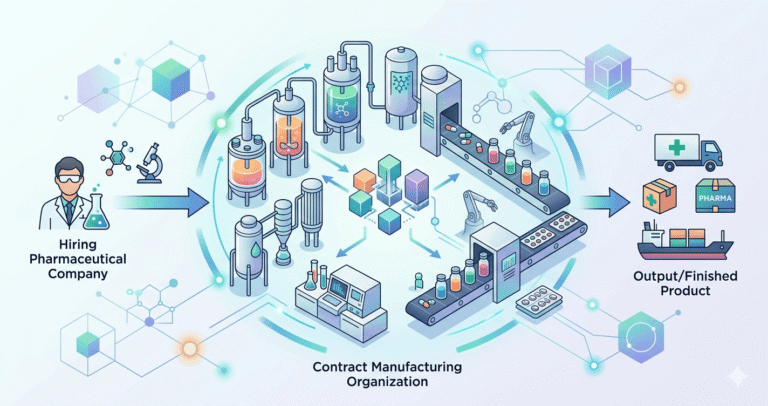
What is Contract Manufacturing in Pharma?
Contract manufacturing (also called third-party manufacturing) means : Contract Manufacturing Vs Own Manufacturing
You outsource production to a manufacturer who produces medicines under your brand name.
You handle:
- Branding
- Marketing
- Distribution
The manufacturer handles:
- Production
- Packaging
- Compliance
This is the backbone of the pharma franchise business model and widely used in PCD pharma franchise in India.
What is Own Manufacturing?
Own manufacturing means:
You set up your own pharma manufacturing plant, including:
- Machinery
- Technical staff
- Licenses (like WHO-GMP)
- Quality control systems
You control everything—from raw materials to final dispatch.
How Both Models Actually Work in the Indian Market
Ground Reality:
- 60–70% of new pharma brands start with contract manufacturing
- In Tier-2 cities like Ahmedabad:
- New entrants prefer low-risk entry
- Capital preservation matters more than ownership
- Companies claiming “own manufacturing” often:
- Actually outsource 40–60% of their portfolio
- Maintain partial facilities for branding credibility
In short: Hybrid models are more common than pure ones
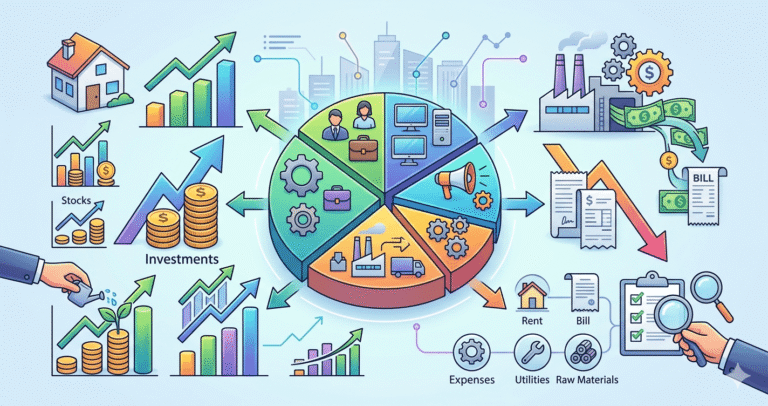
Cost & Investment Breakdown
1. Contract Manufacturing
Initial Investment:
- ₹50,000 – ₹5 lakh
Cost Structure:
- Per unit cost slightly higher
- MOQ (Minimum Order Quantity): 500–5000 units
Working Capital:
- Low to moderate
- Pay per batch
Setup Time:
- 15–45 days
2. Own Manufacturing
Initial Investment:
- ₹50 lakh – ₹2+ crore (minimum viable plant)
Major Costs:
- Land / rent
- Machinery (₹20–80 lakh)
- Licenses & approvals
- Technical staff salaries
- QC labs
Working Capital:
- High (raw materials, labour, inventory)
Setup Time:
- 8–18 months
Reality Insight
- Contract manufacturing reduces initial investment by 70–80%
- Break-even for own manufacturing usually takes 2–4 years
Contract Manufacturing vs Own Manufacturing
| Factor | Contract Manufacturing | Own Manufacturing |
|---|---|---|
| Investment | Low | Very High |
| Risk | Low | High |
| Control | Limited | Full |
| Profit Margin | Moderate | High (long-term) |
| Scalability | Fast | Slower initially |
| Compliance Burden | Minimal | Heavy |
| Flexibility | High | Low |
| Time to Market | Quick | Slow |
Key Takeaway
- Contract manufacturing = Speed + Flexibility
- Own manufacturing = Control + Long-term margins
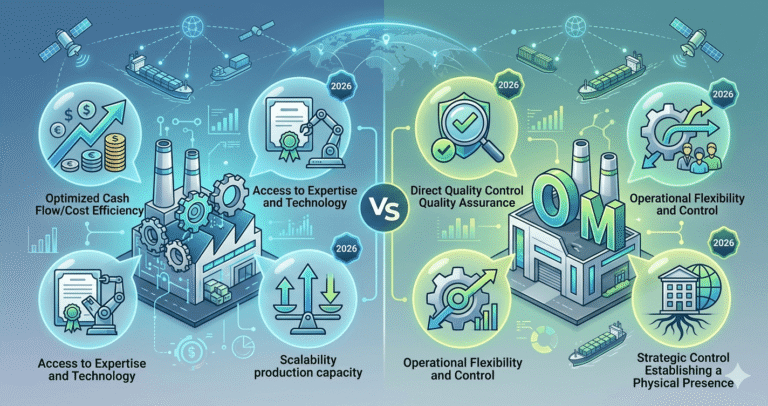
Real Benefits
Contract Manufacturing Works Best When:
- You are starting a pharma franchise
- You want to test market demand
- You lack technical expertise
- You want to scale fast with low risk
Own Manufacturing Works Best When:
- You have stable demand
- You operate at high volume
- You want long-term margin control
- You understand regulatory systems
Hidden Challenges & Failure Reasons
Contract Manufacturing Risks
Quality inconsistency between batches
In contract manufacturing, batch quality can vary due to differences in raw material sourcing, process control, or production priorities at the manufacturer’s end. Even small variations can impact product effectiveness and doctor trust. Over time, this inconsistency can damage your brand reputation in the market.
Dependency on manufacturer timelines
Your entire supply chain depends on the manufacturer’s production schedule, which may not always align with your demand cycles. Delays due to overload, labour issues, or internal priorities can directly affect your stock availability. Contract Manufacturing Vs Own Manufacturing This often leads to missed sales opportunities and distributor dissatisfaction.
Hidden margin manipulation
Some manufacturers adjust pricing through formulation tweaks, packaging changes, or raw material grades without clearly communicating it. This can reduce your expected profit margins or create inconsistency in cost planning. Over time, it becomes difficult to maintain stable pricing in competitive markets.
MOQ pressure → excess inventory
Minimum Order Quantity (MOQ) requirements force you to order larger batches than your immediate market demand. This leads to slow-moving stock, blocked working capital, and higher risk of expiry losses. For new or growing businesses, this can seriously impact cash flow management.
Own Manufacturing Risks
Underutilized capacity
When your plant doesn’t run at optimal production levels, your per-unit cost shoots up significantly. Fixed expenses remain the same, but output is low, making operations inefficient. This gap between capacity and actual demand is one of the biggest reasons manufacturing units struggle.
High fixed costs → cash flow pressure
Salaries, maintenance, electricity, compliance, and loan repayments continue regardless of production volume. Even during slow sales periods, these costs don’t stop, creating constant pressure on cash flow. Many businesses underestimate how long they need to sustain these expenses before reaching stability.
Regulatory delays
Approvals, inspections, and renewals (like WHO-GMP or state FDA licenses) often take longer than expected. Contract Manufacturing Vs Own Manufacturing Any delay can halt production, product launches, or expansion plans. This not only impacts revenue but also disrupts market momentum and distributor confidence.
Staff dependency
Pharma manufacturing heavily depends on skilled technical staff like production managers, QA/QC experts, and pharmacists. If key people leave, operations can slow down or even pause temporarily. Finding and training replacements takes time, affecting consistency and compliance. This challenge is often seen across the ecosystem of pharma third party manufacturing companies in India, where dependency on technical teams plays a critical role in maintaining operational stability and quality standards.
What Most Pharma Companies Won’t Tell You
1. “Own Manufacturing” Is Often Overstated
Many companies:
- Own one small unit
- Outsource majority of products
It’s a branding strategy, not full control
2. Hidden Margins in Contract Manufacturing
Manufacturers may:
- Adjust formulation cost
- Use varying raw material grades
- Offer different pricing to different clients
3. Real Cost of Running a Plant
It’s not just setup:
- Monthly salaries
- Maintenance
- Compliance renewals
- Quality audits
Fixed costs continue even when production stops
4. Quality Isn’t Guaranteed in Either Model
- Bad contract partner = brand damage
- Poor internal QC = regulatory risk
Real Business Case Scenarios
Case 1: Smart Startup
A new company in Ahmedabad:
- Started with contract manufacturing
- Invested ₹2 lakh
- Focused on doctor network + distribution
Result:
- Scaled to ₹25 lakh/month in 2 years
- Later considered own manufacturing
Case 2: Early Manufacturing Mistake
A business invested ₹80 lakh in plant:
- No stable demand
- Low production utilization
Result:
- High fixed costs
- Cash flow breakdown in 14 months
Case 3: Strategic Transition
A company:
- Used third-party manufacturing for 3 years
- Built strong distribution
- Invested in own unit later
Result:
- Controlled cost
- Higher margins
- Sustainable growth
Read More : Third Party Pharma Manufacturing In Ahmedabad | Complete Guide for Pharma Franchise & Start ups
Who Should Choose What?
Choose Contract Manufacturing If:
- You are starting a pharma franchise
- Budget is under ₹10 lakh
- You want fast market entry
- You’re testing product viability
Choose Own Manufacturing If:
- You have ₹1 crore+ capital
- You have consistent demand
- You understand compliance
- You want long-term scaling
5-Step Smart Decision Framework
1. Assess Your Stage
You should first clearly understand where your business currently stands. If you are in the idea or startup phase, contract manufacturing is usually the safer option. For scaling or already established businesses, shifting towards own manufacturing can be considered.
2. Calculate Demand Stability
Before investing heavily, evaluate whether your product has consistent market demand. If demand is not stable or proven yet, it is risky to invest in a manufacturing plant. Stable demand is the foundation for long-term manufacturing success.
3. Evaluate Capital Strength
Own manufacturing requires strong financial backup. You should realistically assess whether your business can survive at least 18 months without profits. Contract Manufacturing Vs Own Manufacturing If not, contract manufacturing is a more sustainable choice in the early stage.
4. Test Market First
Instead of committing to a plant immediately, use third-party manufacturing to test your products in the market. This helps you understand customer response, doctor acceptance, and distribution strength before making heavy investments.
5. Plan Hybrid Model
A smart approach is to start with outsourced production and gradually move towards internal manufacturing. This hybrid model reduces risk initially while allowing long-term control and margin improvement as your business grows.
Common Mistakes to Avoid
- Starting manufacturing without demand
- Choosing cheapest contract manufacturer
- Ignoring quality audits
- Overestimating margins
- Underestimating compliance complexity
Conclusion
There is no universally “better” model.
There is only the right model for your current stage.
- Contract manufacturing gives you speed, safety, and flexibility
- Own manufacturing gives you control and long-term profitability
But here’s the real insight:
Most successful pharma businesses don’t start with manufacturing—they grow into it.
If you’re entering via a PCD pharma franchise in India, your smartest move is Contract Manufacturing Vs Own Manufacturing :
- Start lean
- Validate demand
- Build distribution
- Then scale strategically
Contract Manufacturing Vs Own Manufacturing : FAQs
1. Is contract manufacturing profitable in pharma?
2. How much investment is needed for a pharma manufacturing plant?
3. When should I switch to my own manufacturing?
4. Is quality better in your own manufacturing?
5. Can I run both models together?
References
ABOUT THE AUTHOR

Mitesh Vyas
My name is Mitesh Vyas, and I am a Pharma Franchise Consultant and Industry Research Analyst specializing in India’s PCD pharma business ecosystem. My work focuses on helping beginners, distributors, and small pharma entrepreneurs understand the real-world functioning of the pharma franchise model. Unlike theoretical content, my insights are based on ground-level observations from Indian pharmaceutical markets, including Tier-1, Tier-2, and Tier-3 cities such as Ahmedabad, Indore, Lucknow, and surrounding business hubs. I regularly share insights on how the pharma franchise business in India works in real market conditions, including investment, product strategy, and growth challenges.