Third Party Manufacturing vs PCD Pharma Franchise: If you’re searching this topic, you’re not just curious — you’re trying to make a business decision.
And here’s the truth most blogs won’t tell you:
- Both models can be profitable
- Both models fail massively in real life
- And in 70% of cases I’ve seen working with distributors across Ahmedabad, Indore, and Lucknow, people choose the wrong model for their situation
The result?
Dead stock, blocked money, slow sales, and eventually quitting. So instead of giving you textbook explanations, let’s break this down like it actually works on the ground.
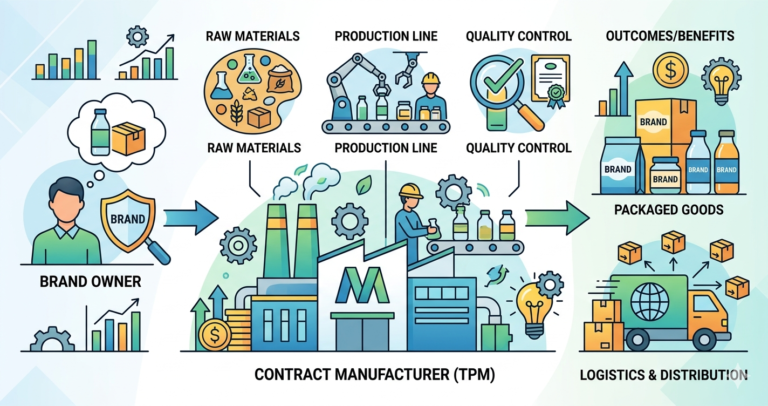
What is Third Party Manufacturing?
Third party manufacturing means:
You own a pharma brand, but production is done by a contract manufacturer.
But here’s the real business angle:
- You’re not just outsourcing manufacturing
- You’re becoming a brand owner + marketer + distributor
You control:
- Product selection
- Pricing strategy
- Branding & packaging
- Market positioning
But you are also responsible for:
- Sales generation
- Market penetration
- Inventory movement
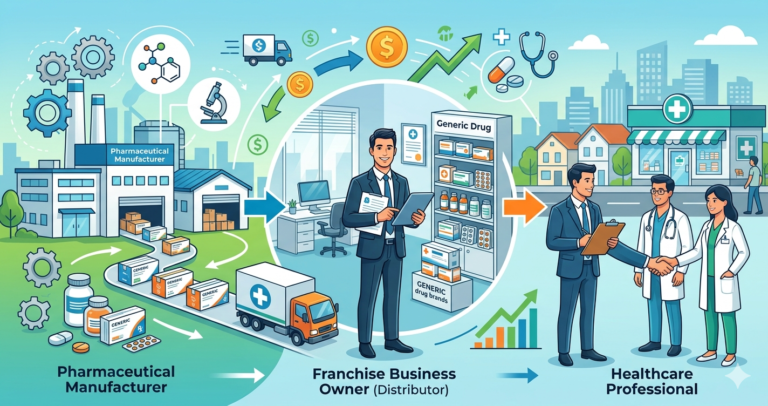
What is the PCD Pharma Franchise?
In a PCD pharma franchise model:
You partner with an existing pharma company and sell their products in your territory, working as an authorized distributor who builds relationships with doctors and retailers to ensure consistent product movement, while relying on trusted third party pharma manufacturers in India for product quality, supply stability, and long-term business consistency.
But practically:
- You are a local distributor with semi-exclusive rights
- Your success depends heavily on doctor prescriptions + retailer push
You get:
- Ready-made product range
- Marketing support (in theory)
- Monopoly rights (in many cases)
But you depend on:
- Company product quality
- Brand trust
- Your field execution
How Both Models Actually Work in the Real Market
PCD Pharma Franchise (Ground Reality)
Cause → What happens → Outcome
- Doctor dependency → Prescriptions take months to shift → Slow sales
- Retailer margin pressure → Shops push other brands → Stock movement slows
- Weak company support → No branding → You struggle alone
Final result:
Many distributors sit on stock for 3–6 months
Third Party Manufacturing (Ground Reality)
Cause → What happens → Outcome
- No brand recognition → Doctors don’t trust new brand → Low initial orders
- MOQ pressure → You buy bulk → Inventory gets stuck
- No sales network → Products don’t move → Working capital blocks
Final result:
Many beginners fail within 12–18 months due to poor sales planning
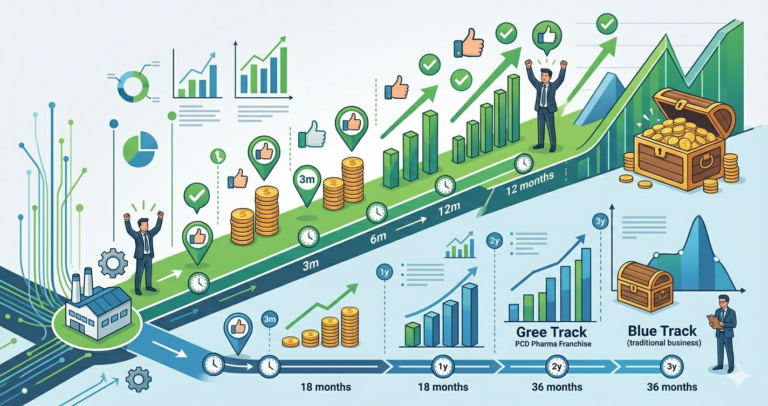
Profitability Comparison (Real Numbers & Timelines)
When comparing Third Party Manufacturing vs PCD Pharma Franchise, profitability depends on investment capacity, market execution, and partner selection. Both models can be profitable, but success and timelines vary based on how well you manage sales, branding, and distribution in real market conditions.
Investment
PCD Franchise: ₹50,000 – ₹2 lakh (starter level)
This is a low-entry model where you can start small and test the market without heavy financial pressure. In real scenarios, this range is enough to begin with a focused product line and gradually expand based on demand.
Third Party Manufacturing: ₹2 lakh – ₹10+ lakh (depending on product range)
Here, investment increases because you’re building your own brand and managing inventory. From my experience, many first-time investors underestimate working capital needs, especially when products don’t move as expected in the initial months.
Profit Margins
PCD (20%–40% distributor margin)
Margins look decent, but actual profit depends on how fast your stock moves. In most cases, slow-moving products reduce real profitability, which is why consistent doctor prescriptions are critical.
Manufacturing (50%–200% margin potential)
On paper, margins are high because you control pricing. But in reality, profit only comes when your products are accepted in the market—otherwise, high margins mean nothing if stock is sitting unsold.
Break-even Time
PCD: 4–8 months (if doctor network is strong)
With active fieldwork and good doctor connections, recovery can be relatively quick. However, without consistent prescriptions, this timeline easily stretches beyond expectations.
Manufacturing: 8–18 months (due to branding & sales buildup)
Building a brand takes time. You need patience for market acceptance, and most businesses take close to a year or more to stabilize and start generating consistent returns.
Risk Level
PCD: Medium risk
The biggest challenge is stock movement. If products don’t rotate regularly, your capital gets stuck, but overall financial exposure remains controlled compared to manufacturing.
Manufacturing: High risk
Risk is higher due to larger investment, bulk production, and dependency on sales execution. Without a clear marketing and distribution plan, unsold inventory can quickly turn into a major financial burden.
Side-by-Side Comparison Table
| Factor | PCD Pharma Franchise | Third Party Manufacturing |
|---|---|---|
| Investment | Low (₹50K–₹2L) | Medium–High (₹2L–₹10L+) |
| Profit Margin | Moderate | High (if successful) |
| Risk | Medium | High |
| Control | Limited | Full control |
| Scalability | Moderate | High |
| Time to Profit | Faster | Slower |
| Difficulty Level | Moderate | High |
Real Benefits (Only If Done Right)
PCD Franchise – Works When:
- You have doctor connections
- You choose a reliable company
- You focus on consistent field work
Then you get:
- Faster cash flow
- Lower risk
- Easier entry
Third Party Manufacturing – Works When:
- You have marketing strategy + distribution plan
- You understand product positioning
- You invest in branding
Then you get:
- Higher margins
- Long-term brand value
- Scalability across cities
Hidden Risks & Why Most People Fail
PCD Failure Reasons
- Wrong company selection
- Over-reliance on monopoly rights
- No doctor relationships
Reality:
“Monopoly doesn’t mean sales. Prescriptions do.”
Manufacturing Failure Reasons
- No sales strategy before production
- Overproduction due to low MOQ cost
- Weak branding
Reality:
“Products don’t sell. Brands do.”
What Most Companies Won’t Tell You
Let’s be brutally honest:
- Many PCD companies promise monopoly but provide zero field support
- Some manufacturers compromise on consistency to reduce costs
- Distributors are often pushed to buy stock they can’t sell easily
- Beginners are rarely told how difficult doctor conversion actually is
In my experience, this lack of transparency is the biggest reason for failure.
Real Case Scenarios (From Ground Experience)
Case 1: PCD Failure (Ahmedabad)
A beginner invested ₹1.2 lakh in a franchise.
- No doctor connections
- Relied only on company claims
- Stock didn’t move
Result: 60% stock unsold after 6 months
Case 2: Manufacturing Failure (Indore)
The investor launched own brand with ₹6 lakh.
- Good products
- No marketing plan
- No field team
Result: Inventory stuck, business shut in 1 year
Case 3: Smart Success (Lucknow)
Distributor started small:
- Chose niche segment (derma)
- Partnered with decent company
- Focused on 15–20 doctors only
Result:
Consistent growth + expansion within 12 months
Which Model Should You Choose?
Choose PCD Franchise if:
- Budget is below ₹2 lakh
- You are a beginner
- You have local doctor access
- You want lower risk
Best for: starting a pharma franchise
Choose Third Party Manufacturing if:
- Budget is ₹5 lakh+
- You understand marketing & branding
- You have distribution network
- You want long-term scalability
Best for: building a pharma franchise business model at scale
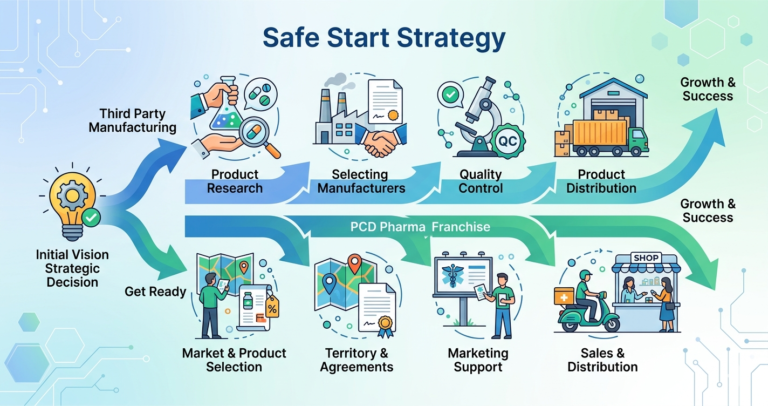
Safe Start Strategy (Step-by-Step)
Step 1: Choose Your Segment
General / Derma / Ortho / Pediatric
Don’t pick a segment based on trends—choose based on local demand and competition in your area. In my experience, focused segments (like derma or pediatric) are easier to penetrate than overcrowded general ranges. The right segment reduces effort and improves prescription chances.
Step 2: Validate Demand
Talk to doctors + retailers
Before investing, spend time in the market—meet doctors, chemists, and stockists to understand what actually sells. This simple step prevents one of the biggest mistakes I’ve seen: investing in products that have no real demand in your target area.
Step 3: Select Right Partner
Company (for PCD) / Manufacturer (for own brand)
Your partner decides your business stability. A good company or manufacturer ensures consistent quality, reliable supply, and realistic pricing, while a wrong one leads to stock issues, complaints, and lost trust in the market.
Step 4: Start Small
Avoid bulk buying initially
Most beginners lose money by over-investing early. Start with limited stock, test product movement, and observe doctor response. This approach protects your capital and gives you real market feedback before scaling.
Step 5: Focus on Sales First
Field work > Stock investment
Pharma is a relationship-driven business—sales come from consistent doctor visits and follow-ups, not from storing inventory. Prioritize fieldwork, because even the best products won’t move without prescriptions.
Step 6: Scale Gradually
Expand only after consistent movement
Once your products show steady repeat orders and doctor acceptance, then expand your range or territory. Controlled scaling ensures cash flow remains healthy and prevents dead stock accumulation.
Mistakes to Avoid (Critical)
- Investing heavily without testing market
- Believing “monopoly = guaranteed success”
- Ignoring doctor relationships
- Choosing cheapest manufacturer
- Overloading inventory
CONCLUSION
If your goal is:
Quick start + lower risk + steady income
→ Go with PCD Pharma Franchise
High profit potential + long-term brand building
→ Choose Third Party Manufacturing
But here’s the real truth:
In India, 80% beginners should start with PCD first, then move to manufacturing later.
Because:
- It teaches market dynamics
- Builds doctor network
- Reduces initial risk
Third Party Manufacturing vs PCD Pharma Franchise - FAQS
1. Which is more profitable long-term?
2. Is the PCD pharma business safe for beginners?
3. Can I do both together?
4. How much can I earn monthly?
5. What is the biggest mistake beginners make?
REFERENCES
ABOUT THE AUTHOR

Mitesh Vyas
My name is Mitesh Vyas, and I am a Pharma Franchise Consultant and Industry Research Analyst specializing in India’s PCD pharma business ecosystem. My work focuses on helping beginners, distributors, and small pharma entrepreneurs understand the real-world functioning of the pharma franchise model. Unlike theoretical content, my insights are based on ground-level observations from Indian pharmaceutical markets, including Tier-1, Tier-2, and Tier-3 cities such as Ahmedabad, Indore, Lucknow, and surrounding business hubs. I regularly share insights on how the pharma franchise business in India works in real market conditions, including investment, product strategy, and growth challenges.