
Checklist Before Choosing A Pharma Manufacturer : Starting a pharma business—whether it’s a PCD pharma franchise in India or third party pharma manufacturing India—looks simple on paper.
But here’s the reality:
In 60–70% of cases I’ve audited, distributors didn’t fail because of low demand… they failed because they chose the wrong manufacturer.
Your ₹1–5 lakh investment doesn’t get stuck due to market competition.
It gets stuck due to:
- Slow-moving products
- Poor quality
- Delayed dispatch
- Fake monopoly promises
This guide is not a generic “pharma contract manufacturing checklist.”
It’s a ground-level, experience-driven pharma manufacturing company selection guide that can save you from costly mistake
Why Choosing the Right Pharma Manufacturer is Critical
Most beginners think: Checklist Before Choosing A Pharma Manufacturer . “If products are cheap, I’ll earn more profit.” That’s where things go wrong.
Ground Reality:
- Doctors don’t prescribe cheap brands—they prescribe trusted quality
- Retailers push fast-moving brands, not unknown ones
- Stockists prefer consistent supply, not excuses
Wrong manufacturer = No prescriptions
Expired stock = Lost market credibility

How Pharma Manufacturing Actually Works in India
Understanding this will help you choose pharma manufacturer wisely: Checklist Before Choosing A Pharma Manufacturer
Two Common Models:
- Third Party Pharma Manufacturing
- You give brand name
- Manufacturer produces medicines
- Loan License / Contract Manufacturing
- You operate under manufacturer’s license
Hidden Reality:
Most companies you see are marketers, not manufacturers.
In cities like Ahmedabad, I’ve seen 5–6 brands using the SAME manufacturer but selling at different prices.
So your real decision is not brand — it’s backend manufacturing quality.

Complete Checklist Before Choosing A Pharma Manufacturer
This is your real-world pharma contract manufacturing checklist:
1. Certifications & Legal Compliance
What to Check:
- WHO-GMP certification
- DCGI approval
- GST number
Why it Matters:
Fake certifications are very common.
If Ignored:
- Product quality issues
- Legal risks
- Doctor rejection
How to Verify:
- Cross-check GST on government portal
- Ask for certificate copies + license number
- Verify on state FDA website
2. Product Quality Consistency
What to Check:
- Same composition across batches
- Stability of results
Why it Matters:
Doctors stop prescribing inconsistent products.
If Ignored:
- Brand rejection within 2–3 months
How to Verify:
- Order sample batches (2–3 times)
- Compare results and packaging
3. Product Range & Market Demand
What to Check:
- Fast-moving molecules (antibiotics, PPI, painkillers)
- DCGI-approved combinations
Why it Matters:
High margin product ≠ high sales product
If Ignored:
- Dead stock accumulation
How to Verify:
- Ask local chemists:
“Which brands sell fastest in this category?”
4. Pricing vs Market Acceptance
What to Check:
- PTR (Price to retailer)
- MRP vs competitor
Why it Matters:
Overpriced products don’t move.
If Ignored:
- No retailer support
- No repeat orders
How to Verify:
- Compare with 3–4 competitor brands in your area
5. Monopoly Rights
What to Check:
- Written agreement
- Territory clarity
Why it Matters:
Most monopoly claims are fake.
If Ignored:
- Same product sold by multiple distributors
How to Verify:
- Talk to existing distributors in nearby districts
6. Packaging Quality
What to Check:
- Blister strength
- Print clarity
- Visual appeal
Why it Matters:
Doctors judge brands by packaging.
If Ignored:
- Low trust = low prescriptions
How to Verify:
- Compare with top brands side-by-side
7. Delivery & Dispatch Timelines
What to Check:
- Average dispatch time
- Emergency supply capability
Why it Matters:
Most manufacturers look good on paper but fail in dispatch timelines.
If Ignored:
- Market loss to competitors
How to Verify:
- Ask:
“Last 5 dispatch timelines for other distributors?”
8. Expiry & Replacement Policy
What to Check:
- Written replacement terms
Why it Matters:
Expiry is the biggest hidden loss.
If Ignored:
- 10–30% stock loss
How to Verify:
- Get policy in invoice/agreement
9. Marketing Support
What to Check:
- Visual aids
- MR support
- Promotional inputs
Why it Matters:
Products don’t sell themselves.
If Ignored:
- Slow brand growth
How to Verify:
- Ask for actual samples of marketing materials
Good Manufacturer vs Risky Manufacturer
| Factor | Reliable Manufacturer | Risky Manufacturer |
|---|---|---|
| Delivery | On-time | Delayed |
| Product Quality | Consistent | Variable |
| Monopoly | Transparent | Fake promises |
| Support | Active | Silent |
| Pricing | Market-aligned | Unrealistic |
How to Verify Manufacturer Claims
Real Verification Methods:
- Call existing distributors (not provided references)
- Visit manufacturing unit (if possible)
- Check online reviews & complaints
- Order trial batch before bulk order
- Track communication responsiveness
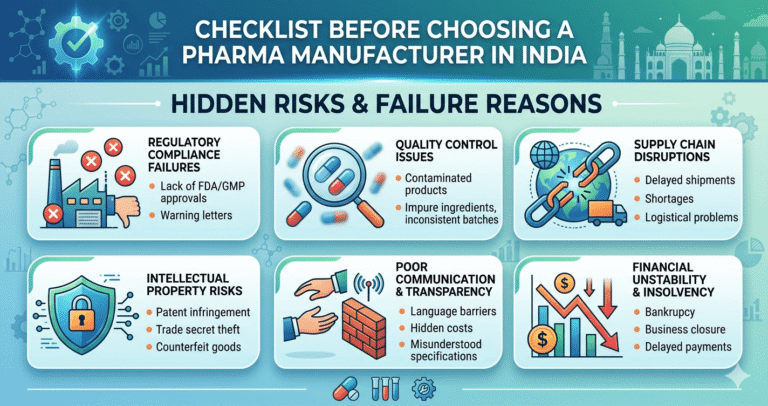
Hidden Risks & Failure Reasons
1. Margin Trap
High-margin products often look attractive on paper, but they usually lack real market demand. Doctors don’t prescribe them and retailers don’t push them, which results in zero movement. In the end, higher margin turns into unsold inventory and blocked capital.
2. Stock Dead Issue
In Tier-2 markets like Indore and Lucknow, poor molecule selection leads to slow or no sales. Checklist Before Choosing A Pharma Manufacturer.
I’ve seen distributors stuck with ₹2–3 lakh worth of expired stock because the products were not aligned with doctor demand. Once stock stops moving, recovery becomes nearly impossible.
3. Supply Failure
Delayed dispatch directly impacts your relationship with doctors and chemists. If you can’t supply medicines on time, doctors quickly shift to alternative brands. One delay can permanently break prescription continuity and cost you long-term market trust.
What Most Pharma Companies Won’t Tell You
This is the truth:
- “Monopoly” is often just a sales pitch
- Batch delays happen regularly
- Cheap products = lower acceptance
- Replacement policies are often ignored later
Many companies focus on onboarding… not supporting you long-term.
Real Case Scenarios
Case 1: ₹2 Lakh Dead Stock
A distributor chose high-margin products.
No prescriptions → stock expired in 8 months.
Case 2: Dispatch Delay Loss
Doctors started prescribing brands.
The manufacturer delayed the supply by 20 days.
Doctor shifted to competitor.
Case 3: Quality Issue
Different batch = different result.
The doctor stopped prescribing permanently.
Who Should & Should NOT Choose Third-Party Manufacturing
Choose If:
You understand market demand
You can promote products
You verify manufacturer properly
Avoid If:
You rely only on company promises
You don’t know local doctor behavior
You expect passive income
7-Step Safe Selection Strategy
1. Verify GST & Certifications
Before trusting any manufacturer, confirm their GST number and certifications like WHO-GMP are genuine. Many companies showcase fake or outdated approvals, which can lead to legal and quality issues later. Always cross-check documents on official government portals.
2. Shortlist 3–5 Manufacturers
Never finalize the first company you find. Comparing multiple manufacturers helps you understand differences in pricing, quality, and support. This step protects you from falling into attractive but risky offers.Checklist Before Choosing A Pharma Manufacturer
3. Order Sample Products
Testing samples gives you a real idea of product quality, packaging, and consistency. Without this step, you’re investing blindly and risking doctor rejection. Always test before placing bulk orders.
4. Compare Pricing with Market
Check whether the product pricing matches existing brands in your target area. Overpriced products don’t move, and under priced ones may indicate compromised quality. For a clearer understanding of this evaluation, refer to this detailed guide on selecting pharma manufacturing companies, as market-aligned pricing plays a key role in ensuring better acceptance.
5. Talk to Existing Distributors
Don’t rely only on company claims—speak directly with current distributors. They reveal real issues like delays, support problems, or stock returns. This is the most practical way to know the truth.
6. Test Dispatch Timeline
Place a small trial order and track how long delivery takes. Many companies promise fast dispatch but fail in execution. Delays can directly impact your relationship with doctors and retailers.
7. Start with Small Investment
Checklist Before Choosing A Pharma Manufacturer Avoid investing heavily in the beginning. Start with a limited product range and test market response first. This reduces risk and gives you flexibility to switch if the manufacturer doesn’t perform.
Expert Mistakes to Avoid
- Choosing based on low price only
- Ignoring doctor preference
- Believing monopoly blindly
- Ordering large quantity initially
- Not verifying replacement policy
Real Benefits of Choosing the Right Manufacturer
1. Faster Product Movement
When you choose the right manufacturer, your products align better with market demand and doctor preferences. This leads to quicker sales cycles and consistent repeat orders. Faster movement also improves your cash flow and reduces stock pressure.
2. Better Doctor Trust
Consistent product quality builds confidence among doctors over time. Once they trust your brand, they are more likely to prescribe it regularly. This trust becomes your biggest competitive advantage in the market.
3. Lower Expiry Losses
With the right product selection and steady movement, the chances of stock expiry reduce significantly. You don’t have to worry about unsold inventory piling up. This directly protects your investment and improves profitability.
4. Strong Long-Term Business Growth
A reliable manufacturer ensures consistent supply, quality, and support, which helps you grow steadily. Instead of struggling with issues, you can focus on expanding your market. This creates a stable and scalable pharma business over time.
Conclusion
Choosing a pharma manufacturer is not a “formality”—
it’s the foundation of your entire business.
A good manufacturer builds your brand.
A bad one destroys it before it starts.
Checklist Before Choosing A Pharma Manufacturer If you’re planning on starting a pharma franchise or entering third party pharma manufacturing, don’t rush this decision.
Take time. Verify deeply. Start small. Scale smart.
Checklist Before Choosing A Pharma Manufacturer In India : FAQs
1. How to choose a pharma manufacturer in India?
2. What is third party pharma manufacturing India?
3. What is the biggest risk in pharma manufacturing selection?
4. Is monopoly rights real in the PCD pharma franchise in India?
5. How much investment is safe to start?
References
ABOUT THE AUTHOR

Mitesh Vyas
My name is Mitesh Vyas, and I am a Pharma Franchise Consultant and Industry Research Analyst specializing in India’s PCD pharma business ecosystem. My work focuses on helping beginners, distributors, and small pharma entrepreneurs understand the real-world functioning of the pharma franchise model. Unlike theoretical content, my insights are based on ground-level observations from Indian pharmaceutical markets, including Tier-1, Tier-2, and Tier-3 cities such as Ahmedabad, Indore, Lucknow, and surrounding business hubs. I regularly share insights on how the pharma franchise business in India works in real market conditions, including investment, product strategy, and growth challenges.