
How To Reduce Manufacturing Cost In Pharma?: If you’re in the pharma business, you already know one harsh reality:
Profit doesn’t depend on how much you sell—it depends on how well you control cost.
Across 50+ PCD distributors and third party manufacturing setups I’ve worked with, one pattern is painfully clear:
70% of businesses overpay 15–25% on manufacturing—without even realizing it.
Why?
- Poor negotiation with manufacturers
- Wrong product selection
- Over-designed packaging
- Low-volume ordering
- Hidden margins in “all-inclusive pricing”
And here’s what nobody tells you:
Even a ₹2–₹5 extra cost per unit can destroy your margin in competitive markets like Ahmedabad, Surat, and Indore.
In this blog, you’ll learn:
- Where pharma manufacturing cost actually increases
- How to reduce it practically (not theory)
- Real mistakes that increase cost
- A proven cost-reduction system used in real businesses

Understanding Manufacturing Cost Structure in Pharma
Before reducing cost, you must understand where your money is going.
1. Raw Material Cost
- Usually 35–60% of total cost
- Fluctuates based on bulk purchase and sourcing
Problem: Small buyers pay higher API rates
Solution: Work with manufacturers who procure in bulk
2. Packaging Cost
Includes:
- Blister
- Bottles
- Cartons
- Labels
In my audits, packaging alone increases cost by 15–25% in most PCD setups.
Problem: Fancy packaging for low-demand products
Solution: Use standardized packaging for general range
3. Third Party Manufacturer Margin
- Typically 15–30% margin
- Higher for low MOQ clients
Problem: New clients get higher quotes
Solution: Build long-term relationship + volume commitment
4. MOQ (Minimum Order Quantity) Impact
Low MOQ may feel safer for beginners, but it significantly increases per-unit cost because manufacturers cannot optimize raw material and packaging in small batches. On the other hand, high MOQ reduces cost but creates risk of blocked capital and expiry if demand is not properly planned. The key is to balance MOQ based on realistic market movement, not assumptions.
5. Logistics & Transportation
Logistics is often ignored, but it silently adds 2–5% to your overall cost, especially when orders are frequent and small. Freight charges vary based on distance, load size, and dispatch frequency, and multiple small shipments can inflate cost unnecessarily. Consolidating orders and planning bulk dispatches can significantly reduce this expense.
6. Wastage & Expiry Loss
Dead stock is a direct hit on profit, as expired products cannot be recovered or sold in the market. Poor demand estimation, over-ordering, and slow-moving products increase this hidden cost over time. Smart inventory planning and tracking product movement regularly are essential to minimize expiry losses.
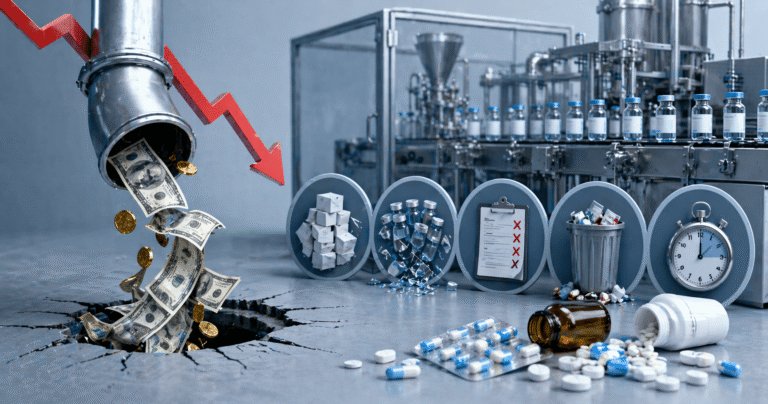
Where Most Pharma Businesses Lose Money
1. Small Batch Ordering
Most beginners entering third party pharma manufacturing make this mistake. Ordering small quantities to “test market”.
Reality:
- Manufacturers increase rate for low volume
- Packaging cost becomes expensive
2. Over-Designing Packaging
“Premium packaging doesn’t sell medicines—doctors do.”
But new businesses spend unnecessarily on:
- Foil printing
- Embossed cartons
- Multi-color designs
3. Choosing Cheap Manufacturer
Biggest myth in pharma:
“Cheap manufacturer = higher profit”
Truth:
- Quality issues → product returns
- Delays → stockouts
- Hidden costs → higher long-term expense
4. Poor Product Selection
In the pharma franchise business model, wrong product choice leads to:
- Slow movement
- Expiry losses
- Blocked capital
5. Credit-Based Pricing Trap
Manufacturers increase rates when:
- You demand credit
- You delay payments
Credit = Hidden cost
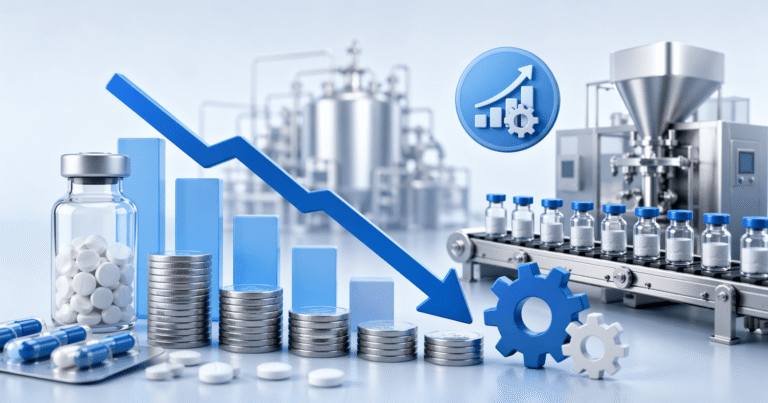
How to Actually Reduce Manufacturing Cost
Raw Material Optimization
Choosing common, high-demand molecules helps you benefit from bulk procurement advantages that manufacturers already have, keeping your cost lower. Rare or niche combinations often come with higher API costs and lower production efficiency, which directly increases your per-unit price. Start with widely prescribed molecules to maintain both demand and cost control.
Packaging Optimization
Standard blister sizes and basic packaging formats reduce tooling and printing costs significantly. Unnecessary customization like special foils, extra colors, or unique box designs may look attractive but can increase packaging cost by 15–20% without improving sales. Keep packaging simple, especially for general range products.
MOQ Negotiation
Instead of placing small separate orders, combining multiple products into one order increases your total value and gives you better negotiation power. Manufacturers are more flexible with pricing when batch sizes are optimized, allowing you to reduce per-unit cost without taking excessive inventory risk.
Manufacturer Selection Strategy
Mid-sized manufacturers often provide the best balance between cost, flexibility, and quality, as they are more open to negotiation compared to large companies. Extremely small manufacturers may offer low prices but can create issues with consistency, delays, and compliance, which eventually increases your overall cost.
Logistics Optimization
Frequent small dispatches increase transportation cost and handling charges, eating into your margin. By consolidating shipments and planning bulk dispatches, you can reduce freight cost per unit and improve overall efficiency. Proper logistics planning ensures smoother supply and better cost control.
Smart Cost Optimization Strategies
1. High MOQ vs Low MOQ
| Factor | Low MOQ | High MOQ |
|---|---|---|
| Cost per Unit | High | Low |
| Risk | Low | High |
| Margin | Low | High |
2. Cheap vs Quality Manufacturer
| Factor | Cheap Manufacturer | Quality Manufacturer |
|---|---|---|
| Cost | Low initially | Moderate |
| Hidden Cost | High | Low |
| Stability | Poor | Strong |
3. Bulk Production vs Small Batch
- Bulk reduces:
- Packaging cost
- Production cost
- But increases:
- Inventory risk
4. Premium vs Basic Packaging
- Premium = branding advantage (only for niche products)
- Basic = cost efficiency (best for general range)
What Most Pharma Companies Won’t Tell You
Let’s be honest—this industry has hidden layers: How To Reduce Manufacturing Cost In Pharma ?
- “All-inclusive pricing” often includes inflated margins
- Free promotional schemes are already added in cost
- Manufacturers quote higher rates to new clients
- Packaging upgrades are used to increase billing
- Low-volume clients are treated as “non-priority”
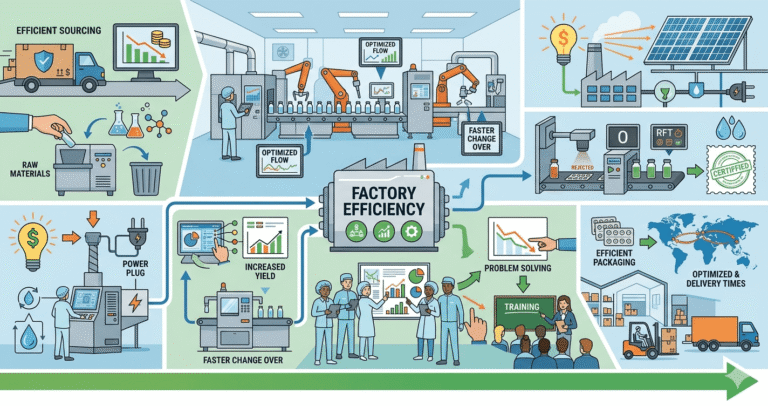
Real Case Scenarios from Ground Market
Case 1: Overpaying Due to Low Volume
A distributor in Ahmedabad was paying:
- ₹22 per strip (antibiotic)
After optimizing MOQ:
- Cost reduced to ₹16 per strip
Saving: ₹6 per strip (~27%)
Case 2: Packaging Cost Disaster
A startup invested heavily in:
- Premium cartons + foil
Result:
- Packaging increased cost by 20%
- Product failed due to low doctor demand
Case 3: Wrong Manufacturer Choice
A beginner chose a cheap manufacturer:
- Faced delayed supply
- Quality complaints
Eventually switched to a better manufacturer:
- Paid slightly higher
- But reduced total loss significantly
Who Should Focus on Cost Optimization
Must Focus:
- PCD distributors
- Startups starting a pharma franchise
- Low to mid-volume businesses
Less Priority:
- Established brands with strong doctor network
- High-margin specialty segments

7-Step Cost Reduction Framework
Step 1: Select Cost-Efficient Product Range
Choosing fast-moving products like antibiotics, fever, and general range ensures consistent demand and faster stock rotation. In real market conditions, these categories reduce the risk of expiry and help maintain steady cash flow. Starting with high-demand molecules keeps both cost and inventory under control.
Step 2: Negotiate MOQ Smartly
Avoid going too low, as it increases per-unit cost, and don’t go too high, which can block your capital. The smart approach is to combine multiple SKUs in one order to improve negotiation power. This helps you achieve better pricing without taking unnecessary inventory risk.
Step 3: Optimize Packaging
Standard packaging formats reduce unnecessary costs related to design, printing, and material usage. Over-branding with premium foils and cartons may look attractive but doesn’t significantly impact sales in most segments. Keeping packaging simple helps you protect margins without affecting product acceptance.
Step 4: Choose Right Manufacturer Type
Mid-sized manufacturers often offer the best balance of cost, quality, and flexibility in pricing. Large manufacturers may be rigid and expensive, while very small ones can compromise on consistency and timelines. Selecting a reliable, moderately scaled partner helps avoid hidden operational costs.
Step 5: Avoid Dead Stock
Tracking product movement regularly is critical to prevent stock from sitting idle and eventually expiring. Slow-moving products should be identified early and discontinued or reduced in quantity. Proper inventory planning directly saves money that would otherwise be lost in expiry.
Step 6: Control Logistics
Frequent small shipments increase transportation and handling costs, reducing overall profitability. Planning bulk dispatches and minimizing delivery frequency helps lower freight cost per unit. Efficient logistics management ensures smoother operations and better cost control.
Step 7: Track Per-Unit Cost
If you are not calculating your per-unit cost, you won’t know where you are losing margin. Every expense—from manufacturing to logistics—should be tracked and divided per unit for clarity. This visibility allows you to make smarter pricing and cost-cutting decisions.
Expert Mistakes to Avoid
- Launching too many products
- Ignoring demand before manufacturing
- Giving excessive market credit
- Not tracking expiry
- Choosing price over quality
Conclusion
Reducing manufacturing cost in pharma is not about cutting corners—it’s about making smarter decisions.
From my experience:
- Most losses don’t come from low sales
- They come from poor cost control
If you:
- Select the right products
- Optimize packaging
- Negotiate properly
- Work with the right manufacturer
You can easily improve margins by 15–30% without increasing sales.
How To Reduce Manufacturing Cost In Pharma? That’s the real game.
How To Reduce Manufacturing Cost In Pharma Business ? : FAQs
1. How can I reduce cost in third party pharma manufacturing?
2. Does packaging really impact pharma cost?
3. Is low MOQ good for beginners?
4. How do manufacturers decide pricing?
5. What is the biggest cost mistake in the pharma business?
References
ABOUT THE AUTHOR

Mitesh Vyas
My name is Mitesh Vyas, and I am a Pharma Franchise Consultant and Industry Research Analyst specializing in India’s PCD pharma business ecosystem. My work focuses on helping beginners, distributors, and small pharma entrepreneurs understand the real-world functioning of the pharma franchise model. Unlike theoretical content, my insights are based on ground-level observations from Indian pharmaceutical markets, including Tier-1, Tier-2, and Tier-3 cities such as Ahmedabad, Indore, Lucknow, and surrounding business hubs. I regularly share insights on how the pharma franchise business in India works in real market conditions, including investment, product strategy, and growth challenges.