
Profit Margin in Pharma Manufacturing Business: Everyone says pharma manufacturing is a high-profit business.
And on paper, it looks attractive:
- Growing demand
- Essential industry
- Strong margins in some products
But here’s the truth from real ground experience:
- In 60–70% of new pharma manufacturing setups, actual profits are much lower than expected in the first 2–3 years.
Why?
Because what people calculate on Excel is very different from what happens in the real market.
This blog will break down:
- Actual profit margins (not assumptions)
- Real cost structures
- Hidden expenses nobody talks about
- Real case scenarios from Indian markets
- And how you can actually improve profitability
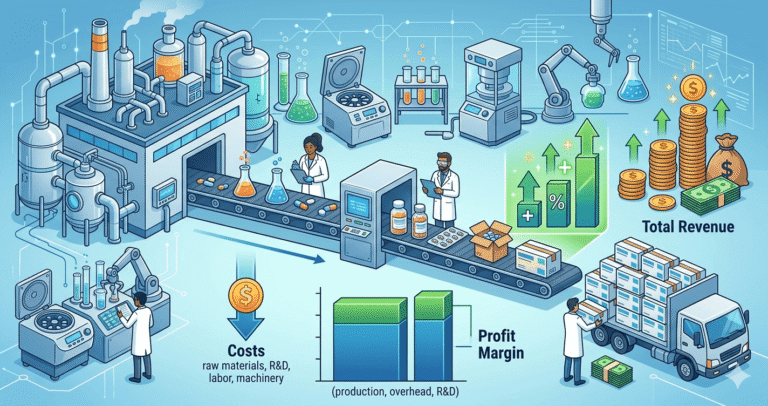
What is Profit Margin in Pharma Manufacturing?
Profit margin simply means:
- Gross Margin = (Selling Price – Production Cost)
- Net Margin = Profit after all expenses (staff, compliance, electricity, etc.)
- Most beginners only look at gross margin
- But real business survival depends on net margin
Actual Profit Margin Breakdown (Real Numbers)
Here’s what I’ve observed across multiple manufacturing units:
Tablets & Capsules
- Gross Margin: 40–60%
- Net Margin: 12–20%
Syrups & Suspensions
- Gross Margin: 30–50%
- Net Margin: 10–18%
Injectables (Higher Investment)
- Gross Margin: 50–70%
- Net Margin: 15–25%
Third Party Manufacturing
- Per Unit Margin: 8–15%
- Volume-based profit model
Reality Insight:
In most small-to-mid scale units, net profit rarely crosses 15–18% consistently, especially in the first few years.
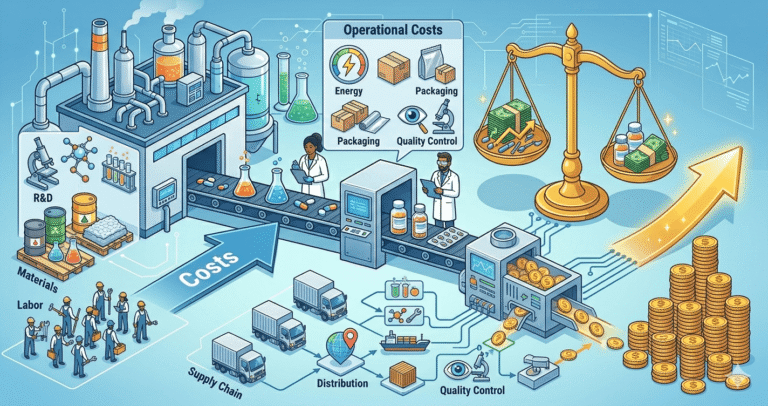
Cost Structure That Affects Profit (Deep Breakdown)
1. Raw Materials (API + Excipients)
Raw materials form the biggest chunk of production cost, especially APIs which are highly price-sensitive. Even small fluctuations in API rates directly impact your margins. In real scenarios, many manufacturers struggle to maintain pricing when raw material costs suddenly rise. Poor procurement planning can quickly turn profitable batches into low-margin ones.
- 30–50% of total cost
- Prices fluctuate frequently
- Even a 5% API price increase can reduce your margin significantly
2. Packaging Cost (Underrated Expense)
Packaging is often underestimated but plays a major role in overall cost structure. Blisters, cartons, foils, and labeling can take up a significant portion of expenses. Many companies overspend on premium designs to compete in the market, which cuts into margins. Smart packaging decisions are critical to balancing branding and profitability.
- Boxes, blister, labels, foils
- Can take 15–25% of total cost
Premium packaging = lower margin
3. Labor & Technical Staff
Skilled manpower like pharmacists, QC experts, and production staff are essential for compliance and quality. These are fixed monthly costs that remain constant regardless of production volume. In low-demand periods, this becomes a financial burden on the business. Efficient workforce utilization is key to maintaining profitability.
- Pharmacist, QC team, production staff
- Fixed monthly burden
Even if production is low, salaries stay constant
4. Compliance Costs
Maintaining certifications like GMP, WHO, and FDA involves continuous documentation, audits, and upgrades. These are recurring costs that many new manufacturers fail to estimate properly. Delays or non-compliance can halt production entirely, causing heavy losses. Over time, compliance becomes one of the biggest hidden expenses.
- GMP, WHO, FDA approvals
- Documentation, audits, renewals
This is a silent profit killer
5. Electricity & Maintenance
Pharma manufacturing units consume high electricity due to machinery, HVAC systems, and controlled environments. Maintenance of equipment is also a regular expense that cannot be ignored. In segments like injectables, these costs are significantly higher. Inefficient energy management can silently reduce overall margins.
- Machinery, HVAC systems
- Especially high in injectable units
6. Marketing & Distribution (If Own Brand)
If you launch your own brand, marketing becomes a major investment area. Expenses include MR salaries, doctor visits, and promotional materials. In most cases, it takes months before prescriptions start generating consistent sales. Without proper strategy, marketing costs can consume a large share of your profits.
- MR salaries
- Doctor visits
- Promotional inputs
This can eat 20–30% of your margin
Expected vs Actual Profit
| Expectation | Reality |
|---|---|
| 30–40% net profit | 10–20% realistic |
| Fast ROI (1 year) | 2–4 years typical |
| High demand = high profit | Demand ≠ consistent orders |
| Full capacity usage | Most plants run at 40–60% |
How It Actually Works in the Real Market
In Tier-2 markets like Ahmedabad, Indore, or Nagpur:
- Many units operate below 50% capacity
- Orders are inconsistent
- Payment cycles are delayed
In 70% of cases I’ve seen:
- Manufacturers struggle more with getting orders than producing medicines
Also:
- Distributors push fast-moving brands only
- Doctors don’t easily shift prescriptions
- New brands take 6–12 months to gain traction
Real Benefits
Pharma manufacturing can be profitable — but under conditions:
- When you have consistent bulk orders
- When plant utilization is above 70%
- When you combine manufacturing + third-party clients
- When cost control is strong
In such cases, margins can stabilize at 18–25% net
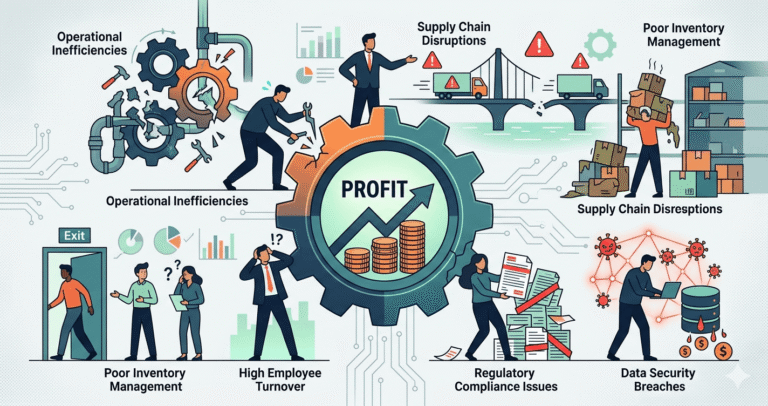
Hidden Challenges That Reduce Profit
1. Idle Plant Problem
When production capacity is underutilized, fixed costs continue to run without generating enough output. Machinery, staff, and maintenance expenses remain constant, reducing overall profitability. In real cases, many new units operate below 50% capacity in initial years. This makes it difficult to recover investment on time.
2. Credit Cycle Pressure
In the pharma market, distributors and stockists usually take 45–90 days to clear payments. This creates a gap between sales and actual cash flow. Even profitable businesses can face working capital shortages due to delayed payments. Poor credit control can slow down operations and limit growth.
3. Over-Dependence on Few Clients
Relying heavily on 1–2 major clients is a risky strategy in manufacturing. If one client stops orders or delays payments, it directly impacts revenue stability. Many small manufacturers face sudden losses due to this dependency. Diversifying the client base is essential for long-term sustainability.
4. High Competition
The pharma market is highly competitive, with multiple companies offering the same molecules. Price wars and aggressive marketing reduce profit margins over time. New entrants struggle to differentiate their products in crowded segments. Without strong branding or distribution, survival becomes challenging.
5. Regulatory Delays
Licensing, approvals, and compliance processes often take longer than expected. Delays in documentation or inspections can halt production and product launches. This impacts both revenue timelines and investor expectations. Proper planning and expert guidance are crucial to avoid costly setbacks.

What Most Pharma Companies Won’t Tell You
1. “High Margin Products” Don’t Guarantee Sales
A product with a 60% margin may look attractive on paper, but without market demand, it won’t generate revenue. Doctors prefer trusted brands, and retailers push fast-moving stock. In real scenarios, slow-moving high-margin products often expire on shelves. Profit comes from rotation, not just margin.
2. Idle Capacity is the Biggest Loss
Even if your product margins are strong, low production volume can destroy profitability. Fixed costs like staff, electricity, and maintenance continue regardless of output. Many units operate below optimal capacity in the early stages. Without consistent orders, the business struggles to stay financially efficient.
3. Compliance Costs Keep Increasing
Pharma manufacturing is a highly regulated sector with evolving standards. Regular audits, documentation updates, and certification renewals add recurring expenses. Many beginners underestimate these long-term costs while planning investment. Over time, compliance becomes a continuous financial commitment.
4. Third Party Clients Bargain Aggressively
As competition increases among manufacturers, third-party clients negotiate heavily on pricing. Bulk orders often come with thinner margins and strict terms. To retain clients, manufacturers are forced to compromise on profit percentages. Volume increases, but margin per unit gradually declines.
5. Payment Delays Kill Cash Flow
Sales figures may look strong, but delayed payments create serious liquidity issues. Distributors and clients often take weeks or months to clear dues. This gap affects daily operations, raw material purchases, and salary payments. In many cases, cash flow problems hurt more than low margins.

Real Case Scenarios
Case 1: ₹50 Lakh Investment, Low Orders
A new manufacturer set up a tablet unit.
- Investment: ₹50 lakh
- Expected ROI: 1.5 years
Reality:
- Orders inconsistent
- Plant utilization at 40%
Result: Break-even took 3+ years
Case 2: Good Margin but Cash Flow Crisis
Manufacturer had:
- 20% margin
- Good product demand
Problem:
- Payments delayed by 60–90 days
Result: Working capital shortage → business stress
Case 3: Third Party Model Stability
Small unit focused only on third-party manufacturing
- Lower margin (10–12%)
- High volume orders
Result: Stable income + lower risk
Manufacturing vs PCD vs Third Party
| Model | Investment | Risk | Margin | Control |
|---|---|---|---|---|
| Manufacturing | High | High | Medium | High |
| PCD Pharma Franchise in India | Low | Medium | High | Medium |
| Third Party Manufacturing | Medium | Low | Low–Medium | Low |
Insight:
Many smart entrepreneurs today start with:
- third party pharma manufacturing
- or PCD pharma business in India
…before entering full manufacturing
Who Should Start This Business
Suitable For:
- Pharma distributors expanding backward
- People with doctor network
- Existing PCD players
Not Suitable For:
- Passive investors
- Beginners without market knowledge
- People expecting quick returns

How to Increase Profit Margin (Actionable Strategy)
1. Focus on High-Rotation Products
In pharma, fast-moving products generate consistent revenue and keep cash flow healthy. High-margin products often fail if demand is low or prescriptions are weak. Retailers and distributors prefer products that sell quickly, not just those with better margins. Prioritizing rotation ensures steady business growth.
2. Improve Batch Efficiency
Producing in larger, optimized batches reduces the cost per unit significantly. Fixed costs like labor, electricity, and setup time get distributed across more units. Many small manufacturers lose margin due to inefficient batch planning. Better production scheduling directly improves profitability.
3. Add Third Party Clients
Third-party manufacturing helps maintain consistent production volume. Even with lower margins, it ensures your plant doesn’t sit idle. This improves overall capacity utilization and spreads fixed costs effectively. It’s a practical way to stabilize income in the early stages.
4. Control Packaging Cost
Packaging should be cost-effective without compromising compliance and basic appeal. Over-investing in premium packaging reduces profit margins unnecessarily. Smart design choices can maintain brand value while keeping costs under control. This balance is critical in competitive markets.
5. Manage Credit Cycle Strictly
Long payment cycles can block working capital and slow down operations. Setting clear credit terms and following up regularly is essential. Many profitable businesses struggle due to delayed cash inflow. Strong credit discipline keeps the business financially stable.
6. Avoid Over-Expansion Early
Expanding too quickly increases financial pressure and operational complexity. Many beginners invest heavily before establishing stable demand. Starting small allows better control over costs and processes. Gradual scaling based on real market performance is the safer approach.
Expert Mistakes to Avoid
- Choosing plant over market demand
- Over-investing in machinery
- Ignoring sales network
- Launching too many products
- Trusting unrealistic ROI promises
Conclusion:
Pharma manufacturing is not a shortcut to high profit.
It’s a:
- Capital-heavy
- Process-driven
- Volume-dependent business
- If done right, it can generate stable 15–25% returns
- If done wrong, it can lock your capital for years
Profit Margin in Pharma Manufacturing Business in India: FAQs
1. Is pharma manufacturing profitable in India?
2. What is the average profit margin?
3. How long does it take to break even?
4. Is third party manufacturing better?
5. Can beginners start pharma manufacturing?
Reference:
ABOUT THE AUTHOR

Mitesh Vyas
My name is Mitesh Vyas, and I am a Pharma Franchise Consultant and Industry Research Analyst specializing in India’s PCD pharma business ecosystem. My work focuses on helping beginners, distributors, and small pharma entrepreneurs understand the real-world functioning of the pharma franchise model. Unlike theoretical content, my insights are based on ground-level observations from Indian pharmaceutical markets, including Tier-1, Tier-2, and Tier-3 cities such as Ahmedabad, Indore, Lucknow, and surrounding business hubs. I regularly share insights on how the pharma franchise business in India works in real market conditions, including investment, product strategy, and growth challenges.