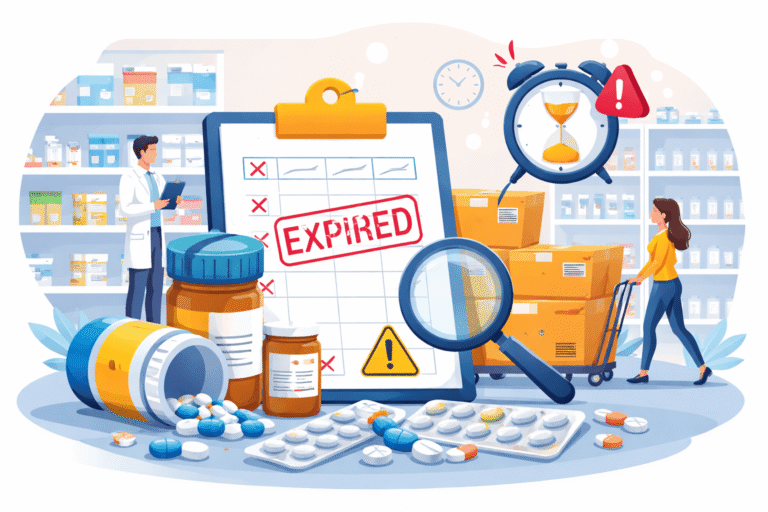
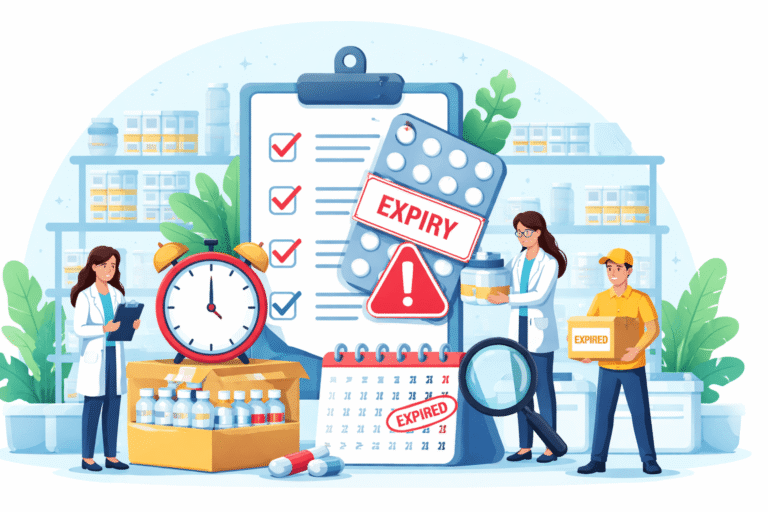
Most pharma franchise distributors focus on one thing: sales.
But in real market conditions, what silently kills profit is not low sales — it’s stock expiry.
Here’s what actually happens:
- You invest ₹1–2 lakh in stock
- Sales start slowly
- Some products don’t move
- After 6–12 months… expiry hits
And suddenly, 20–30% of your capital is blocked or lost
In 60–70% of cases I’ve seen, especially among first-time distributors, expiry is not due to market failure — it’s due to poor planning and wrong buying decisions.
Most companies will never explain this clearly.
In this blog, I’ll break down:
- Why stock expiry actually happens
- How inventory works in real pharma franchise business
- Practical systems to prevent expiry
- What to do with near-expiry stock
Understanding Stock Expiry in Pharma Business
It is directly linked to:
Demand Mismatch
In real market conditions, demand doesn’t come just because you stock products—it depends on prescriptions, local disease patterns, and doctor trust. When distributors buy without understanding actual market demand, products sit unsold and slowly move toward expiry.
Poor Stock Planning
Most beginners purchase based on schemes or assumptions rather than data, which leads to overstocking or wrong product mix. In my experience, lack of planning directly blocks working capital and creates unnecessary pressure to sell slow-moving stock.
Slow Product Movement
If a product doesn’t move within the first 2–3 months, it usually indicates weak demand or poor market push. Over time, slow movement reduces your selling window, forcing discounts or leading to expiry loss.
In a typical PCD pharma business in India, you don’t control demand fully — especially if you are just starting. That’s why expiry risk is always present. But smart distributors reduce this risk through controlled inventory and rotation strategy.
Why Stock Expiry Happens in Real Market
1. Overstocking Due to Company Schemes
Most first-time distributors fall into this trap:
“Sir, we’re offering a 10+1 scheme, so it’s better if you purchase in higher quantity.”
In reality:
- You buy extra to save cost
- But demand doesn’t match
- Extra stock becomes dead stock
Cause → Bulk purchase
Effect → Slow movement
Outcome → Expiry loss
2. Wrong Product Selection
In real Tier-2 markets like Ahmedabad, Indore:
- Antibiotics move seasonally
- Syrups depend on weather
- Some brands don’t have doctor support
If you stock without understanding demand:
- Products sit for months
- Expiry risk increases
3. Poor Demand Forecasting
Most beginners misjudge demand by 2x–3x.
They think:
“If I have stock, it will sell.”
Reality Demand comes from:
- Doctor prescriptions
- Retailer push
- Market acceptance
Without this, stock doesn’t move.
4. No Tracking System
In 70% of cases I’ve seen:
- No batch-wise tracking
- No monthly review
Result:
- Expiry is noticed too late
- No recovery possible
How Inventory Actually Works in Pharma Franchise
Understanding this cycle is critical:
Purchase → Stock Holding → Market Demand → Sales Movement → Expiry Risk
If movement slows for 3–6 months:
- Stock becomes risky
- Discounting starts
- Profit margin reduces
If ignored:
This is where most distributors fail — they don’t monitor movement speed
Major Reasons for Expiry Loss
Bulk Buying Under Schemes
In real practice, many distributors get attracted to “Buy 10 Get 2” offers and end up purchasing more than the market can absorb. This extra stock often becomes a burden, leading to slow movement and eventual expiry loss.
Lack of Doctor Connectivity
Pharma sales heavily depend on prescriptions, and without doctor support, products don’t move as expected. When doctors are not familiar with your brand, even good-quality medicines remain unsold.
No MR Activity in Territory
Without Medical Representative (MR) visits, there is no active push in the market. In most cases I’ve seen, absence of MR activity directly results in low visibility and poor product movement.
Poor Retailer Network
Retailers play a key role in stock movement, especially for generic and OTC products. If your network is weak or inactive, your stock stays in the godown instead of reaching the market.
Ignoring Slow-Moving SKUs
Many distributors focus only on fast-selling products and ignore items that are not moving. Over time, these slow SKUs accumulate and become high-risk for expiry.
No Expiry Return Agreement
Most beginners rely on verbal promises from companies regarding expiry returns. In reality, without a clear written agreement, the entire loss usually falls on the distributor.
In most cases:
20–30% stock remains slow-moving in first 6 months
Real Benefits of Proper Stock Management
When inventory is managed correctly:
Capital Rotation Improves
When stock moves faster, your invested money comes back quickly, allowing you to reinvest in better-selling products instead of it being stuck in dead inventory.
Expiry Loss Reduces Significantly
By aligning purchases with actual demand, you avoid overstocking, which directly lowers the chances of medicines expiring unsold.
Cash Flow Becomes Stable
Consistent stock movement ensures regular inflow of money, helping you manage expenses, payments, and reinvestment without financial stress.
Profit Margin Increases
When you minimize expiry and avoid forced discounting of near-expiry stock, your overall profitability improves in a more sustainable way.
In my experience:
Distributors who control inventory properly earn more than those who only focus on sales.
Hidden Challenges & Financial Risks
- Companies push high-margin but slow products
- Retailers prefer fast-moving brands
- New distributors don’t get prescription support quickly
- Credit cycle delays slow stock movement
All these increase expiry risk.
What Most Pharma Companies Won’t Tell You About Expiry
This is the reality most beginners discover late:
1. Expiry Replacement Is Not Guaranteed
In real market conditions, many companies verbally promise expiry replacement, but the actual terms are often unclear or limited. Without proper documentation, distributors later realize that conditions apply, and full replacement is rarely honored.
2. Schemes Are Designed to Push Stock
Offers like “Buy 10 Get 2” or extra discounts are mainly designed to increase company sales, not your profitability. In my experience, these schemes often lead distributors to overstock products that don’t match real market demand.
3. Risk Is Shifted to the Distributor
Once the stock is billed and delivered, the financial risk largely shifts to you. If products don’t move, the responsibility of managing or absorbing the loss usually falls on the distributor.
4. Hidden Agreement Terms
Many companies include conditions in their policies that are not clearly explained upfront, such as limited return windows or partial replacement clauses. Most beginners overlook these details and face issues only when expiry situations arise.
Real Case Scenarios
Case 1: Overstocking Loss
- Investment: ₹2 lakh
- Bulk purchase under scheme
Problem:
30% stock didn’t move
Result:
₹50,000+ loss due to expiry
Fix:
- Reduced SKUs
- Focused on fast-moving products
Case 2: Seasonal Product Failure
- High stock of antibiotics
Problem:
Season ended → demand dropped
Result:
Stock remained unsold
Fix:
- Planned seasonal buying
- Smaller batches
Case 3: No Expiry Return Policy
- Company refused replacement
Problem:
No written agreement
Result:
Full loss
Fix:
- Negotiated terms before purchase
Who Should Be More Careful About Expiry
High Risk:
- New distributors
- Low investment businesses
- No market experience
Lower Risk:
- Experienced distributors
- Strong doctor network
- Established product demand
7-Step System to Prevent Stock Expiry in Pharma Franchise
Step 1: Start with Limited SKUs
In real market conditions, starting with a full product range often leads to dead stock. Begin with a limited number of products so you can test demand and control risk.
Step 2: Focus on Fast-Moving Products
Prioritize products that already have demand in your area, such as commonly prescribed antibiotics, painkillers, or syrups. This ensures quicker movement and reduces holding time.
Step 3: Track Batch-Wise Expiry
Maintain clear records of batch numbers and expiry dates. In my experience, distributors who track this monthly are able to act early and prevent major losses.
Step 4: Avoid Scheme-Based Bulk Buying
Discount schemes may look profitable, but they often push you to overstock. Always buy based on demand, not on offers.
Step 5: Monitor Monthly Stock Movement
Review your stock every month to identify which products are moving and which are not. This helps you adjust future purchases and avoid accumulation.
Step 6: Push Near-Expiry Stock Strategically
If stock is nearing expiry, act early by offering retailer discounts, schemes, or faster distribution to clear it before it becomes unsellable.
Step 7: Negotiate Expiry Return Terms
Always confirm expiry return or replacement policies in writing before purchasing. This protects you from bearing the full loss later.
Expert Mistakes to Avoid
- Buying too much stock initially
- Ignoring slow-moving products
- No tracking system
- Trusting verbal promises
- Not understanding local demand
Conclusion
Here’s the truth most people realize late:
Stock expiry is not a small issue — it directly affects your profit and survival.
In real market conditions:
- Smart distributors control stock
- Beginners focus only on buying
If you manage:
- Inventory smartly
- Demand properly
- Movement consistently
You can reduce expiry loss significantly and build a sustainable pharma franchise business model.
How To Manage Stock Expiry In Pharma Franchise? - FAQS
REFERENCES