
The OTC (Over-the-Counter) pharma segment in India is growing faster than most people realize. With rising self-medication trends, increasing health awareness, and easy access to pharmacies—even in Tier-2 and Tier-3 cities—the OTC pharma business in India is becoming a serious opportunity. But let’s get one thing clear upfront: OTC pharma franchise is NOT as easy as companies advertise.
In my experience working with 50+ distributors across cities like Ahmedabad, Surat, and Indore, I’ve seen both extremes—people making steady monthly income and others stuck with expired stock worth ₹1–2 lakh.
Most online content talks about “high demand” and “easy sales.” Very few talk about ground reality: retailer control, margin pressure, and product movement dynamics.
This guide will show you:
- How OTC franchise actually works in real markets
- What truly drives sales (not what companies claim)
- Where beginners go wrong
- A practical strategy to succeed in 2026

What is OTC Pharma Franchise ?
An OTC pharma franchise is a distribution-based business model where you sell non-prescription products like:
- Pain relief gels & sprays
- Multivitamins & supplements
- Cough syrups
- Antacids
- Protein powders
Unlike ethical pharma (doctor-prescribed), OTC is:
- Retail-driven, not doctor-driven
- Dependent on chemist recommendation & consumer demand
It is a sub-segment of the broader PCD pharma franchise in India, but operates very differently on the ground.

How OTC Pharma Franchise Actually Works in Real Market?
Here’s the truth most beginners don’t understand: In 70% of OTC cases I’ve seen, sales depend more on retailers than doctors.
Real Flow of OTC Sales
- Company supplies products to distributor
- Distributor supplies to chemists/retailers
- Retailer decides:
- Which brand to push
- Which product to ignore
What Actually Drives Sales?
1. Retailer Margin & Scheme
In the OTC pharma business in India, retailer margin and promotional schemes directly influence product sales. In my experience, chemists prefer brands offering higher margins and better schemes, which leads to faster stock movement and repeat orders. Even when product quality is similar, margin advantage often decides which brand gets pushed at the counter—making it a critical success factor in any OTC pharma franchise model.
2. Brand Familiarity
Brand recognition helps generate initial trust and faster off-take in OTC products, especially in urban markets. However, across multiple distributors I’ve worked with, lesser-known brands also perform well when supported by competitive pricing and retailer incentives. In the real OTC pharma market, familiarity creates entry—but margin and demand sustain long-term sales.
3. Product Rotation Speed
Product rotation speed is one of the most important indicators of success in an OTC pharma franchise. Fast-moving SKUs like antacids, pain relief gels, and vitamins typically rotate within 15–30 days, ensuring healthy cash flow. In contrast, slow-moving products often remain unsold for months, increasing the risk of expiry and blocking working capital—one of the most common mistakes beginners make.
4. Retailer Relationship
Strong retailer relationships are the backbone of success in the OTC pharma business. In my on-ground experience across Tier-2 markets, distributors who regularly engage with chemists, understand their preferences, and offer consistent support outperform those relying only on company marketing. In a retailer-driven model, trust and connection often matter more than brand promotion.

OTC Pharma Market Trends in India 2026
1. Self-Medication is Rising
The rise of self-medication in the OTC pharma business in India is significantly driving demand for products like antacids, pain relief medicines, and vitamins. In my experience, a large percentage of walk-in customers directly ask chemists for quick relief solutions without consulting doctors. This shift is accelerating OTC product movement, especially in urban and semi-urban markets.
2. Preventive Healthcare Boom
Preventive healthcare is becoming a major growth driver in the OTC pharma market. Products such as multivitamins, immunity boosters, and protein supplements are witnessing higher demand than traditional OTC categories. Across multiple distributors I’ve worked with, these segments show consistent repeat sales, making them highly attractive for long-term growth in a pharma franchise business model.
3. Rural & Tier-2 Market Growth
Tier-2 and rural markets are fueling the next phase of growth in the OTC pharma franchise in India. In cities like Ahmedabad, Surat, and Indore, I’ve observed that retailer influence is extremely strong, price sensitivity is high, and scheme-based selling dominates. Success in these markets depends more on local demand understanding than brand positioning.
4. Digital Influence
Digital awareness is gradually shaping consumer behavior in the OTC segment. Customers are increasingly asking for specific products like “Vitamin C tablets” or “protein powder” after online research. However, in real market conditions, the final purchase decision is still heavily influenced by the retailer, making it essential to balance digital demand with strong chemist relationships.

Real Benefits
1. Faster Sales Cycle
In the OTC pharma business in India, high-demand products like antacids, pain relief gels, and vitamins typically move faster than ethical medicines. In my experience, the right product selection can ensure stock rotation within 15–30 days, leading to better cash flow and quicker reinvestment—one of the key advantages of the OTC pharma franchise model.
2. No Doctor Dependency
Unlike the traditional pharma franchise business model in India, OTC products do not rely on doctor prescriptions or medical representative visits. Sales are primarily driven by retailer recommendations and consumer demand, making it easier for beginners to enter the market without building a doctor network.
3. Low Entry Barrier
One of the biggest advantages of starting an OTC pharma franchise is the low initial investment. Based on my on-ground experience, you can begin with ₹50,000 to ₹2 lakh by focusing on limited, high-moving SKUs. This makes it an accessible entry point for those exploring starting a pharma franchise in India.
4. Repeat Demand Products
OTC categories like antacids, cough syrups, pain relief gels, and multivitamins have strong repeat consumption. Across multiple distributors I’ve worked with, these products generate consistent secondary sales, ensuring steady demand and helping maintain regular income in the OTC pharma business in India.

Hidden Challenges & Failure Reasons
1. Overloading Inventory
Overstocking is one of the most common mistakes in the OTC pharma franchise business. In my experience, first-time distributors often purchase 30–50 SKUs without validating local demand, assuming all products will sell. The reality is that only 20–30% of OTC products generate consistent movement, while the rest remain unsold—blocking working capital and increasing financial risk.
2. Retailer Dependency
The OTC pharma business in India is heavily retailer-driven, meaning distributors have limited control over actual sales. Across multiple markets I’ve worked in, if chemists do not actively recommend or push your brand, even high-quality products fail to move. This makes strong retailer relationships and competitive margins critical for survival.
3. Margin Pressure
Margin pressure is a hidden challenge in the OTC pharma franchise model. Retailers typically demand high margins and continuous schemes to promote products, which directly reduces distributor profitability. In real market scenarios, balancing competitive pricing with sustainable margins becomes a key challenge for long-term success.
4. Expiry Risk
Expiry risk is a major concern, especially with slow-moving OTC products like syrups and protein supplements. In my experience, poor stock planning and low product rotation often lead to unsold inventory nearing expiry, resulting in direct financial losses. Effective inventory control is essential to minimize this risk in the OTC pharma business.
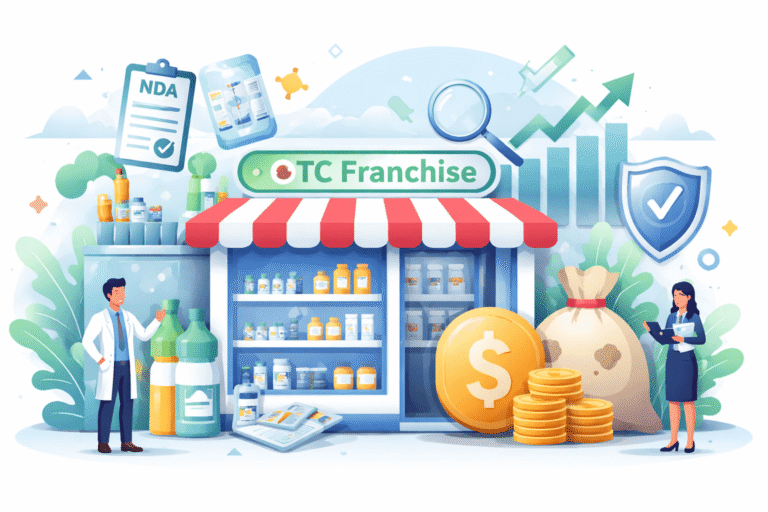
What Most Pharma Companies Won’t Tell You About OTC Franchise
1. “Easy Sales” is a Myth
Many pharma companies promote the OTC pharma franchise as a model where products “sell automatically,” but this is far from reality. In my experience, OTC sales are highly dependent on retailer push, margin, and ongoing schemes. Without strong chemist support, even high-demand products may not move, making active fieldwork essential.
2. Retailer is the Real Decision Maker
In the OTC pharma business in India, the retailer—not the doctor or company—controls the final sale. Across multiple distributors I’ve worked with, chemists decide which brand to recommend based on margin, availability, and trust. Understanding this retailer-driven dynamic is critical for success in the OTC segment.
3. Margins Eat Your Profit
While companies may offer margins of 35–40%, a significant portion (25–30%) often goes to retailers to ensure product movement. In real scenarios, this leaves distributors with thinner profit margins than expected. Managing pricing, schemes, and stock rotation becomes essential to maintain sustainable profitability.
4. Slow SKUs Kill Your Investment
One of the biggest hidden risks in the OTC pharma franchise model is over-expansion of product range. Companies often promote a wide portfolio, but in my experience, only 20–30% of SKUs generate consistent sales. The rest remain slow-moving, tying up capital and increasing the risk of expiry losses.

Real Case Scenarios
Case 1: ₹1.5 Lakh Investment Failure
A distributor in Surat:
- Invested in 40+ OTC products
- Focused on wide range
Result
- Only 10 products sold
- ₹70,000 stock stuck
- Expiry losses after 8 months
Mistake
No demand validation
Case 2: Smart Beginner Success
A new distributor in Ahmedabad
Started with just 8 products:
- Antacids
- Pain relief gel
- Vitamin tablets
Result
- Full rotation in 20 days
- Reinvested profit
- Expanded gradually
Strategy
Focus on high-moving SKUs
Case 3: Retailer Margin Decides Brand
Two brands of cough syrup
- Brand A: 20% margin
- Brand B: 30% margin
Retailers pushed Brand B
Sales difference: 3X

Who Should & Should NOT Start This
Ideal For
- Retail-oriented business mindset
- People with chemist network
- Beginners wanting low-risk entry into starting a pharma franchise
Not Ideal For
- People expecting “passive income”
- Those without fieldwork capability
- Those depending only on company support

5-Step Strategy to Succeed in OTC Pharma Franchise (2026)
Step 1: Market Research
Market research is the foundation of success in the OTC pharma business in India. In my experience, visiting 20–30 local chemists and understanding what products sell fast and which brands they prefer gives you real demand insights. This ground-level validation helps avoid wrong product selection and reduces the risk of unsold inventory.
Step 2: Product Selection (High Rotation SKUs)
Choosing the right products is critical in an OTC pharma franchise. Focus on high-rotation categories like antacids, pain relief gels, multivitamins, and cough syrups, which generate consistent demand. Across multiple distributors I’ve worked with, starting with limited, fast-moving SKUs ensures quicker stock movement and better cash flow, while avoiding slow-moving or niche products reduces risk.
Step 3: Company Selection
Selecting the right pharma company is not just about brand name—it’s about business practicality. In real market conditions, factors like margin, scheme structure, and supply consistency play a bigger role in product movement. A company offering reliable stock availability and competitive trade margins will support long-term growth in the OTC pharma franchise model.
Step 4: Retailer Network Building
Retailer relationships directly impact sales in the OTC pharma business. In my on-ground experience, distributors who regularly visit chemists, offer attractive schemes, and maintain strong communication see significantly higher product movement. In a retailer-driven market, trust and engagement often translate directly into revenue.
Step 5: Stock & Expiry Control
Effective stock and expiry management is essential to protect your investment in an OTC pharma franchise. Keeping limited inventory, tracking monthly product movement, and avoiding bulk purchases helps maintain healthy cash flow. In my experience, controlled inventory reduces expiry losses and ensures sustainable business operations.
Expert Insights / Mistakes to Avoid
Mistake 1: Buying Full Product Range
One of the biggest mistakes in starting an OTC pharma franchise is purchasing a full product range without testing demand. In my experience, only a small percentage of SKUs generate consistent sales, while the rest remain slow-moving. Starting with limited, high-demand products allows better stock rotation and reduces the risk of unsold inventory.
Mistake 2: Ignoring Retailer Psychology
In the OTC pharma business in India, retailers prioritize profit over brand loyalty. Across multiple markets I’ve worked in, chemists push products that offer higher margins and better schemes. Ignoring this psychology leads to poor product movement, even if the brand quality is good.
Mistake 3: Expecting Fast Profit
Many beginners enter the OTC pharma franchise with expectations of quick returns, but real market data tells a different story. In my experience, it typically takes 3–6 months to reach break-even if the right strategy is followed. Unrealistic expectations often lead to poor decisions and early exit from the business.
Mistake 4: No Follow-Up
OTC pharma is a relationship-driven business where consistent follow-up is critical. Distributors who fail to regularly visit retailers, monitor stock movement, and maintain engagement often struggle with low sales. In real scenarios, continuous interaction with chemists directly impacts product visibility and repeat orders.
Mistake 5: Overtrusting Company Claims
Relying solely on company promises without market validation is a common risk in the OTC pharma franchise model. In my experience, many companies overstate product demand and ease of sales. Verifying actual movement through local chemists and real market feedback is essential before making investment decisions.

OTC vs Ethical Pharma Franchise
| Factor | OTC Franchise | Ethical Franchise |
|---|---|---|
| Sales Driver | Retailer | Doctor |
| Speed | Fast | Slow |
| Investment Risk | Medium | Medium-High |
| Dependency | Chemist | Doctor |
| Marketing | Schemes | MR Visits |
Conclusion
The OTC pharma franchise in India is a real opportunity—but only for those who understand its ground reality.
It is not:
- A shortcut business
- A guaranteed profit model
It is:
- A retail-driven system
- A relationship-based business
- A strategy-first opportunity
In my experience, the difference between success and failure in OTC is not investment—it’s understanding how products actually move in the market. If you approach it with:
- Smart product selection
- Strong retailer network
- Controlled inventory
You can build a stable and scalable business in 2026.
OTC Pharma Franchise Opportunities In India: FAQs
1. How much investment is required for an OTC pharma franchise?
2. Is OTC pharma more profitable than ethical pharma?
3. How long does it take to break even?
4. What are the best OTC products to start with?
5. What is the biggest risk in OTC pharma business?
References
ABOUT THE AUTHOR

Mitesh Vyas
My name is Mitesh Vyas, and I am a Pharma Franchise Consultant and Industry Research Analyst specializing in India’s PCD pharma business ecosystem. My work focuses on helping beginners, distributors, and small pharma entrepreneurs understand the real-world functioning of the pharma franchise model. Unlike theoretical content, my insights are based on ground-level observations from Indian pharmaceutical markets, including Tier-1, Tier-2, and Tier-3 cities such as Ahmedabad, Indore, Lucknow, and surrounding business hubs. I regularly share insights on how the pharma franchise business in India works in real market conditions, including investment, product strategy, and growth challenges.